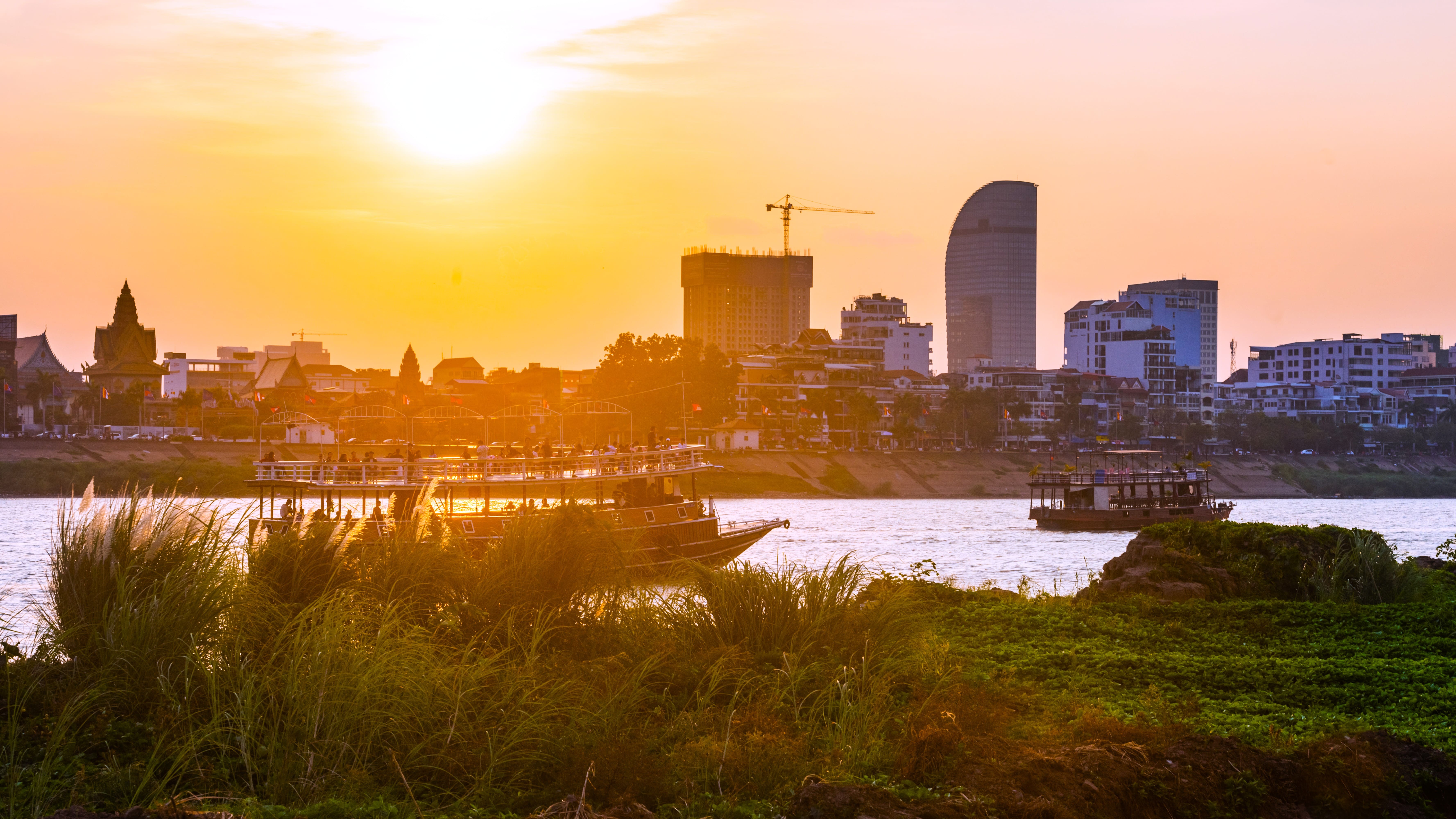
Stung Treng
Quiet town at the confluence of the Mekong and Sesan rivers, gateway to Laos. Authentic destination with impressive rapids and river islands.
Stung Treng is a Cambodian provincial town situated at the confluence of the Mekong and Sekong rivers, on the border with Laos. Far from the beaten tourist trail, it serves as the gateway to Irrawaddy dolphins, Mekong rapids, and the flooded forests of the northeast. Its unhurried pace, morning markets, and riverine landscapes make it a cherished stop for travelers seeking Cambodia off the conventional path.
Practical Information at a Glance
- Access: national highway from Phnom Penh (approximately 480 km) or from Kratie to the south; long-distance buses available.
- Laos Border: Dom Kralor crossing accessible by boat or car.
- Recommended Duration: 1 to 2 nights to combine town exploration with Mekong excursions.
- Season: dry season (November–April) recommended for boat trips; dolphins are more visible in the dry season when river levels drop.
What to See
The riverside front is the town's heart: wooden houses on stilts line the banks, dugout canoes laden with cargo cross the current. The central market comes alive at dawn with stalls of fresh Mekong fish, vegetables, and spices. A handful of pagodas punctuate the unpaved streets of the town center, witnesses to daily life largely untouched by tourism.
History and Context
Stung Treng (literally "deep river") long served as a commercial crossroads between Cambodia, Laos, and Vietnam. Under French colonial rule, the town was a minor administrative post. The region suffered through the conflicts of the 1970s–1990s, which partly explains its limited development and the relative preservation of its riverine ecosystems.
Highlights of a Visit
Irrawaddy Dolphins
An hour's boat ride north of town, in the border zone with Laos, lives a small population of Irrawaddy dolphins (Orcaella brevirostris), a critically endangered species. Local guides arrange morning pirogue excursions. Observation is kept at a respectful distance; dolphins frequently surface in the shallow rapids zones.
Rapids and Flooded Forests
The Mekong narrows here into a series of rapids and wooded islands. In the dry season, flooded forests emerge, creating a landscape of trunks and vines explored by kayak or pirogue. Some islands are home to fishing communities accessible only by boat.
The Morning Market
Stung Treng's market reflects the region's ethnic diversity: Khmer, Lao, and highland minority groups. Dried fish, rice noodles, tropical fruits, and artisanal textiles mingle here. Arrive before 7 a.m. to witness peak activity.
Photography Tips
Golden sunrise light on the Mekong is the day's finest. From the riverbank or a pirogue, water reflections and fishermen's silhouettes offer natural compositions. For dolphins, a telephoto lens is essential; overly close approaches are forbidden and counterproductive.
Location and Access
Stung Treng lies in northeast Cambodia in the province of the same name. The town is connected by road to Kratie to the south and to the Laotian border crossing to the north. Buses and minivans serve Phnom Penh and Siem Reap with connections. The local airport has minimal activity; most travelers arrive by road. The town center is compact and walkable on foot or by tuk-tuk.
Nearby
- Kratie — another Mekong riverside town, also known for Irrawaddy dolphins and colonial riverfront.
- Ratanakiri — neighboring province to the east, home to the volcanic Yeak Laom lake and highland minority villages.
- Preah Vihear — Khmer temple perched on the Dangrek cliffs, accessible from the south of the region.
Frequently asked questions
The dry season, from November to April, is most favorable. The Mekong's water level drops, dolphins concentrate in more restricted zones, and are easier to spot from a pirogue.
Long-distance buses and minivans connect Phnom Penh to Stung Treng via the national highway. The journey is lengthy; consider stopping in Kratie if you wish to explore the region at a measured pace.
Yes, the Dom Kralor checkpoint on the Cambodian side and Voen Kham on the Laotian side permit passage. Verify visa requirements before departure, as conditions may change.
Casual attire is fine for the town and market. When visiting a pagoda, cover shoulders and knees out of respect.
One to two nights are sufficient to explore the riverside, market, and take a boat excursion to dolphins or rapids. Add an extra day if you plan to reach Ratanakiri.
Want to discover this destination?
Our local advisors design your tailor-made trip.