Samathi Pagoda
Samathi Pagoda
About 6 km from Kep's crab market, Samathi Pagoda combines an active Buddhist sanctuary, Khmer statuary and panoramic views over the bay from the national park.
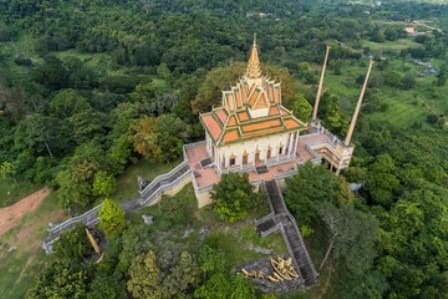
About 6 km from the crab market in Kep, Samathi Pagoda stands at the foot of a hill overlooking the national park. Its name, which means "place of meditation" in Khmer, sums up its purpose: an active Buddhist sanctuary, nestled within a forested setting, accessible by a ritual staircase and frequented by both pilgrims and hikers exploring the park's trails.
Why visit Samathi Pagoda
Samathi brings together three distinctive features rarely found together in the Kep region: an active place of worship, an unobstructed viewpoint over the bay and coastline, and an approach that fits naturally into a hike through the national park. The pagoda is still inhabited by monks, making it a living place of worship rather than a frozen monument. It is also one of the rare opportunities in this coastal area of Cambodia, known primarily for its seafood and beaches, to encounter well-maintained Khmer religious architecture.
The appeal extends beyond the spiritual: the statuary tells fragments of Khmer history and Buddhist cosmology, and the climb up the staircase offers moderate exertion rewarded by panoramic views of the sea.
What to see at Samathi Pagoda
The staircase and the Naga
Access to the entrance courtyard is via a straight staircase of 256 steps. Along the railings, sculptures of Naga serpents flank the ascent on either side, serving as guardians in a role characteristic of Buddhist sites throughout Southeast Asia. The climb requires some effort but remains accessible to most visitors.
The architecture
The pagoda displays a typical silhouette with its yellow roof and white walls, which stand out against the surrounding vegetation. The entrance courtyard concentrates most of the decorative elements: at its base, gilded sculptures represent boats and soldiers; on the balcony, a statue of a four-faced deity dominates the space. Inside, you will find a mural painting, several Buddha statues and an altar.
The Garuda and the panorama
On the site, giant Garuda bird statues face eastward. Local tradition attributes to them a role as symbolic protectors of the Cambodian border, located about forty kilometres away. An observation platform, set up on the heights of the complex, overlooks the sea, Kep Bay and the forest canopy of the national park. The late afternoon sky is particularly clear during the dry season.
Practical information
- Dress code: shoulders and knees covered, as in any active pagoda.
- Shoes: you must remove them before entering the building.
- Duration: allow 1 to 2 hours on site, longer if you combine it with a hike in the park.
- Admission: free entry, a donation to the monks is appreciated.
- Interaction with monks: some are happy to explain Buddhist prayer and meditation to visitors, though this is not systematic.
When to visit
The dry season, from November to April, remains the most comfortable period for tackling the staircase and park trails. Late afternoon, around sunset, offers favourable light over the bay from the observation platform, but plan to descend before nightfall, as path lighting is limited. During the rainy season (May-October), the national park trails can become slippery.
How to get there
Two approaches are possible from Kep:
- By tuk-tuk or motorbike from the crab market: this is the most direct option to reach the foot of the staircase. The journey is short and easy to arrange.
- On foot via the national park: the trail called "Samathi path" branches off from the main park circuit. It allows you to reach the pagoda as part of a wider hiking loop. Some sections are steep; bring closed-toe shoes and plenty of water.
What to see nearby
- Kep National Park: the pagoda is one of its main points of interest, but the trails offer other viewpoints over the coast.
- The crab market: about 6 km away, an emblematic place in Kep to taste Kampot pepper crab.
- The town of Kep: beaches, abandoned colonial villas and boat access to Rabbit Island.
Frequently asked questions
The straight staircase leading to the entrance courtyard has 256 steps, lined with sculptures of Naga serpents.
Yes. It is still occupied by Buddhist monks, and some occasionally explain prayer and meditation to passing visitors.
According to local tradition, these giant birds serve as symbolic protectors of the Cambodian border, located about forty kilometres from the pagoda.
As in any active pagoda, cover shoulders and knees, and remove your shoes before entering.
Yes, the "Samathi path" trail branches off from the main circuit of Kep National Park and allows you to include the pagoda as part of a wider hiking loop.
Planning your trip
Samathi Pagoda fits naturally into a beach and nature stop in southern Cambodia. To build a complete itinerary combining Kep, Kampot and the country's major sites, explore our tailor-made circuits in Cambodia.
Interested in this visit?
We can include it in your personalised itinerary.