Pursat Province
Pursat Province
Between the floating village of Kampong Luong, the bamboo train, and the Cardamom Mountains, Pursat offers authentic rural Cambodia, halfway between Phnom Penh and Battambang.
Name: Pursat or Pouthisat
Cambodian name: ខេត្តពោធិ៍សាត់
Status: Province
Area: 12,692 km²
Population: 477,750 inhabitants
Among Cambodia's most visited provinces, Pursat is a magnificent destination that deserves a stop on your itinerary. Numerous natural sites and attractions await exploration. You'll also have the opportunity to discover the diverse cultures of the province and its rural regions.
Today
Nowadays, Pursat province is rapidly gaining popularity in Cambodia as a tourist destination. It is also the fourth-largest province in the kingdom, covering approximately 12,700 km². While Pursat may lack ancient temples, what makes it equally renowned is the history of the conflicts between the Siamese and Khmer peoples before French colonization.
Upon arriving in Pursat's capital, you'll discover several woodworking workshops. The city indeed borders the vast cardamom forest, these herbaceous plants that produce the eponymous spice, one of the region's greatest treasures. You'll meet locals working with teak, sandalwood, and rubber wood. Numerous oil palms also grow throughout Pursat. As you walk the city's streets, you'll pass countless shops selling wooden sculptures and furniture.
Toponymy
The name Pursat derives from a tree called Po Ro Sat. According to legend, this tree floated down the river, took root, and gradually grew throughout the province. Years later, Po Ro Sat became Po Sat, then Pursat. The region is also known for its substantial orange production, a specialty that earned the city the nickname Krauch Po Sat, meaning "orange of Pursat."
Attractions in Pursat
Wat Bakan
Wat Bakan temple in Pursat is renowned as one of the oldest and most visited temples in Cambodia. The temple is indeed considered a major center of Buddhist religion.
Phnom Ba Klas
Ba Klas Mountain is a natural and cultural site located in the village of Tnaot Chum, in Krakor district, approximately 20 kilometers east of Pursat. You can admire beautiful scenery with lush vegetation. On the hillsides of this region, you'll find many small fruit trees, notably kuy and sei gem, fruits highly prized by visitors. You can also explore the ruins of an ancient pagoda where several statues and sculptures remain. Some Khmer people still come to this place for spiritual contemplation.
Visiting Baktra Resort
Baktra is a natural site and tourist resort located approximately 16 kilometers south of Pursat, along National Road 5. You can enjoy forest hikes leading to a large hill reaching 50 meters in height. You'll discover a wonderful landscape of streams, a famous stone boulder, and several natural wells.
The Tomb of Oknha Klang Meung
Considered a famous historical site in Cambodia, the tomb of Cambodian hero Oknha Klang Meung will be an unmissable activity during your visit to Pursat. According to history, Oknha Klang Meung was the leader who won the Khmer war against the Siamese army in 1482.
The Neakta Kliang Meung Site
This site is both historic and popular in Cambodia, located in Snam Preah commune, approximately 6 km south of Pursat city. Most visitors are animist believers who venerate Neakta Kliang Meung, the guardian spirit of this sacred place. You'll find a large statue of this famous guardian during your visit. The statue was erected in 1993 to replace an earlier one destroyed during the war. The area facing the statue is considered a place of worship. Behind the statue lies where residents gather for traditional games during Khmer New Year and Pchum Ben.
Pursat River
It is Pursat River that gives the city its beauty. It flows into Tonlé Sap and covers an area of approximately 124,635 hectares over 80 kilometers. The watercourse originates in high-precipitation zones at the peaks of the Cardamom Mountains. The province hosts an annual "run" organized along the river's banks. Men and women participate in this 5 to 10 km race. At sunset, Pursat River offers you some of the province's most spectacular landscapes.
The Cardamom Mountain Range
While in Pursat, you can also visit the Cardamom Mountains, easily accessible. Along the way, you can visit the small village of Veal Veng nestled within these mountains. This is also an excellent opportunity for trekking through the region's beautiful forests.
The Floating Village of Kampong Luong
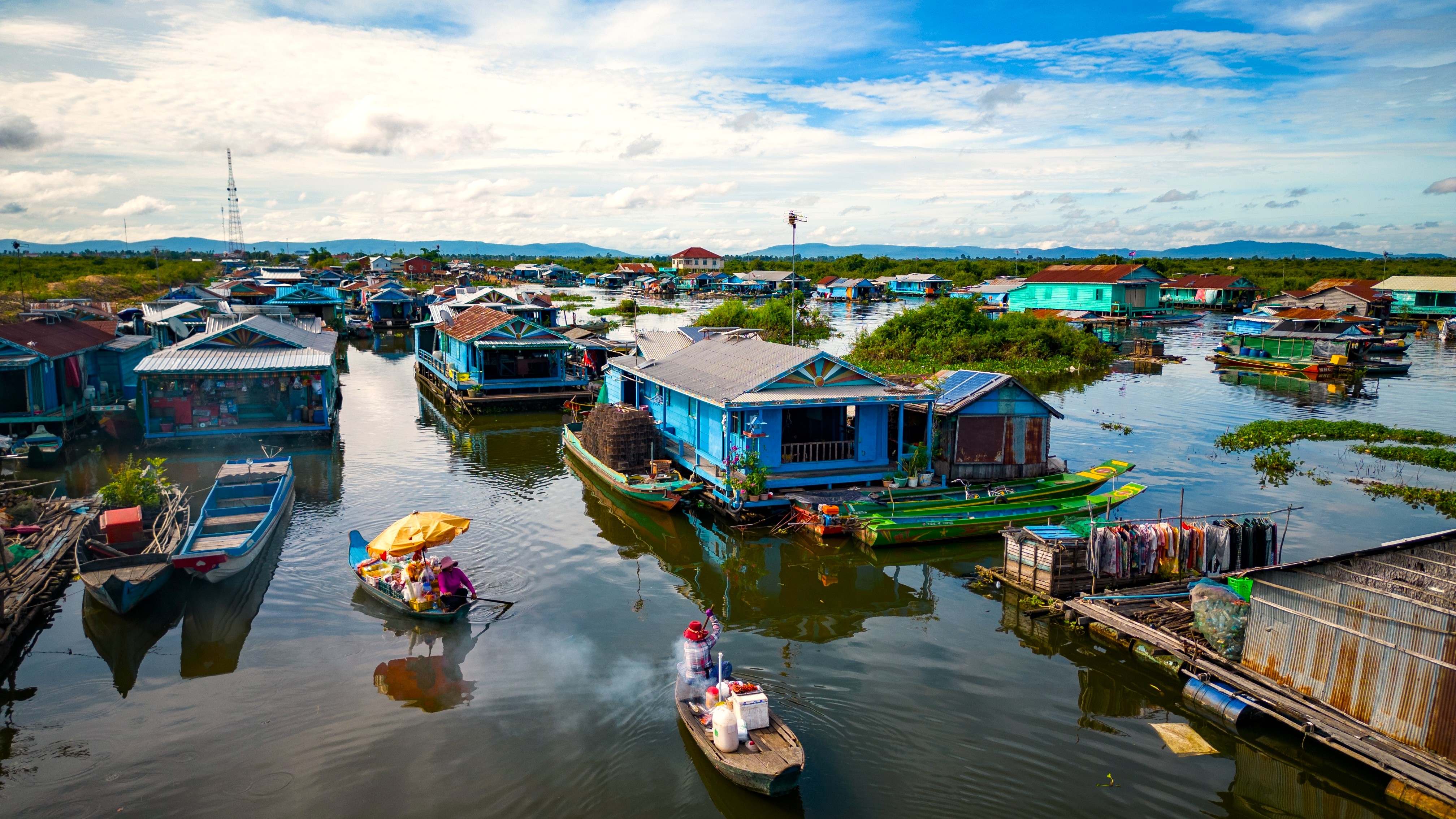
One of the most popular attractions for tourists visiting Pursat is the floating village of Kampong Luong. Located 1.5 hours by tuk-tuk from the capital, you can reach it by boat on Tonlé Sap Lake. The village shifts with the seasons according to the lake's water level. Kampong Luong retreats 5 kilometers during the dry season and is flooded during the rainy season. The population of nearly 10,000 inhabitants is predominantly Vietnamese. This charming village is exceptionally well-organized, its infrastructure mirroring that of a traditional town. There is a school, a temple, a church, grocery stores, a barber shop, a bar, a gas station, a mosque, shops, and most unusually: an ice-manufacturing plant. By boat, you can admire beautifully equipped floating homes. Some even have adjoining animal pens or small gardens.
A Bamboo Train Journey
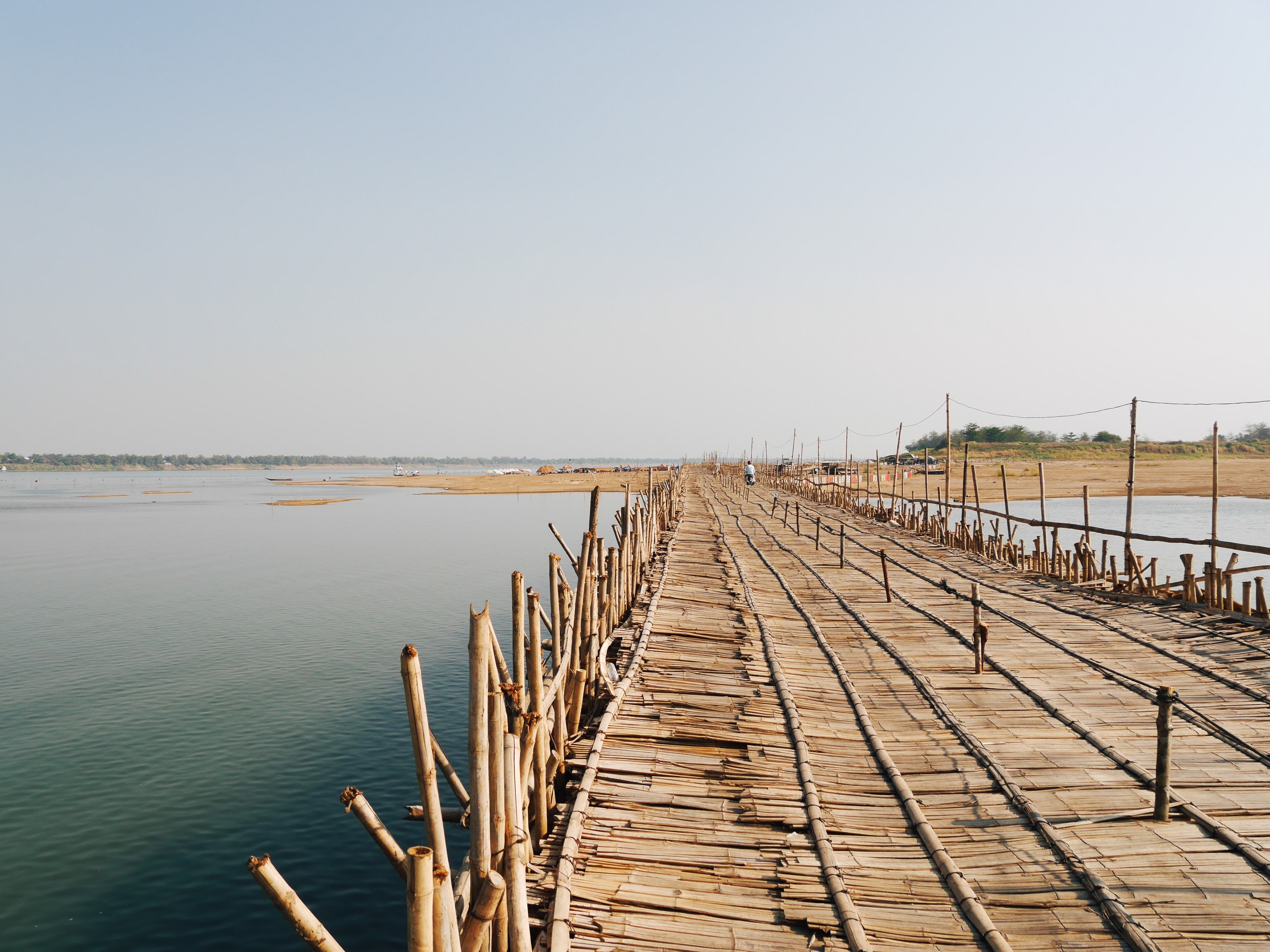
As its name suggests, the "bamboo train" is a train made of bamboo that, during your visit, will be useful for traveling from village to village. The train consists of a bamboo platform where residents load various goods and passengers. The train moves forward thanks to a small motor. This vehicle runs on only a single track. Consequently, when two trains meet, the less loaded one is moved to another rail to clear the way for the other. You'll appreciate this efficient and inexpensive mode of transport where you can meet locals. Moreover, you can admire beautiful countryside scenery reflecting Cambodia's authenticity.
Geography
To the east, Pursat province borders Tonlé Sap Lake; to the west lie the Cardamom Mountains, which also cover Koh Kong and Kampot provinces; and to the southwest is part of the Thailand border and coastline. Pursat province is thus primarily surrounded by mountainous terrain. In the northeast, fertile plains extend to Battambang, home to the country's largest rice-producing paddies. The region encompasses several bioregions, ranging from forest-covered mountains to the fertile plains of the Tonlé Sap basin. Approximately 58% of the province is covered by forests. Pursat River delimits the province and flows into Tonlé Sap.
Climate
Pursat province has a tropical climate with dry winters. Rainfall is more abundant in summer than in winter. The average annual temperature is 28.8°C and the average annual precipitation is 1,721.8 mm. February is the driest month in Pursat while September is very humid as it marks the rainy season. April is the hottest month of the year and December the coldest.
Pursat's Threatened Flora
Aquilaria crassna trees are abundant in Pursat's forests, due to the region's geographical characteristics and climate. However, this species is threatened by a parasite called Phaeoacremonium parasitica, just as another tree species that existed in Pursat during earlier centuries. They are now also facing extinction due to the severe deforestation affecting this region.
Agarwood, a precious and highly sought timber, is also extensively used in Pursat. The depletion of these trees has led to the emergence of projects for protecting endangered trees in Pursat.
What to Do in Pursat?
- To better understand the province, you can visit Pursat's cultural and historical sites such as Wat Bakan, the tomb of Oknha Klang Meung, and the Neakta Kliang Meung site.
- To discover Pursat's mountainous regions, you can trek through the Cardamom Mountains and Phnom Ba Klas.
- For entertainment, you can visit Baktra Resort or take walks along the banks of Pursat River.
- Don't miss a bamboo train ride to discover the city's beautiful landscapes and small villages.
- To complete your journey, be sure to visit the floating village of Kampong Luong and discover the floating homes while chatting with the very welcoming inhabitants.
Pursat province sits on National Road 5 heading toward Battambang, 174 kilometers northwest of Phnom Penh. The province is also accessible by boat, train, and numerous small roads. You can take a bus heading to Battambang from the capital to reach the province.
To get around Pursat, you have choices: motorcycle taxis, tuk-tuks, or the bamboo train.
Best Time to Visit Pursat
February is the driest month in Pursat province, making it the best time to travel there.
Want to discover this destination?
Our local advisors design your tailor-made trip.