The floating village of Kampong Khleang
The floating village of Kampong Khleang
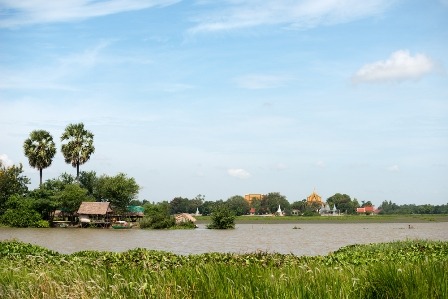
On the shores of Tonlé Sap, Kampong Khleang lines up stilt houses several metres high and a way of life entirely governed by the lake's cycle.
Kampong Khleang is one of the largest lacustrine villages on the Tonlé Sap, Southeast Asia's largest lake. Located about fifty kilometres east of Siem Reap, it is home to several thousand residents living in stilt houses whose impressive height reflects the exceptional amplitude of the lake's water cycle.
Why visit Kampong Khleang
Unlike other Tonlé Sap villages closer to Siem Reap, Kampong Khleang remains largely untouched by mass tourism. A visit here offers access to a way of life fully organised around the lake: fishing, fish processing, schooling, markets and daily travel by canoe.
The site also lends itself to observing the Tonlé Sap ecosystem, designated a UNESCO biosphere reserve. It is one of the most credible entry points for understanding how an entire economy has been built around the seasonal variations of a lake.
History and geography of the village
Tonlé Sap is a lake unique in the world for its functioning: during the rainy season, the river connecting it to the Mekong reverses its course and its volume is multiplied five to six times. This annual respiration has shaped the riverside villages, of which Kampong Khleang is one of the oldest and most populated.
Inhabitants have adapted their homes to this amplitude: houses are built on stilts that can reach eight to ten metres high. During the dry season, people move about on foot between the stilts; during the rainy season, water rises almost to the floorboards and boats become the only means of transport. The local economy is based primarily on fishing, supplemented by the production of prahok (fermented fish paste) and dried fish.
What to see and do
The stilt village
Traversing on foot or by boat, depending on the season, allows you to observe the spectacular verticality of the dwellings. The main streets are lined with small shops, fish-smoking workshops and modest temples. The contrast between the base of the stilts (dry or submerged) and daily life above is one of the most striking aspects of the site.
The floating section and the lake
Beyond the fixed village, a floating section (homes, school, grocery store) moves with the level of the lake. A boat trip to the mouth of Tonlé Sap allows you to grasp the vastness of the body of water and observe the flooded mangrove at the right time of year.
Prek Toal bird sanctuary
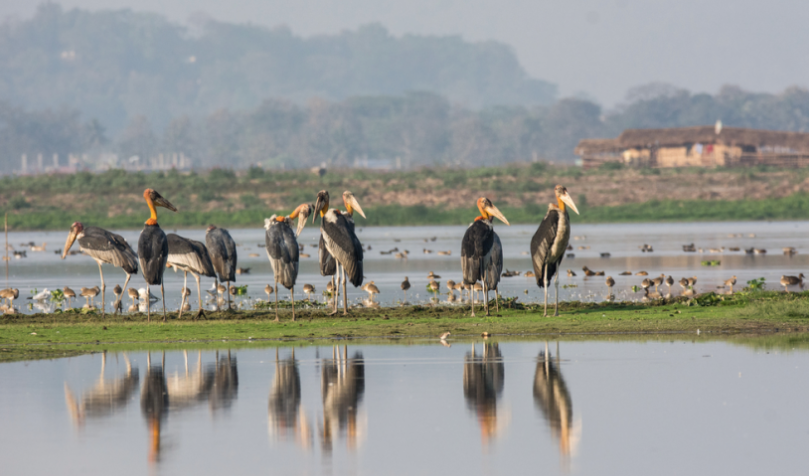
Located on the north-west shore of Tonlé Sap, Prek Toal sanctuary is home to over one hundred species of aquatic birds, including several endangered species (spotted-billed pelicans, African openbills, Asian open bills). It can be visited as a separate excursion, ideally early in the morning between December and April.
When to go
The season radically influences the experience.
- Dry season (December to April): low lake level, stilts fully visible, access partly on foot. Comfortable conditions for photography and walking.
- Rainy season (June to October): maximum water level, travel exclusively by boat, flooded mangrove accessible. The most spectacular period to understand how the lake functions, but visits are occasionally disrupted by showers.
- Inter-seasons (May and November): interesting compromises, lighter crowds.
How to get there
Kampong Khleang is reached from Siem Reap by road, in approximately 1.5 to 2 hours depending on the state of the tracks. Most visitors book an excursion combining car transfer to the landing point and then a boat journey through the village and on the lake. It is also possible to arrange the journey by tuk-tuk for the road portion, but the distances make a car more comfortable.
Practical information
- Duration of visit: allow a minimum of half a day, a full day if you wish to extend your time on the lake.
- Prices: entry to the village and boat rental are generally combined in a package. Budget for a moderate fee, higher for small groups than for shared boats.
- Guide: an English-speaking guide greatly improves understanding of the site (lake cycle, social organisation, fishing).
- What to bring: sun protection, water, shoes that can handle water or mud depending on the season.
- Respect: this is a inhabited village, not a museum site. Ask before photographing people and avoid giving sweets or money to children.
See in the surrounding area
- Siem Reap and the Angkor complex, a base for visiting the lake.
- Tonlé Sap as a whole, with its other villages (Kampong Phluk, Chong Khneas, Prek Toal).
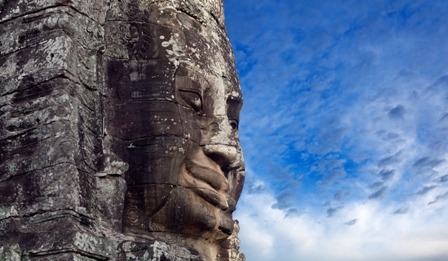
- The Bayon temple, easily combined with Kampong Khleang from Siem Reap.
Frequently asked questions
Frequently asked questions
Kampong Phluk is closer to Siem Reap and quicker to visit, but also more crowded. Kampong Khleang is more remote, larger, and offers a less touristy experience. If you have a full day, Kampong Khleang is generally preferable.
Yes. The village is inhabited year-round. In the dry season, you discover the true height of the stilts and can walk in part on foot. Only the floating section and the lake require a boat.
It is not compulsory but highly recommended. Without context on the lake cycle, fishing organisation and daily life, the visit becomes just a simple boat tour.
Half a day is enough for the village alone. Allow a full day if you extend the excursion onto the lake or to Prek Toal sanctuary.
Prepare your trip
Kampong Khleang fits naturally into an itinerary around Siem Reap, as a complement to the Angkor temples. To plan a bespoke tour including Tonlé Sap, consult our trips to Cambodge.
Interested in this visit?
We can include it in your personalised itinerary.