The Koh Ker Pyramid
The Koh Ker Pyramid
Ephemeral capital of the Khmer Empire between 928 and 944, Koh Ker preserves a 36 m pyramid and the Prasat Thom temple, isolated in the jungle northeast of Siem Reap.
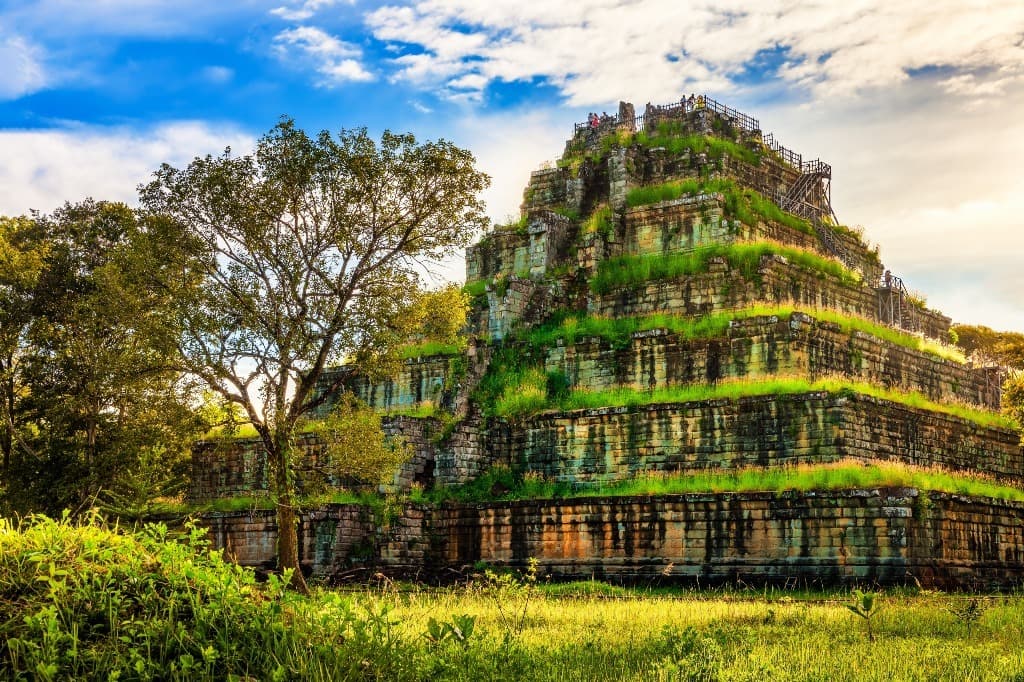
Former capital of the Khmer Empire between 928 and 944, Koh Ker — once named Chok Gargyar — houses one of the most singular structures of Khmer art: a stepped pyramid over 35 meters tall, isolated in the jungle of northern Cambodge, approximately 120 km northeast of Siem Reap. The site, long forgotten, contains 16 temples and places of interest marked by Hindu influence, including the pyramid itself (the prang) and the Prasat Thom temple.
Why visit the Koh Ker pyramid
Koh Ker offers a radically different experience from Angkor. The site is isolated, rarely visited, and vegetation has reclaimed the structures. The six-level pyramid, built on a square base of 60 meters per side, resembles no other Khmer monument: its architecture evokes ziggurats more than classical temple-mountains. For travelers interested in Khmer history beyond the most visited sites, Koh Ker usefully complements a visit to the Angkor temples by revealing a brief yet decisive chapter of the empire.
History of the site
King Jayavarman IV, originally from the region, was consecrated at Koh Ker in 928 following a victory over Angkor. He established his capital there and built the entire city in thirteen years, until 941, the year of his reign's end. Angkor became capital again in 944, and Koh Ker was gradually abandoned.
Since the capital's fall, the site has suffered centuries of looting: statues, lintels, and artifacts were stolen, and some monuments reduced to rubble. Many major works are now preserved in museums, notably in the Musée des arts asiatiques Guimet in Paris, which houses the statue of Jayavarman IV that once faced Yama in the antechamber of Prasat Thom.
What to see on the site
Prasat Thom
North of Koh Ker, the Prasat Thom site spans over 800 meters long and 150 meters wide. The temple, dedicated in 921 by Jayavarman IV to Shiva — member of the Hindu Trimurti symbolizing restorative destruction — is preceded by a monumental sanctuary, Prasat Kraham, which housed a dancing five-headed Shiva statue, 4 to 5 meters tall.
The temple itself stands in the middle of a pond, accessible by an earthen path. In its antechamber remain the remains of a bovine statue: long identified as Shiva on his mount Nandin, it actually represents Yama, god and judge of the dead in Hinduism, mounted on his buffalo. Shortly after 941, a statue of Jayavarman IV faced it, a mise-en-scène symbolizing the king's passage to the afterlife.
The main enclosure contains 21 brick sanctuaries dedicated to Shiva and two ancient libraries. The density of these structures contrasts with the open space leading to the pyramid.
The Prang
The six-level pyramid bears the name prang, a Thai term designating a stupa built atop a pyramidal structure. It rises to over 36 meters (sources vary between 35 and 40 m). According to archaeological hypotheses, a large linga — a sculpture of phallic appearance representing Shiva — once crowned the summit. It has since disappeared, and only lion decorations remain at the base of the walls. A wooden staircase allows visitors to reach the summit, from which the surrounding canopy stretches as far as the eye can see.
Practical information
- Visit duration: allow 2 to 3 hours to explore Prasat Thom, the pyramid, and the main annexed temples.
- Entrance fee: a ticket specific to the site is required (different from the Angkor Pass), at a modest rate.
- What to bring: water, closed-toe shoes (uneven terrain), sun protection, insect repellent.
- Safety: stay on marked trails. The region underwent demining operations, but unmanaged areas may remain sensitive.
When to visit
The dry season, from November to March, remains the most suitable: access tracks are passable and the heat manageable. From April to May, temperatures often exceed 35°C. During the rainy season (June to October), laterite roads can become difficult, but vegetation around the site is at its peak and visitor numbers very low.
How to get there
Koh Ker is located approximately 120 km northeast of Siem Reap, a 2.5 to 3-hour drive. Several options:
- Car with driver for the day from Siem Reap: the most common option, often combined with Beng Mealea on the way.
- Organized tour: most local agencies offer a day trip combining Beng Mealea and Koh Ker.
- Tuk-tuk: not recommended due to distance and road conditions.
The road is now largely paved, though the final section may remain uneven depending on the season.
What to combine in the region
- Beng Mealea: temple engulfed by jungle, located on the road between Siem Reap and Koh Ker.
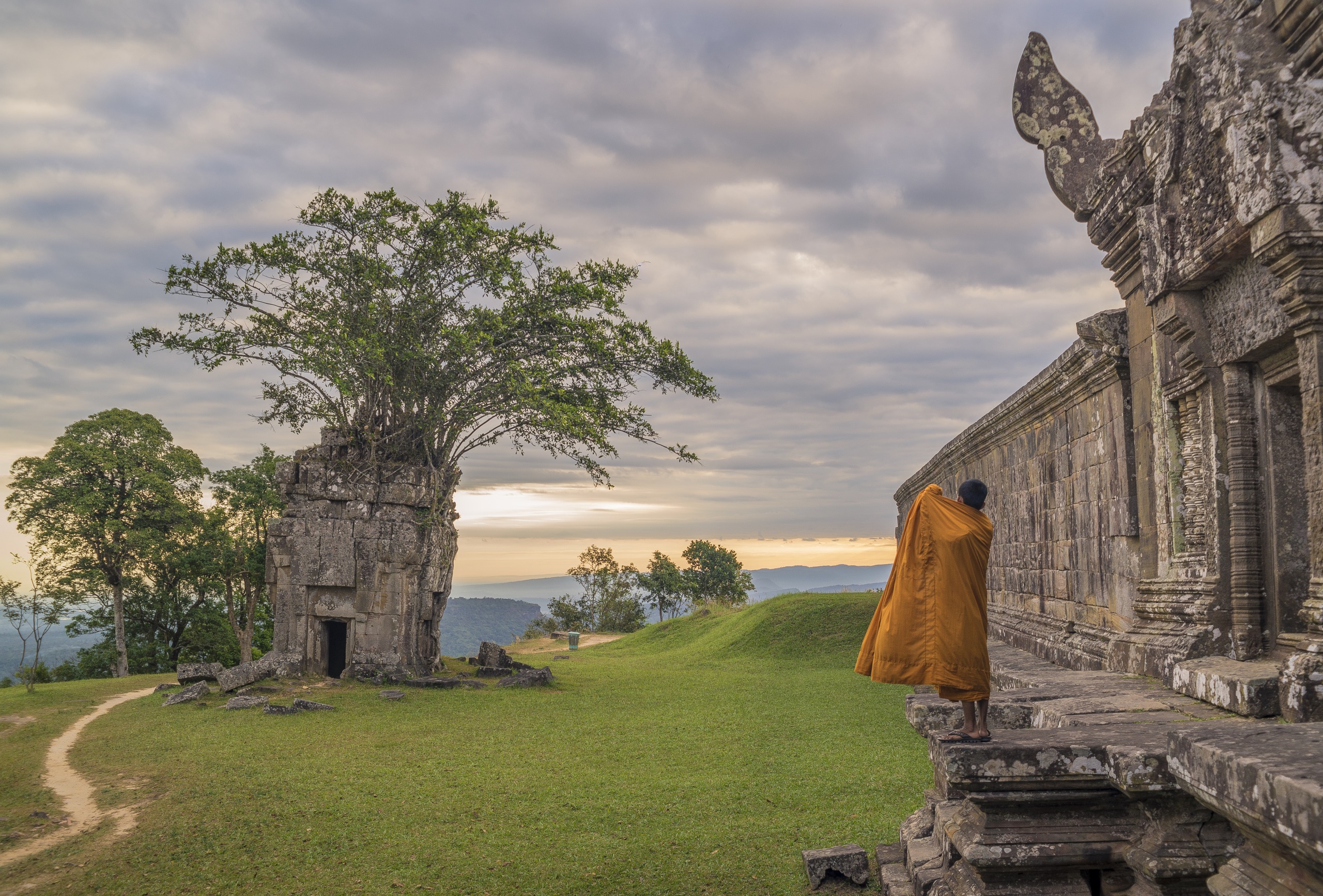
- Preah Vihear: Khmer sanctuary perched on the Thai border, approximately 3 hours' drive north.
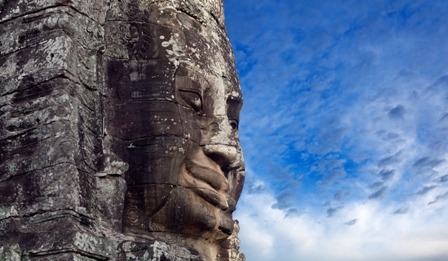
- The Bayon temple and the Angkor complex, in Siem Reap.
- Siem Reap, the ideal logistical base for exploring Khmer sites.
Frequently asked questions
Frequently asked questions
Plan your trip
Koh Ker naturally fits into an itinerary devoted to Khmer heritage, as a complement to Angkor and Beng Mealea. To build a tailor-made itinerary including this exceptional site, explore our journeys in Cambodge.
Interested in this visit?
We can include it in your personalised itinerary.