Lolei Temple
Lolei Temple
Built in 893 by Yasovarman I in the center of the Indratataka baray, Lolei marks the transition between Hariharalaya and Angkor. Four towers dedicated to the royal family.
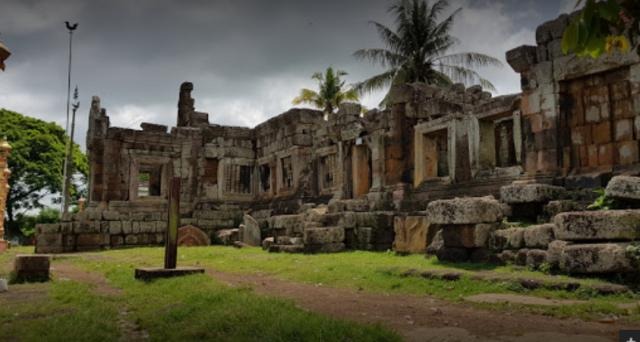
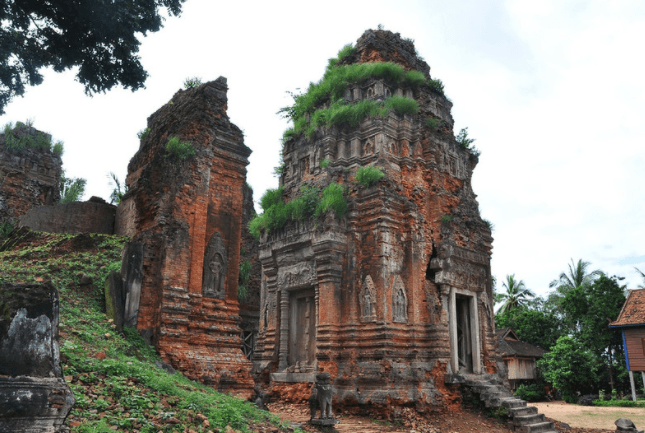
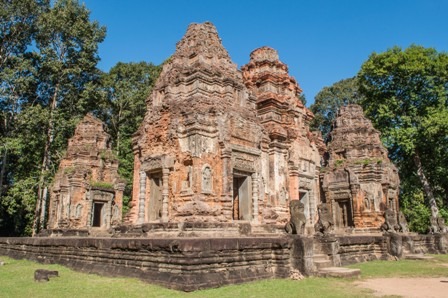
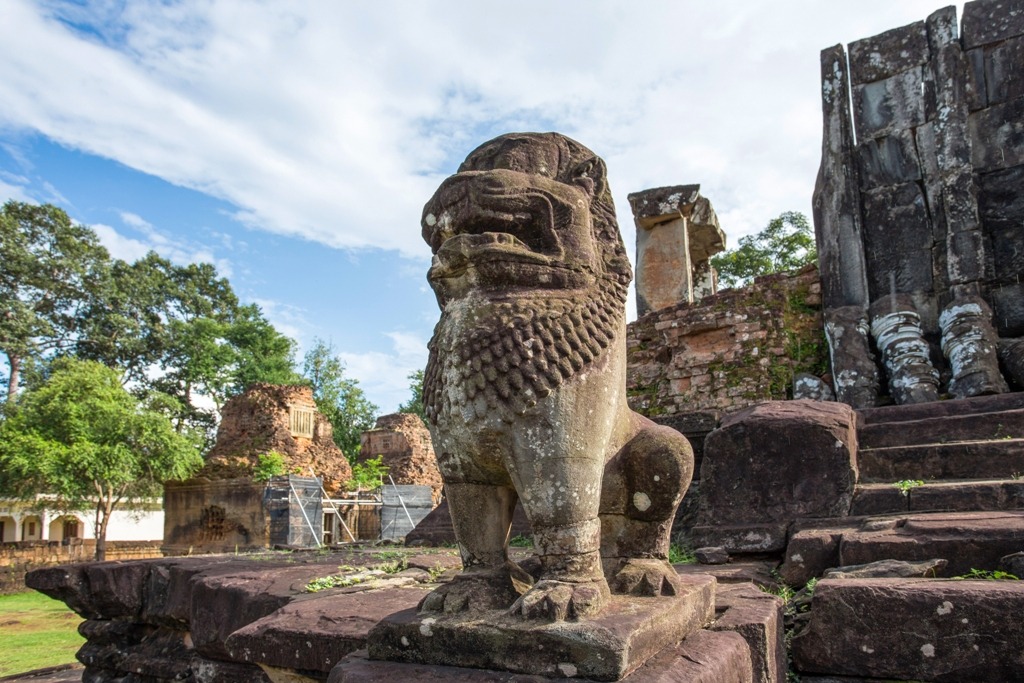
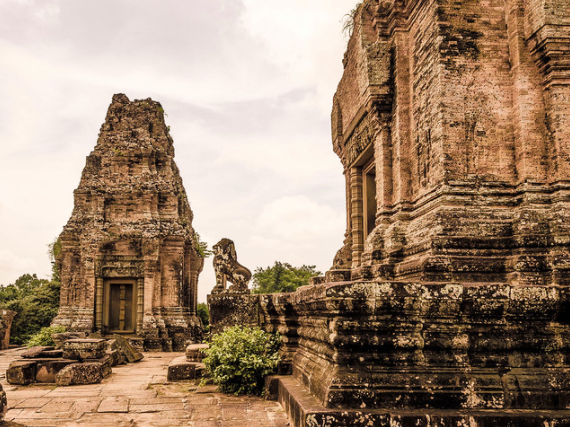
Lolei Temple stands at Roluos, on the site of the former capital Hariharalaya, about fifteen kilometers southeast of Siem Reap. Built in 893 by King Yasovarman I, it was the first Khmer temple constructed in the middle of a baray—a vast water reservoir symbolizing the primordial ocean surrounding Mount Meru in Hindu cosmology. Today, its four reddish-brick towers, often buttressed by metal support structures, tell of a pivotal moment in Khmer history.
Why Visit Lolei
Lolei is not the most spectacular of Angkorian temples, but its significance lies elsewhere. It marks the transition between two capitals of the Khmer empire: Hariharalaya, founded by Jayavarman II in the early ninth century, and Yasodharapura, which would become Angkor. The finely carved lintels here rank among the best preserved of the Roluos group, and the active pagoda Wat Lolei, adjoining the towers, adds a living religious dimension to the site. Visitor numbers remain modest compared to the great temples of Angkor, allowing for a more leisurely visit.
History of the Temple
To understand Lolei, one must go back to 802, when Jayavarman II, known as the Chakravartin ("universal monarch"), proclaimed the independence of the Khmer people from Javanese suzerainty—an episode whose exact circumstances remain debated by historians—and founded the Khmer empire. His first capital, Hariharalaya, was established at the present-day Roluos site.
Nearly a century later, King Indravarman I built two great brick sanctuaries there: Preah Ko around 879, then the temple-mountain of Bakong. In 889, shortly before his death, he had an immense reservoir dug, the Indratataka baray.
His son Yasovarman I ascended the throne and launched, in 893, the construction of Lolei in the very center of this paternal baray. The sovereign—credited with the gradual transition to Khmer script from Sanskrit—dedicated the sanctuary to Shiva and to his own family. Shortly after, he moved the capital northwest, to the site of present-day Angkor Thom, naming it Yasodharapura. His first State temple there would be Phnom Bakheng. The Khmer empire would endure for more than six centuries.
What to See On-Site
The Four Towers and Their Family Symbolism
The temple features four brick towers arranged in a staggered pattern on a platform. Yasovarman I dedicated them to his royal family:
- the two largest towers represent his grandparents;
- the two smaller ones, his parents;
- the front towers represent the male line, those at the rear, the female line.
This arrangement makes Lolei as much a dynastic sanctuary as a religious one.
The Sculpted Lintels
The sandstone lintels above the false doors rank among the best preserved elements. One can recognize nagas (mythical serpents) and the god Indra riding his mount, the three-headed elephant Airavata. The Sanskrit inscriptions carved on the door jambs are equally remarkable.
The Dry Baray and Wat Lolei
The Indratataka reservoir, which once surrounded the temple, has been dry for centuries: access to the towers is therefore on foot, across dry land. Just beside it stands Wat Lolei pagoda, a Buddhist monastery built much later and still active. Monks in saffron robes and a village school coexist here with the Hindu ruins.
Practical Information
- Ticket: admission is included in the Angkor pass (1, 3, or 7 days), to be purchased at Angkor's central ticketing office before heading to Roluos.
- Duration of visit: allow 30 to 45 minutes for Lolei alone, 2 to 3 hours for the entire Roluos group.
- Best time: early morning or late afternoon, when oblique light plays on the red brick and the heat is more bearable.
- Dress code: shoulders and knees covered, the site remains a place of worship.
- Condition: the temple undergoes regular restoration campaigns; metal scaffolding is frequently present.
How to Get There
Lolei is located approximately 15 km southeast of Siem Reap, in the Roluos temple group, along National Road 6 toward Phnom Penh. Several options:
- By tuk-tuk from Siem Reap: 30 to 40 minutes of travel, the most common way to visit Preah Ko, Bakong, and Lolei in sequence.
- By private car with driver: convenient for combining Roluos with other temples farther afield on the same day.
- By bicycle: feasible for active travelers, departing early to avoid the heat.
The Roluos group is typically visited in the order Preah Ko → Bakong → Lolei, or vice versa, over half a day.
Nearby Attractions
- Preah Ko: the oldest of the three temples in the group, famous for its six towers and Nandi bull guardians.
- Bakong: the first sandstone temple-mountain of the empire, prototype of the great Angkorian pyramids.
- Surrounding villages: the hamlets bordering the site offer opportunity for interaction with locals, often included in guided circuits.
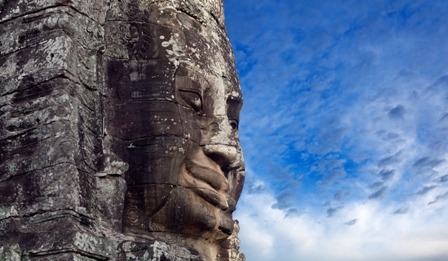
- Angkor Thom and the Bayon Temple: about twenty kilometers away, direct legacy of the capital relocation undertaken by Yasovarman I.
Frequently Asked Questions
Frequently asked questions
Lolei was built in 893 under the reign of Yasovarman I, making it one of the oldest temples in the Angkorian area, with over eleven centuries of history.
The Indratataka reservoir, dug in 889, has not been fed for centuries. The evolution of Angkor's hydraulic network and the gradual abandonment of royal works after the empire's fall left the baray empty. Access to Lolei is therefore across flat ground.
No. The standard Angkor pass (1, 3, or 7 days) covers all temples in the archaeological park, including the Roluos group.
Allow 30 to 45 minutes for Lolei alone. When including it in the Roluos circuit with Preah Ko and Bakong, plan for 2 to 3 hours total.
Yes, work sites generally keep access open to visitors. Metal structures support towers weakened by time, but circulation around the sanctuaries remains possible.
Planning Your Trip
To incorporate Lolei and the Roluos group into a complete itinerary through the Khmer realm, explore our Cambodia travel suggestions and have yourself accompanied by an English-speaking guide who can place these first foundations of the Angkorian empire in perspective.
Nearby
Interested in this visit?
We can include it in your personalised itinerary.