Nokor Bachey
Nokor Bachey
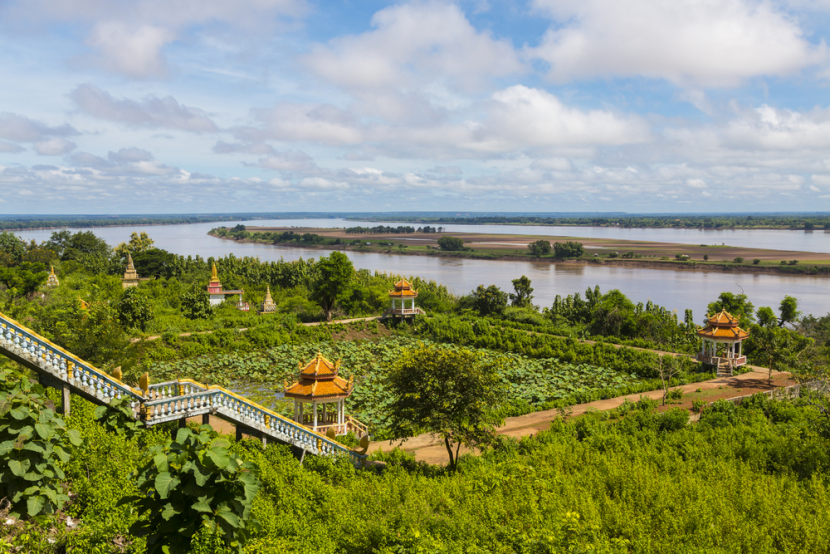
Located 2 km from Kampong Cham, Nokor Bachey combines a 12th-century Hindu temple dedicated to Vishnu with an active Buddhist pagoda.
The temple of Nokor Bachey stands 2 kilometers northwest of Kampong Cham, in eastern Cambodge. Built as a Hindu sanctuary in the mid-12th century, it is today integrated into an active Buddhist pagoda: sandstone and laterite ruins coexist with a modern shrine where the faithful come to pray, making the site's unique character.
Why visit Nokor Bachey
Three reasons make the visit compelling for those venturing beyond the Angkor circuit:
- Preserved Hindu iconography: Dvarapalas, lions, nagas and representations of Vishnu offer a complete reading of the 12th-century Khmer pantheon.
- A living religious site: the Buddhist pagoda installed within the ancient Hindu enclosure illustrates the spiritual layers of Cambodge.
- An uncrowded site: away from mass tourism, the visit unfolds at the pace of monks and Kampong Cham residents.
History of the temple
Nokor Bachey is believed to have been built in the mid-12th century during the reign of Suryavarman II, the sovereign who built Angkor Wat. Like his great imperial undertaking, the king dedicated this temple to the worship of Vishnu, the protective god of the Hindu triad (Trimurti), alongside Brahma the creator and Shiva the destroyer. Among the Khmers, Vishnu is also designated by the name Preah Norey.
Several sources, however, mention an older foundation, possibly predating the 12th century, later reworked under Suryavarman II: archaeological research remains incomplete. Over the centuries, the site was largely damaged, then reinvested by the Buddhist community, which built the pagoda Wat Nokor, still active today. This superimposition between ancient Hinduism and contemporary Theravada Buddhism gives the place its true value.
What to see on site
The guardians of the gates
Four structures form the temple. At the entrance, two Dvarapalas, or gate guardians, frame the passage. They always go in pairs: the one on the left represents benevolence, the one on the right its malevolent counterpart. This duality is characteristic of Khmer iconography.
Lions and nagas
Along the same line are deployed six lion statues, three on each side, in strict symmetry. Their position adjacent to the pathway is typical of the 12th century. They protect the site against evil spirits. Behind them watch over eight nagas, these multi-headed serpents considered in Hindu cosmology as guardians of the world's treasures.
The myth of Garuda and the nagas
The nagas maintain a conflictual relationship with Garuda, the mount of Vishnu. Depicted with an eagle's head, beak, wings and talons on a human body, Garuda is the half-brother of the nagas but their sworn enemy: they had imprisoned and mistreated his mother before he freed her. This narrative explains the simultaneous presence of both figures in the temple's iconography.
The two statues of Vishnu
Vishnu is represented twice on the site. The first statue shows him with four arms and four hands, topped by a conch, his most classical representation. The second, in the fourth structure, is rarer: Vishnu appears here with eight arms and interlaced hands, a posture seldom found in preserved Khmer statuary.
Practical information
- Duration of visit: allow 1 to 1.5 hours to tour the four structures and observe the active pagoda.
- Entrance fee: a modest ticket is requested at the entrance, priced locally.
- Dress code: shoulders and knees covered, as the site is an active Buddhist place of worship.
- Best time: the dry season, from November to February, offers the most pleasant conditions for an outdoor visit. Avoid the hottest hours in early afternoon.
How to get there
From the center of Kampong Cham, Nokor Bachey is located approximately 2 km to the northwest. Several options are available:
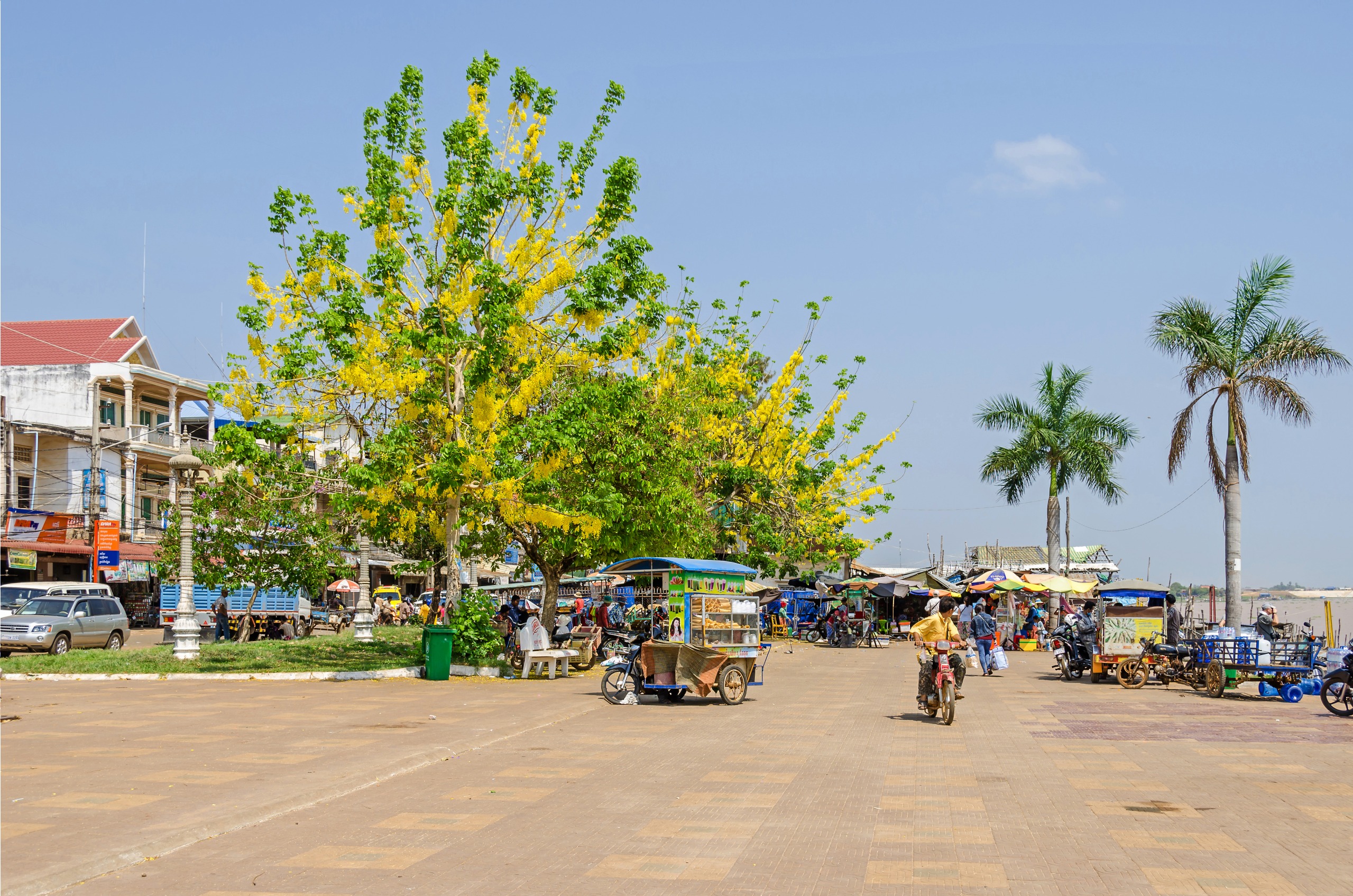
- Tuk-tuk: the simplest solution, negotiated as you go from the market or the Mekong waterfront, about ten minutes' travel.
- Bicycle: the road is flat, the journey easy for those wishing to explore the surroundings at their own pace.
- On foot: possible but demanding in the heat, best reserved for experienced visitors.
Kampong Cham itself is connected to Phnom Penh via National Road 7 (approximately 3 hours by bus).
What to see in the region
Nokor Bachey fits well into a Cambodian heritage itinerary. To continue exploring Khmer temples, several sites are worth the detour:
- Angkor Thom: the fortified royal city of King Jayavarman VII, near Siem Reap.
- Beng Mealea: temple engulfed by jungle, contemporary with Angkor Wat.
- Banteay Samre: well-preserved temple of the Angkor complex.
- Bakong: pyramid-temple of the Roluos group, among the oldest Khmer structures.
- Choeung Ek: Killing Fields memorial, near Phnom Penh, to understand recent history.
Preparing your trip
Nokor Bachey lends itself to a stop on the road between Phnom Penh and northeastern Cambodge, or as a complement to a classic Angkor circuit. To build a tailor-made itinerary incorporating Kampong Cham and Khmer sites, consult our Cambodge journeys.
Nearby

Interested in this visit?
We can include it in your personalised itinerary.