Phnom Sambok Hill
Phnom Sambok Hill
Ten kilometers north of Kratie, Phnom Sambok Hill brings together a monumental naga-guarded staircase, a hilltop pagoda and sweeping views over the Mekong countryside.
About ten kilometers north of Kratie, Phnom Sambok Hill combines a hilltop pagoda, a monumental staircase guarded by nagas and panoramic views over the Mekong countryside. Developed for local tourism during the Sangkum era (1953–1970), the site remains an easy, brief stop to fit into a day spent in Kratie, paired with a trip to observe the Irrawaddy dolphins.
Why visit Phnom Sambok
Phnom Sambok is not a monumental site like Angkor, yet it concentrates several points of interest within a compact area:
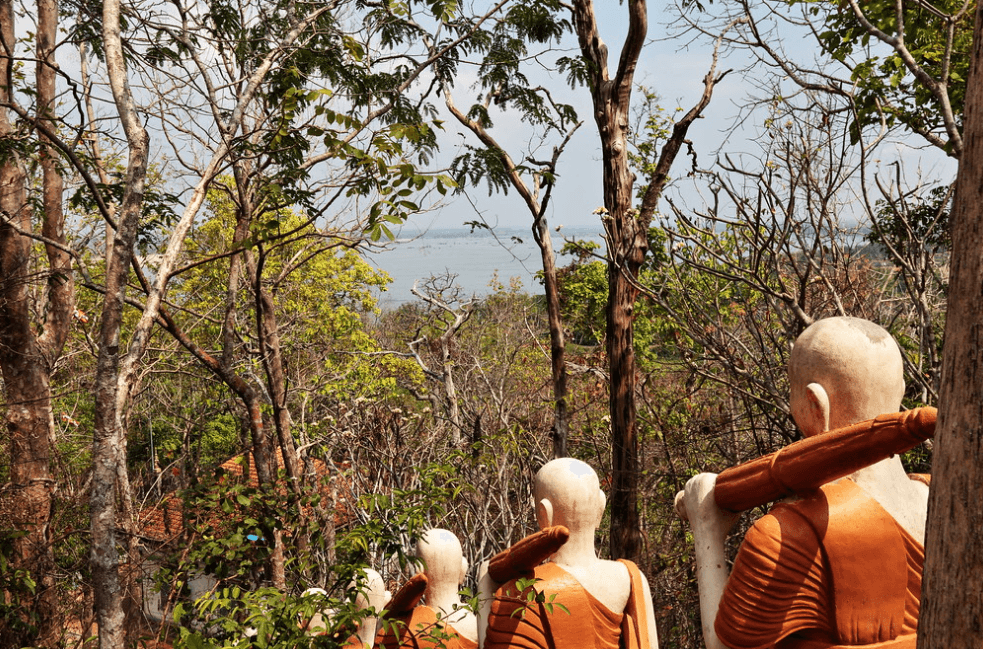
- A straight concrete staircase, decorated with two long pale-green nagas, lined with about fifty Buddhist monk statues aligned along the slope.
- An imposing Buddha statue at the summit, marking the pagoda entrance.
- Clear views across the surrounding rice fields and the Mekong, particularly striking at day's end.
- A wooded hillside frequented by numerous bird species, whose calls accompany the climb.
The entire visit takes less than two hours and pairs well with a day devoted to river activities around Kratie.
History and etymology
The site was developed during the Sangkum Reastr Niyum regime (1953–1970), a period when local tourism was encouraged across several provinces. The staircase, statues and current pagoda reflect this development strategy.
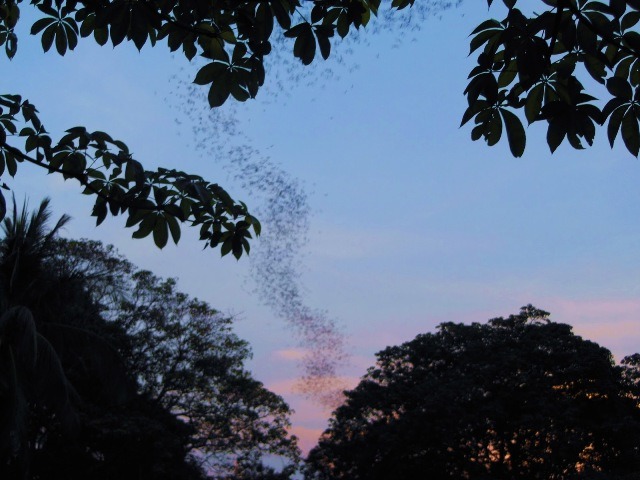
The hill's name draws from local oral tradition. According to the story, inhabitants discovered a gold mine at the foot of the ridge. They then named the location kanleng sambo meas, "place rich in gold," an expression that became phnom sambo meas, "mountain rich in gold," and then simply Phnom Sambo, "mountain of riches." Over time, pronunciation shifted toward Phnom Sambok, meaning "mountain of bird nests"—a fitting name given the bird life that still populates the wooded hill.
What to see on site
The naga staircase
At the foot of the hill, an earthen path leads to the start of a straight concrete staircase, bordered on each side by two pale-green nagas that run its entire length. Along the right flank, about fifty Buddhist monk statues are lined up along the slope and extend beyond the foot of the staircase.
The summit pagoda
At the top, a large Buddha statue marks the pagoda entrance, aligned with the staircase axis. The building remains an active place of worship: visitors should wear covering clothing (shoulders and knees) and remove shoes before entering sacred spaces.
The ponds and vegetation
The hill conceals two ponds, one to the north and one to the south of the summit. The slopes are covered in dense vegetation where tropical flowers and plants flourish, ideal for bird-watching.
The panorama
From the summit, views extend across Kratie's countryside and the Mekong. The site suits a picnic break or sunset contemplation facing due west.
When to visit
Late afternoon is the most rewarding time: angled light enhances the statues, the heat subsides for the climb and the sunset unfolds from the summit. The dry season (November to April) remains more comfortable for the staircase ascent; during the rainy season, steps can be slippery.
Practical information
- Visit duration: allow 1 to 2 hours on site, depending on your pace and time spent at the summit.
- Difficulty: long staircase but no technical challenge; bring water.
- Dress code: covering clothing to enter the pagoda, closed-toe shoes for the earthen path at the hill's base.
- Entry fee: free or modest admission; donations welcome for the pagoda.
- Services: few facilities on site; bring water and snacks, especially for a sunset visit.
How to get there from Kratie
Phnom Sambok lies about ten kilometers north of Kratie, on the road running along the Mekong. Several options:
- Tuk-tuk: the most common option from Kratie's center, often combined with observing Irrawaddy dolphins at Kampi, further north.
- Bicycle or scooter: the paved road runs alongside the river and crosses countryside dotted with stilt houses; a pleasant journey outside peak heat hours.
- Private car with driver: convenient if the hill fits into a broader circuit around Kratie.
At the foot of the ridge, an earthen path leads to the staircase start.
What to combine in the region
The hill suits a half-day outing combined with Irrawaddy dolphin observation at Kampi, located on the same road north of Kratie. To deepen your discovery of eastern Cambodge, the coffee plantations of Mondulkiri offer a nature stop at altitude. For Khmer heritage, the Bayon Temple and the Terrace of Elephants at Angkor remain the highlights of a full itinerary.
Frequently asked questions
One to two hours are sufficient to climb the staircase, visit the hilltop pagoda and enjoy the panorama. Allow more time if you wish to watch the sunset.
The concrete staircase is long but presents no technical challenges. It remains accessible to anyone in reasonable physical condition. During the rainy season, steps can be slippery.
Yes, this is the most common arrangement. Both sites lie north of Kratie on the same road along the Mekong and combine easily into a half-day outing by tuk-tuk.
Yes. The pagoda is an active place of worship: shoulders and knees must be covered, and shoes removed before entering sacred areas.
Late afternoon is preferred for the light on the statues, cooler conditions for the climb and the sunset facing due west from the summit.
Plan your journey
Phnom Sambok fits naturally into an itinerary blending the Mekong, river wildlife and Khmer heritage. To build a custom route including Kratie, explore our travel ideas for Cambodge.
Interested in this visit?
We can include it in your personalised itinerary.