The Roluos Archaeological Complex
The Roluos Archaeological Complex
15 km from Siem Reap, Roluos brings together the remains of Hariharalaya, the first Angkorian capital. Its 9th-century temples announce the architecture of Angkor.
15 km east of Siem Reap, along National Route 6, the Roluos complex holds the remains of Hariharalaya, the first stable capital of the Khmer Angkorian Empire. Its temples, erected in the late 9th century, lay the foundation for the architecture that would flourish at Angkor.
Why Visit Roluos
Roluos is the chronological starting point of the Khmer temple circuit. Before Angkor Vat, before the Bayon temple, it is the Roluos sanctuaries that establish the codes: brick tower-sanctuary on sandstone platform, pyramidal temple-mountain, baray (ritual reservoir) and east-west alignment. Visiting Roluos means reading the first page of the Angkorian story.
The site remains far less crowded than the major temples of the Angkor park, allowing for a more peaceful visit. Archaeology enthusiasts will find finely sculpted lintels and stucco decorations still legible here, particularly at Preah Ko.
History: The First Angkorian Capital
Hariharalaya was founded by Jayavarman II in the early 9th century, marking the emergence of the unified Khmer Empire. But it was his successors who endowed the city with its major temples. Indravarman I (reign 877-889) launched the monumental program with Preah Ko in 879, then Bakong in 881. His son Yasovarman I completed Lolei in 893 before transferring the capital further north, toward the future site of Angkor.
The complex underwent several restoration campaigns in the 20th century. Bakong, particularly damaged, was reconstructed by French archaeologist Maurice Glaize between 1936 and 1943—ten years of anastylosis work that restored its pyramidal silhouette.
What to See on Site
Preah Ko (879)
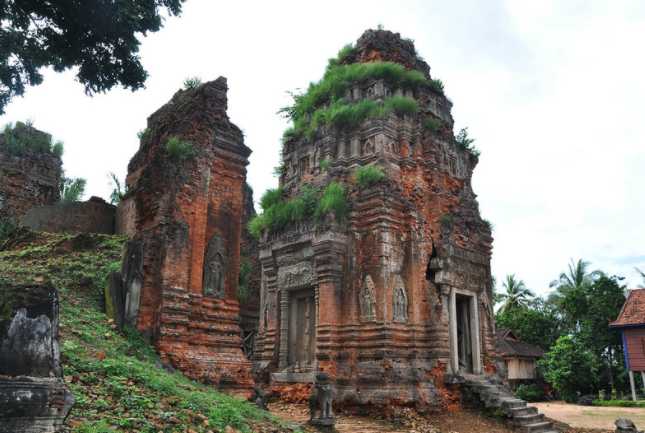
Inaugurated in 879 by Indravarman I, Preah Ko is dedicated to Shiva and to the memory of royal ancestors. Its name, meaning "the sacred ox," comes from the statues of Nandin (Shiva's bull mount) resting before the sanctuaries.
The temple consists of six brick towers arranged in two rows of three, on a sandstone platform oriented east. The three front towers honor the king's male ancestors: the central tower to Jayavarman II (the dynasty's founder), the left to Prithivindreshvara, his father, the right to Rudreshvara, his grandfather. The rear towers honor their wives. The sandstone lintels and false doors count among the finest testimonies of late pre-Angkorian sculpture.
Bakong (881)
Built in 881 under Indravarman I and dedicated to Shiva, Bakong is the first true Khmer temple-mountain. Its square base of 65 meters per side supports a five-tiered pyramid symbolizing Mount Meru, the cosmic axis of Hindu mythology.
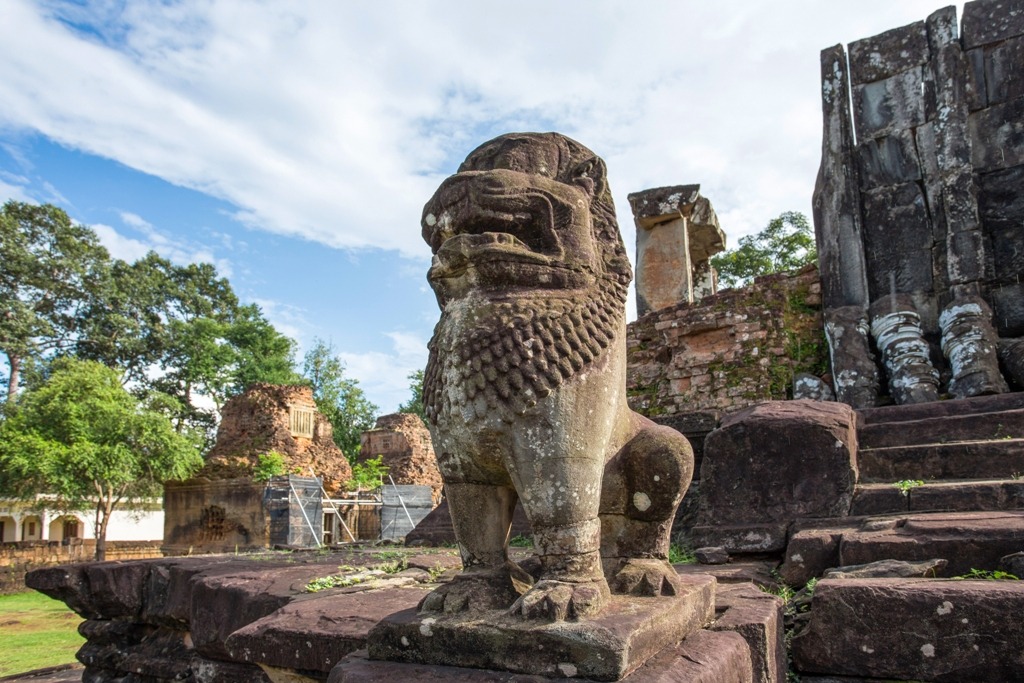
The sculptural decoration combines Nagas (protective serpents), garudas and yaksas. A monumental staircase guarded by lions leads to the summit. Four gopuras (entrance porches) pierce the enclosures at the cardinal points, and moats still surround the entire complex. The peripheral brick towers were once covered with colored plaster, traces of which remain visible. This very scheme—tiered pyramid, moats, east-facing orientation—would be reproduced on a grander scale at Angkor Vat three centuries later.
Lolei (893)
Commissioned by Yasovarman I in 889 in honor of his father Indravarman I, Lolei was completed in 893. Its originality lies in its location: it was built on an artificial island in the center of a baray (ritual reservoir) now dried up. It is the first Khmer temple built thus in the middle of water, a model later imitated by Neak Pean and the Eastern Mebon.
Four brick towers remain on a two-level foundation, in poor condition. An active pagoda occupies part of the site, making it a living place.
Prei Monti
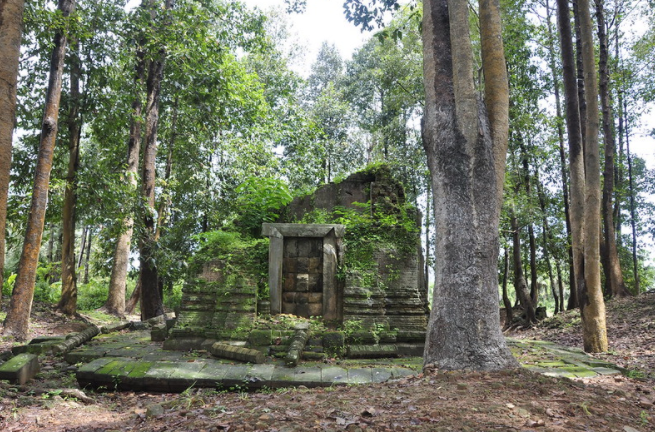
Likely built in the early 9th century and dedicated to Shiva, Prei Monti stands about 1 km south of Bakong. In ruins and overgrown with vegetation, it is rarely visited. Archaeology enthusiasts will find the calm of a raw site, without tourist amenities.
Practical Information
- Access to Roluos is included in the Angkor Pass, the combined ticket covering the entire Angkor archaeological park. It comes in 1, 3 or 7-day versions and is purchased at the ticketing center located at the northeast exit of Siem Reap, on the road to Angkor.
- Allow approximately 2 to 3 hours of visiting to explore Preah Ko, Bakong and Lolei at a leisurely pace. A half-day is comfortable from Siem Reap, including transfers.
- The site opens early in the morning and closes late afternoon. A morning visit offers soft light and reduced crowds.
- Bring water, a hat and clothing covering shoulders and knees, particularly for Lolei which houses an active pagoda.
When to Go
The dry season, from November to March, offers the most pleasant conditions: clear skies, bearable temperatures and passable paths. April and May are very hot, with peaks exceeding 35°C. The rainy season, from June to October, transforms the surrounding vegetation into a picturesque green setting, but late-afternoon showers are frequent. The early morning hours remain the best time slot, regardless of season.
How to Get There
From Siem Reap, the tuk-tuk is the most widely used mode of transport: 30 to 40 minutes by National Route 6 toward Phnom Penh. Most drivers offer a half-day package including waiting time on site. Cycling is feasible for fit travelers (15 km flat) but sun exposure is intense. A private car with driver allows you to combine Roluos with other Angkor park sites in a single day.
Nearby Attractions
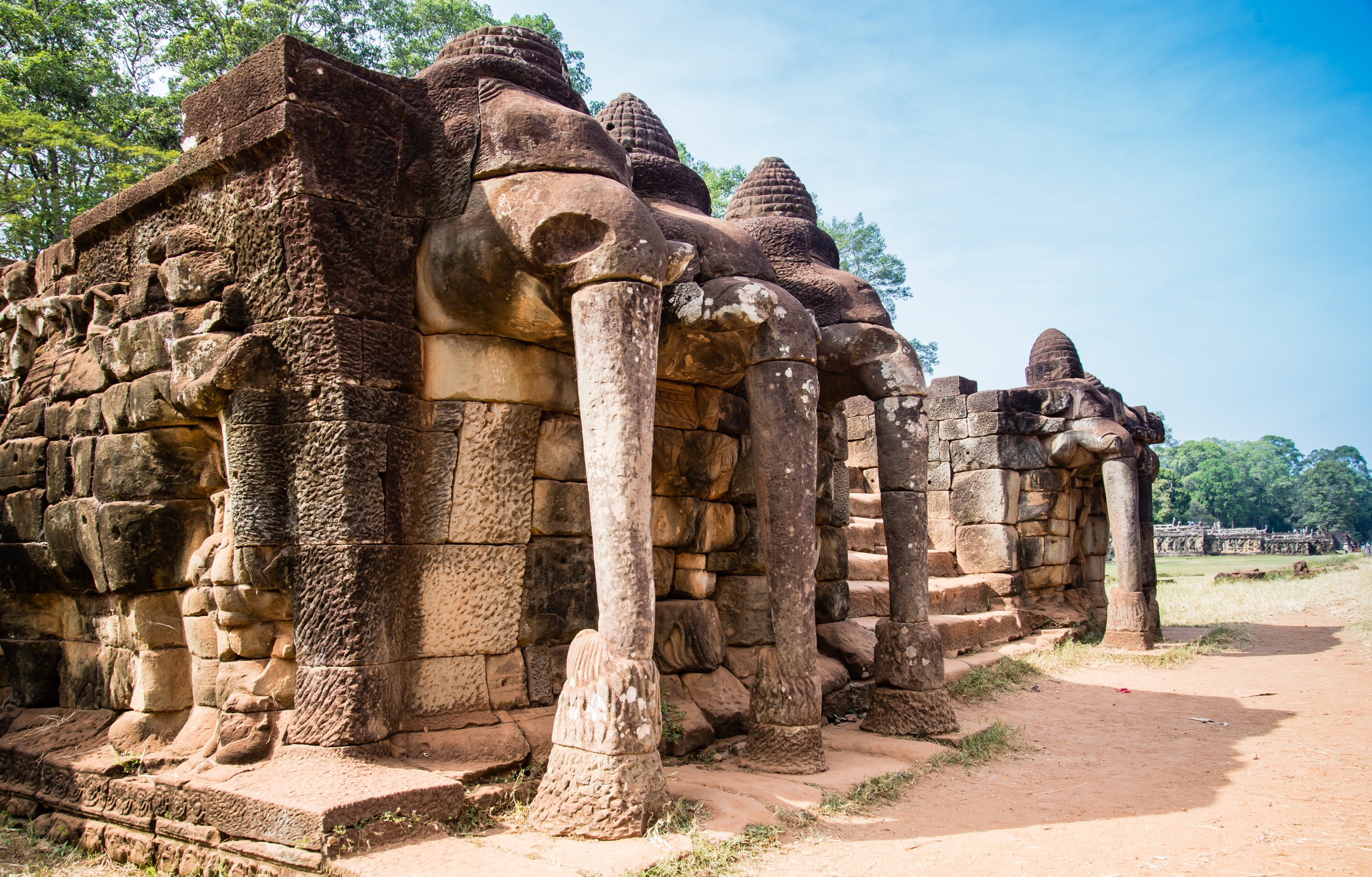
Roluos fits naturally into a larger Angkorian circuit. The main Angkor park, with the Bayon temple and the Terrace of Elephants, is just a few kilometers to the north. The town of Siem Reap itself offers markets, craft workshops and restaurants to end your day.
Frequently Asked Questions
Frequently asked questions
Plan Your Trip
Roluos fits naturally into a circuit devoted to Khmer temples and the history of the Angkorian Empire. To build a custom itinerary integrating Siem Reap, Angkor and other regions of the country, consult our Cambodge trips.
Nearby
Interested in this visit?
We can include it in your personalised itinerary.