The Terrace of the Elephants
The Terrace of the Elephants
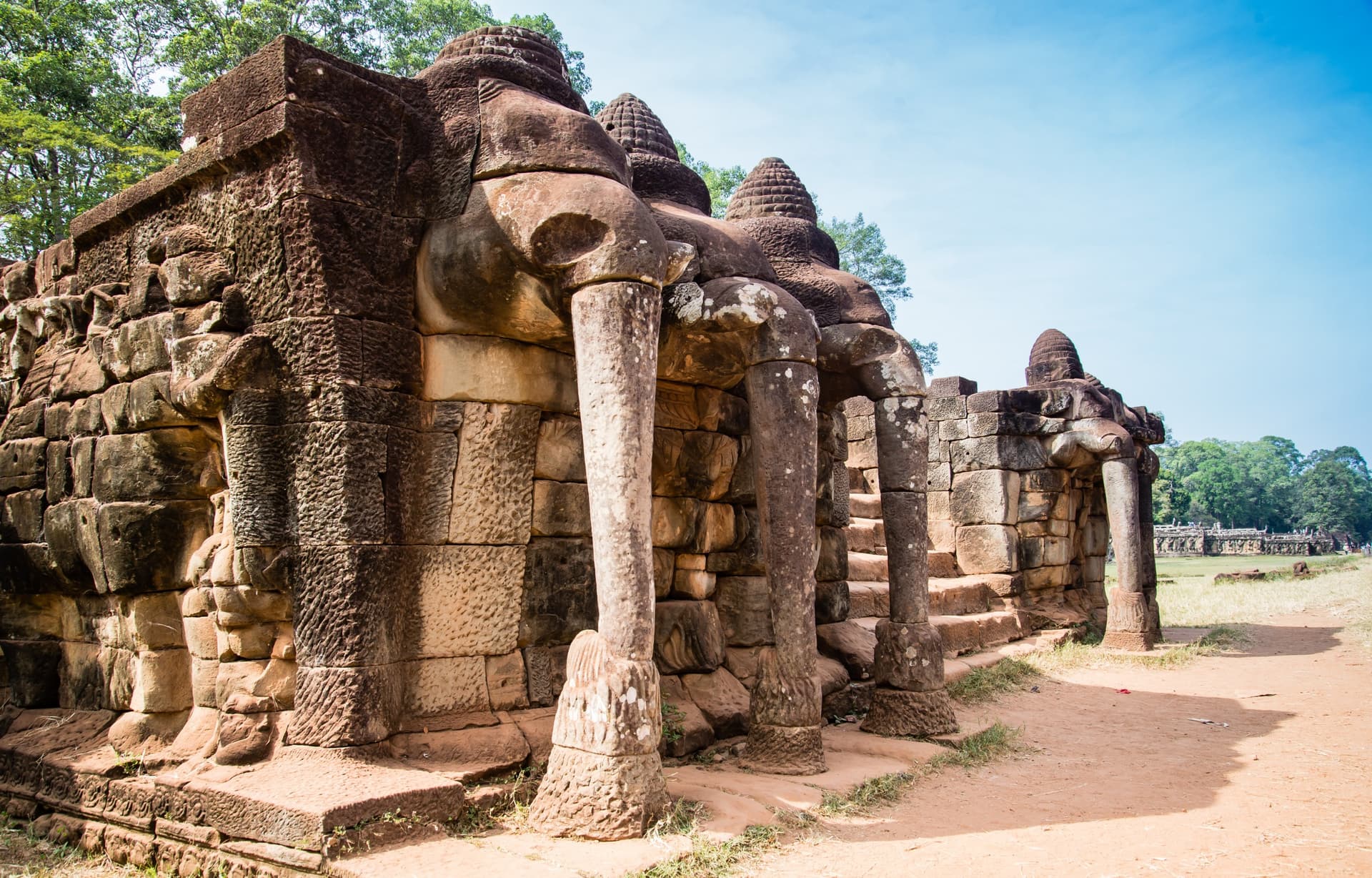
Royal grandstand of Jayavarman VII at the heart of Angkor Thom, the Terrace of the Elephants unfolds 300 meters of bas-reliefs and sculptures of war elephants.
The Terrace of the Elephants is a royal ceremonial terrace located at the heart of Angkor Thom, to the east, facing the Royal Palace. Built in the late 12th century under the reign of Jayavarman VII, it served as a grandstand for the sovereign to attend military parades, ceremonies, and the triumphant return of Khmer armies. Nearly 300 meters long, it is inscribed on the UNESCO World Heritage List alongside the entire Angkor Thom complex.
Why visit the Terrace of the Elephants
The Terrace of the Elephants holds several attractions for those exploring Angkor Thom:
- A 12th-century royal grandstand where Jayavarman VII received his victorious army returning from war against the Chams.
- Exceptional bas-reliefs spanning nearly 300 meters: war elephants, garudas, atlantean lions, Khmer dancers.
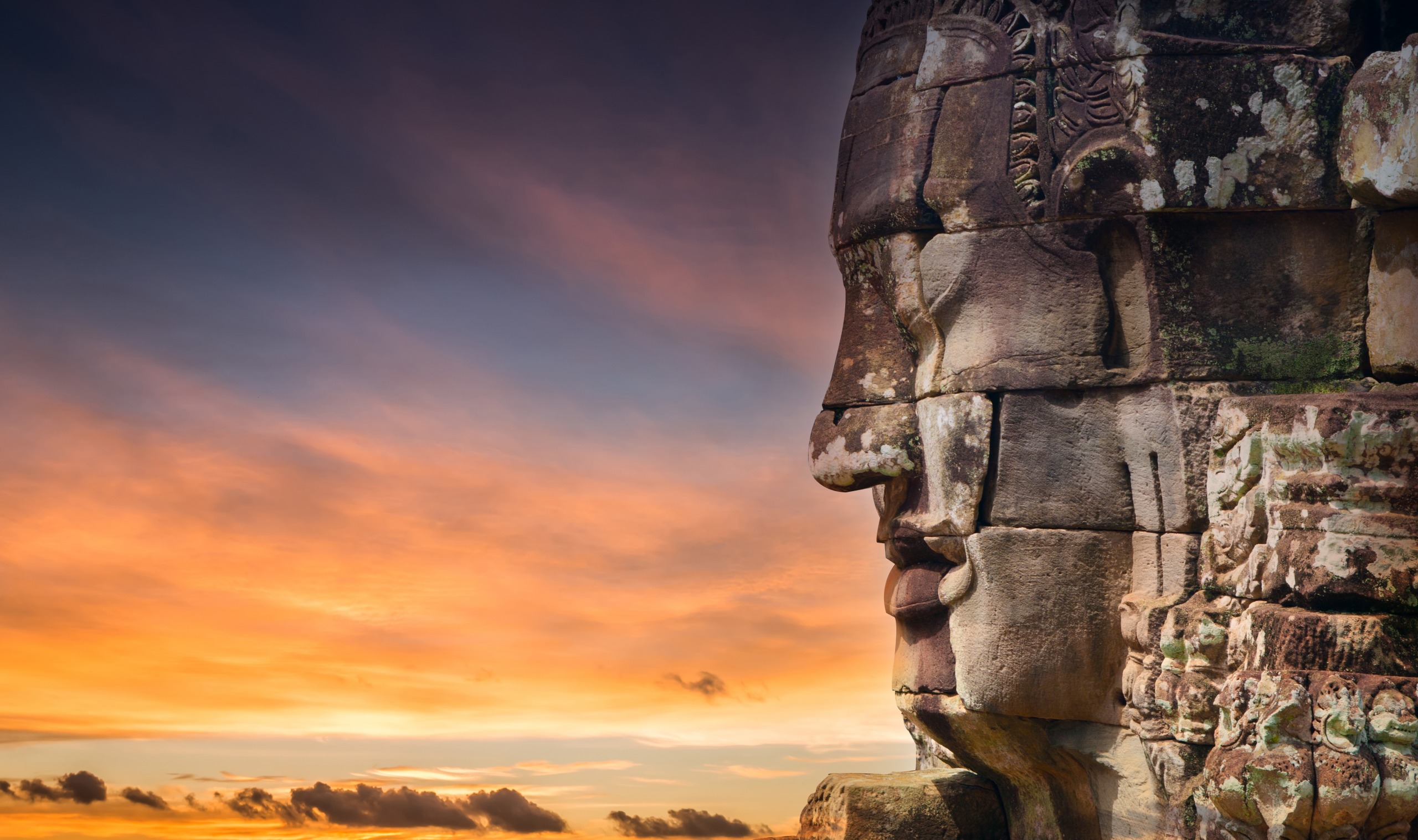
- A strategic location at the center of Angkor Thom, steps away from the Bayon, the Baphûon, and the Terrace of the Leper King.
- A vivid reading of classical Khmer art, with an iconographic program blending warfare, Hindu mythology, and Buddhism.
History and origins
The terrace was built in the late 12th century under Jayavarman VII, the great builder king of Angkor Thom and the Bayon. It extended the royal palace and served as a ceremonial grandstand during ceremonies, audiences, and military parades. The sovereign attended here, notably the return of Khmer armies following their victory against the Chams, enemies from present-day southern Vietnam.
In the 13th century, Chinese envoy Zhou Daguan stayed at Angkor and left one of the rare contemporary accounts of the site. He describes a wooden pavilion—now vanished—crowning the terrace, as well as mirrors framed in gold that adorned the whole structure. This light construction, made of perishable materials, explains the terrace's current appearance, with only the richly sculpted stone foundations remaining.
Along with the entire Angkor Thom complex, the Terrace of the Elephants has been inscribed on the UNESCO World Heritage List since 1992.
What to see on site
Architecture and dimensions
The terrace rests on a platform 3 to 5 meters high depending on the sections, with a base of approximately 4,500 m²: nearly 300 meters long by 15 meters wide. It is punctuated by five staircases—three central and one at each end—bordered by balustrades in the form of nagas, the mythical serpents that guard Khmer temples. The main staircase leads to a central grandstand adorned with elephant sculptures and a lotus-shaped throne, the king's privileged observation point.
Sculptures and bas-reliefs
The decorative program gives the terrace its name. On the sandstone walls that support it, a long procession of harnessed war elephants mounted by mahouts runs for nearly 300 meters. At the north corner, three elephant heads are notable for holding bouquets of lotus flowers in their trunks—one of the most recognizable compositions on the site.
Beyond the elephants, the decoration blends several registers:
- Garudas with outstretched wings, hybrid creatures from Hindu and Buddhist mythology, appearing to support the terrace.
- Atlantean lions and warrior spirits in supporting positions.
- A five-headed horse followed by warriors and Khmer dancers, a scene evoking Buddhist legends.
- Armed soldiers with raised weapons, witnesses to the military parades the terrace once hosted.
Practical information
- Access: included in the Angkor Pass (ticket valid for 1, 3, or 7 days), valid for all temples on the site.
- Hours: open from dawn to sunset, like all of Angkor Thom.
- Duration of visit: allow 30 to 45 minutes to explore the terrace, longer if you combine it with the nearby Terrace of the Leper King and Baphûon.
- Level: accessible to all, flat terrain, a few steps.
- Tip: bring water, a hat, and closed-toe shoes; the sculptures are best read in the raking light of late afternoon.
When to visit
The Terrace of the Elephants can be visited year-round, but comfort depends on the season.
- Dry season (November to February): the most pleasant period, with moderate temperatures and clear skies. It is also the high tourist season at Angkor.
- March to May: intense heat, sometimes over 35°C; visits recommended early in the morning.
- Rainy season (June to October): brief afternoon showers, lush vegetation, soft light, and fewer visitors.
Late afternoon, around 4 to 5 p.m., offers raking light that highlights the bas-reliefs and allows you to follow up with sunset over Angkor.
How to get there
The terrace is located within Angkor Thom, approximately 8 km north of central Siem Reap. Several options from the city:
- Tuk-tuk: the most common solution; allow a half-day or full day depending on your circuit through Angkor.
- Bicycle: flat route but long under the heat; best during the dry season and early morning.
- Car with driver: greater comfort for long days or groups.
Once at Angkor Thom, the terrace can be reached on foot from the Bayon (approximately 10 minutes), northwest of the royal plaza.
Nearby
The Terrace of the Elephants is part of a monumental complex that flows naturally into a continuous visit:
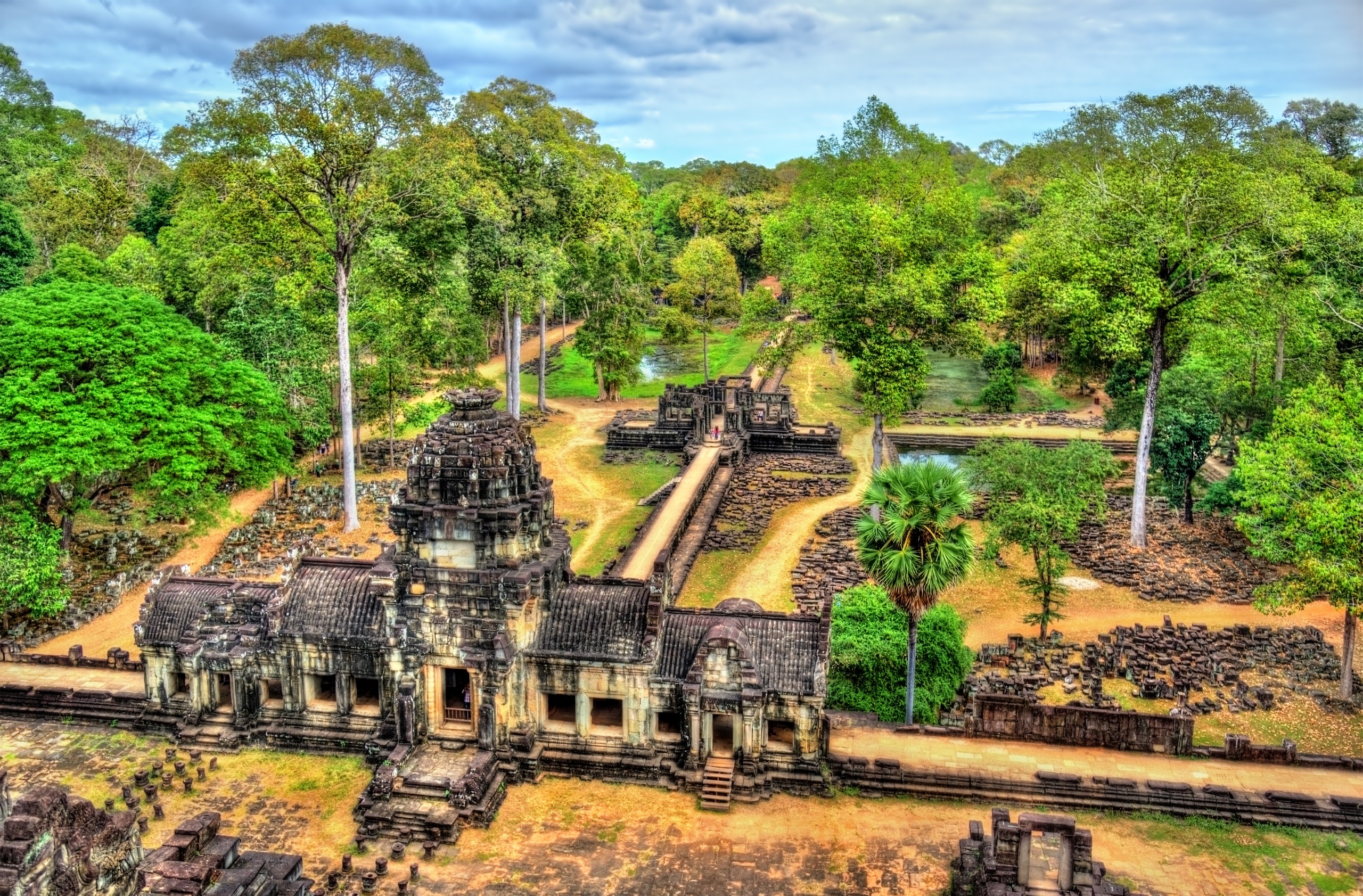
- Baphûon: 11th-century temple-mountain, just south of the Royal Palace.
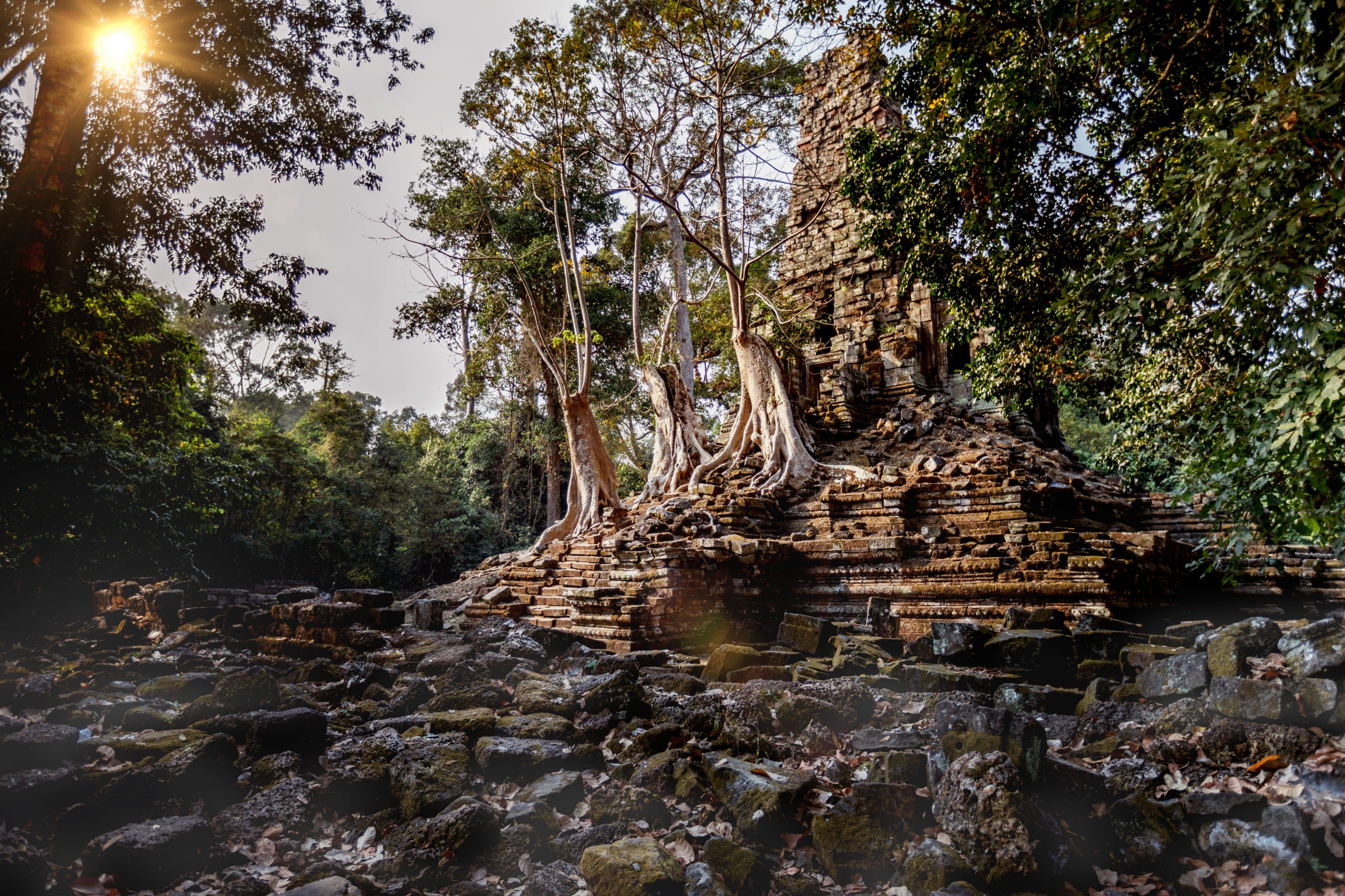
- Preah Palilay: small Buddhist sanctuary hidden in vegetation, north of the terrace.
- Angkor Wat: the flagship temple of the site, a few kilometers to the south.
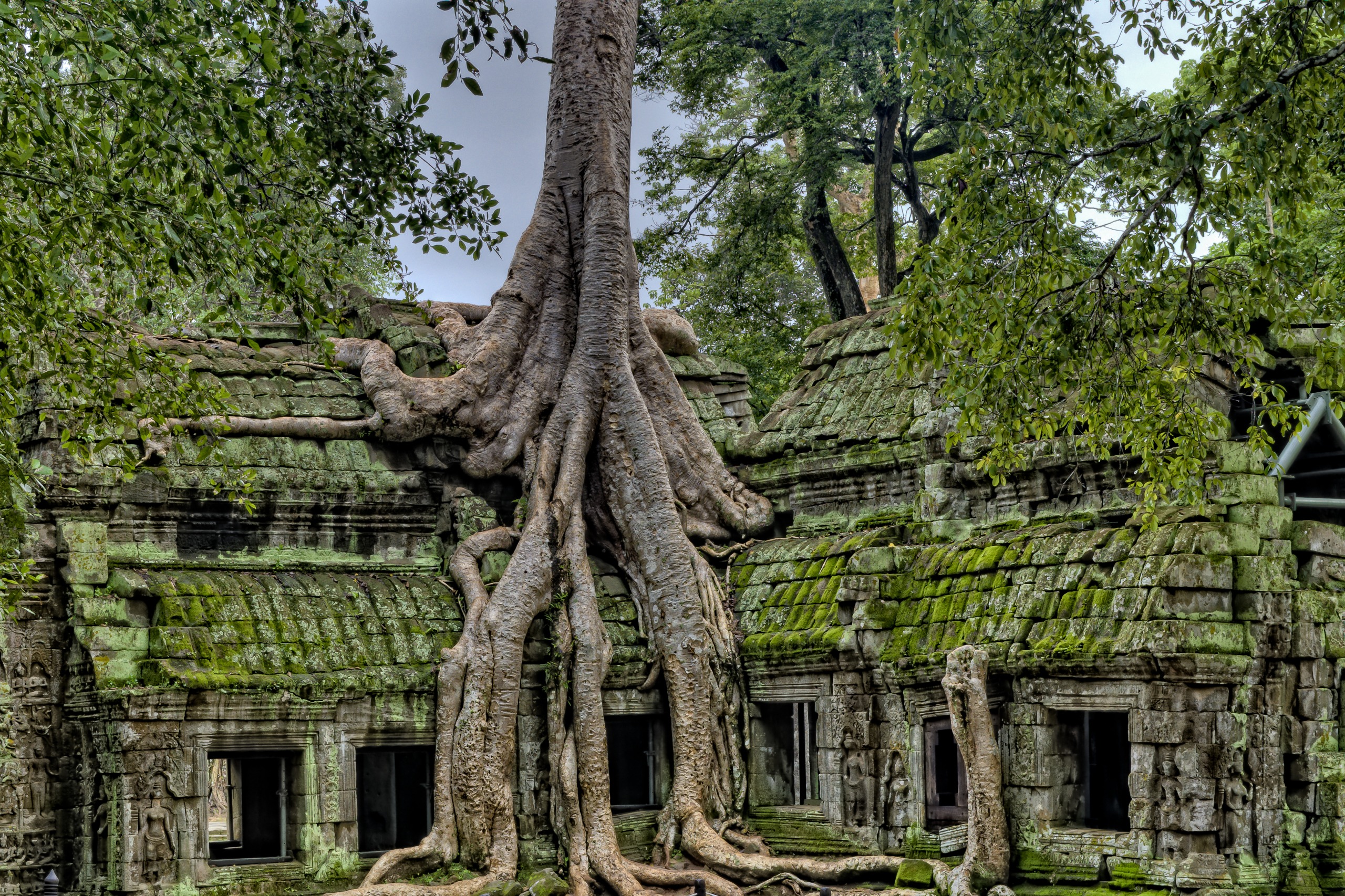
- Ta Prohm: temple overgrown by strangler figs, east of Angkor Thom.
- Pre Rup: temple-mountain renowned for sunset viewing, east of the site.
Frequently asked questions
Frequently asked questions
No. Access is included in the Angkor Pass, the single ticket covering all temples at Angkor, including Angkor Thom and its monuments.
Allow 30 to 45 minutes for the terrace alone. Combined with the Terrace of the Leper King, Baphûon, and Bayon, plan a half-day in this sector of Angkor Thom.
The name comes from the sculpted decoration running along the supporting walls: a long procession of harnessed war elephants mounted by mahouts, complemented by three elephant heads holding bouquets of lotus flowers in their trunks.
Late afternoon, around 4 to 5 p.m., offers raking light that highlights the relief of the sculptures. Early morning is an alternative to avoid crowds.
The base of the terrace can be explored on flat terrain and allows you to admire the bas-reliefs. Access to the top, however, requires climbing some stairs.
Planning your trip
The Terrace of the Elephants naturally fits into a circuit of at least two days at the Angkor site, ideally combined with Siem Reap, Tonlé Sap Lake, and Phnom Penh. To build a tailor-made itinerary and benefit from expert local advice, explore our trips to Cambodge.
Nearby
Interested in this visit?
We can include it in your personalised itinerary.