South Coast and Islands
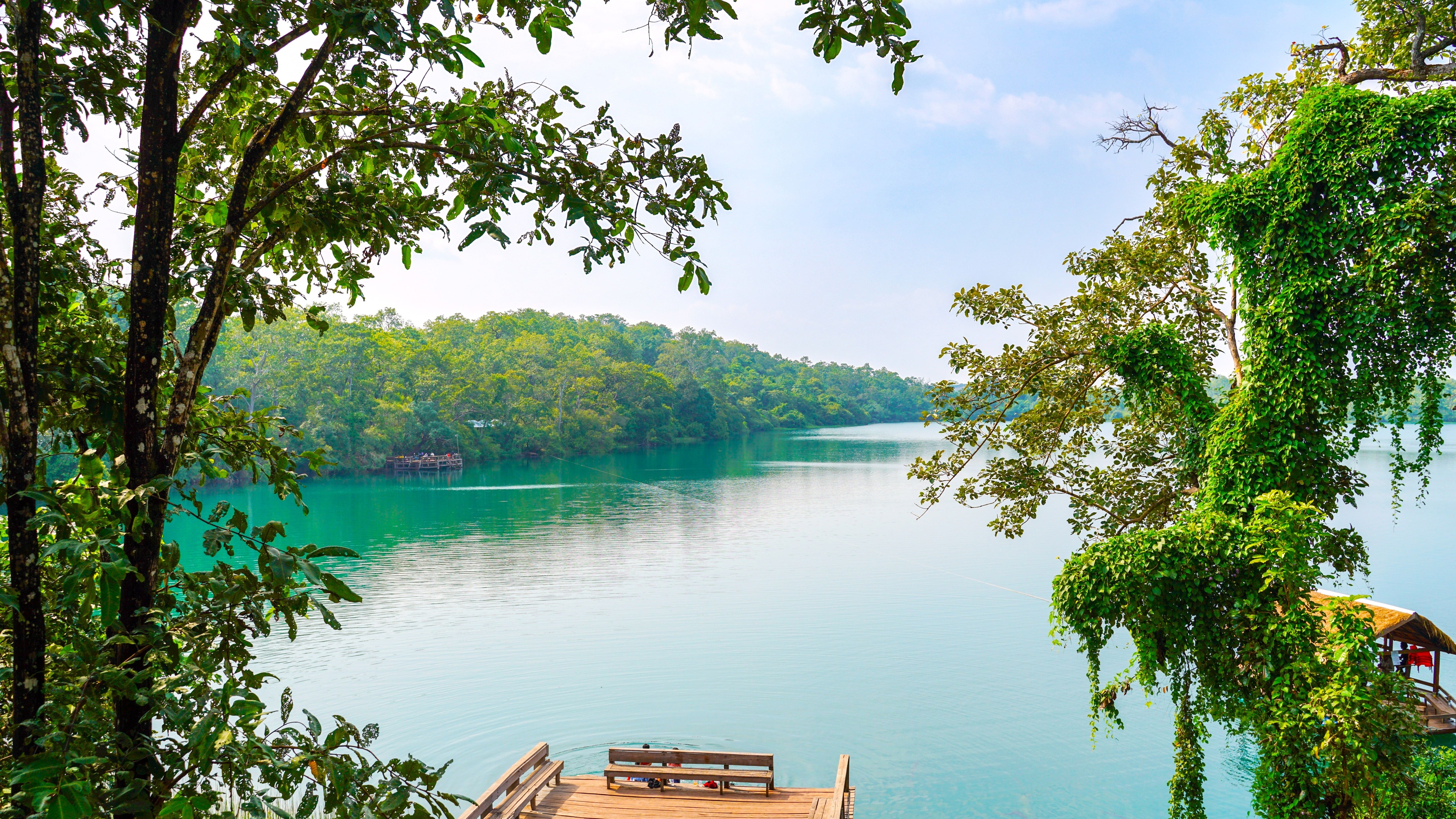
440 km of coastline facing the Gulf of Thailand, between Kampot's pepper plantations, Kep's modernist villas and the forested beaches of Koh Rong Samloem.
Cambodia's south coast stretches approximately 440 km along the Gulf of Thailand, between the Vietnamese border to the east and Koh Kong province to the west. From our local agency, this is the region we propose as a counterpoint to Angkor's temples and Phnom Penh: it shifts radically in pace, landscape and cuisine. Here, the coastal plain is punctuated by isolated massifs such as Bokor, which peaks at 1,081 metres, and the sea opens onto a string of still-sparsely-populated islands: Koh Rong, Koh Rong Samloem, Koh Thmei, Koh Ta Kiev.
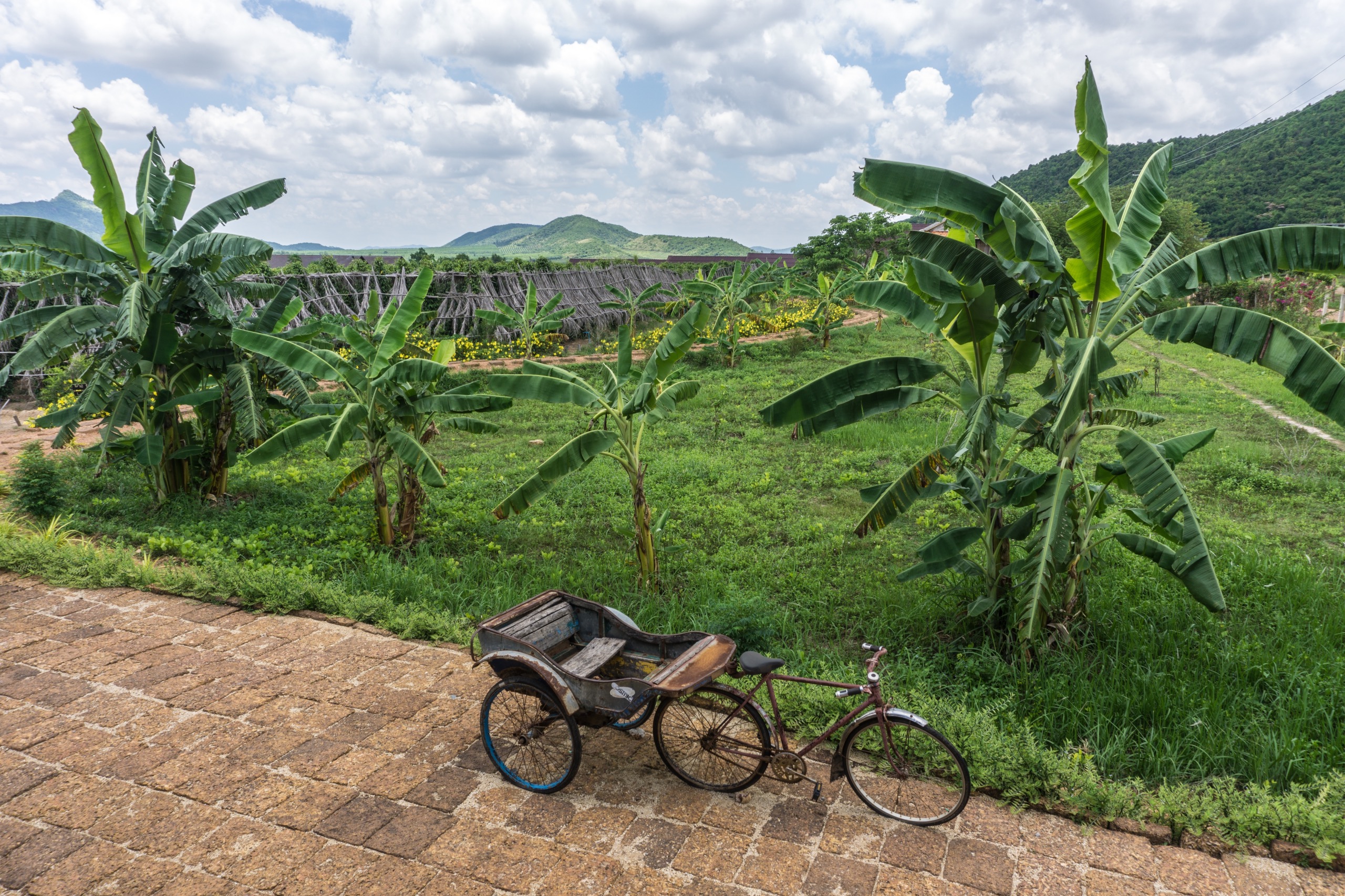
Kampot is our main anchor point. The town developed along the Praek Tuek Chhu river, downstream from Bokor National Park, and retains a pre-war urban fabric with its Sino-Khmer trading posts and converted colonial warehouses. It is the capital of Cambodian pepper, recognised as a Protected Designation of Origin since 2010; we organise plantation visits around Phnom Voar and Kampong Trach, where producers explain the three harvests (green, black and red pepper) and their drying processes. At the river mouth, the traditional salt marshes of Kampot and Kep still produce fleur de sel exported throughout the sub-region.
Kep, 25 km to the east, strikes a quieter note. The seaside resort founded in the 1900s by the French, revived in the 1960s under Sihanouk, retains some fifty modernist villas in ruins scattered through the vegetation. The crab market, by the sea, sells blue crabs caught in the bay each morning, cooked with fresh green peppercorns right nearby: this is the region's emblematic dish. Kep National Park, 50 km² of dry forest, can be explored on foot in 2 to 3 hours via a loop trail that climbs to a viewpoint overlooking the islands.
Further west, Sihanoukville remains the embarkation port for the islands, though the town itself has been disfigured by a wave of casino construction since 2017. We keep our stay there brief. Fast boats reach Koh Rong in 45 minutes and Koh Rong Samloem in 1 to 1.5 hours depending on weather. Koh Rong Samloem, smaller and roadless, concentrates most of the accommodation we select: Saracen Bay on the east coast for comfort, Lazy Beach or Sunset Beach on the west coast for wilder beaches accessible by forest trail in 20 to 40 minutes. Further afield still, Koh Thmei in the Ream archipelago and Koh Ta Kiev offer nights in simple bungalows, without 24-hour electricity.
The coastal hinterland deserves mention. The Cardamom Mountains, a forest massif of 4.4 million hectares straddling Koh Kong and Pursat, is home to Chong communities and still-preserved wildlife (gibbons, Asian elephants). We offer eco-lodge stays at Chi Phat or Tatai, with kayaking down the Tatai river and nights in forest hammocks. On the economic side, artisanal fishing, rice and pepper cultivation, and increasingly small durian plantations around Kampot structure daily life in the villages.
This region stands apart from the rest of Cambodia through its relationship with water (sea, rivers, salt marshes) and a cuisine of fresh produce: green peppercorn crab, grilled squid, fish amok steamed in a banana leaf. For the traveller, it is the place to slow down after the intensity of temples and the density of Phnom Penh.
To discover
Kampot protected designation pepper plantations. Visit pepper farms around Phnom Voar: explanation of three annual harvests, comparative tasting of ripe red pepper and sun-dried black pepper.
Green peppercorn crab in Kep. At the crab market by the sea, selection of live blue crab then immediate wok cooking with fresh green peppercorns picked that morning in the nearby hills.
West coast of Koh Rong Samloem. Walk across the island from Saracen Bay to Lazy Beach in 40 minutes via a forest trail, to reach a 700-metre beach with no roads or jetties.
Bokor National Park. Plateau at 1,081 metres accessible via a 32 km asphalt road from Kampot: remnants of the French hill station from the 1920s, abandoned casino and Sampov Pram pagoda.
Cardamom forests at Tatai. Kayak descent of the Tatai river to the waterfalls, night in a floating lodge, guided hike with a former hunter turned forest ranger.
When to go
We recommend the south coast between November and April. December to February are the most stable months: clear skies, temperatures between 24 and 30°C, calm sea with swells under 1 metre, making island crossings comfortable. March and April are warmer, up to 34-35°C during the day in Kampot, but remain dry and manageable. On the Bokor plateau, expect 4 to 6°C cooler than the coast and higher humidity; bring a fleece for evenings.
From May to October, the southwest monsoon sets in with rainfall exceeding 400 mm per month in August and September on the coast. Crossings to Koh Rong are sometimes suspended for 24 to 48 hours, and some west coast island accommodation closes from June to September. This period remains possible for Kampot and Kep, where showers are often brief and stormy late afternoon, but we advise against it for a beach stay centred on the islands.
Practical advice
We recommend 4 to 6 days for the region: 2 days on the Kampot-Kep pairing (pepper plantations, Bokor, crab market, Kep park) and 2 to 4 days on an island, depending on desired pace. Add 2 extra days to include the Cardamom Mountains at Tatai or Chi Phat. Access is by road from Phnom Penh: 3.5 to 4 hours to Kampot via NR3, 4.5 hours to Sihanoukville via the motorway opened in 2022. There is no regular domestic flight to the south coast; Sihanoukville airport operates at a slow pace.
The most coherent combination is Phnom Penh and the Mekong, then the South Coast, at the end of your itinerary, to finish on a restful note after Siem Reap and Angkor. For travellers with 15 days or more, the sequence Battambang and Tonle Sap, then Phnom Penh, then South Coast flows smoothly in road transfers. Comfort ranges from boutique hotels in town (Kampot, Kep) to simple stilted bungalows on the islands. This region suits contemplatives, families with children from age 6 thanks to short distances and safe swimming, and travellers who wish to end their Cambodian stay at a slower pace.