Mondulkiri and Ratanakiri
Northeast Cambodge, its hills at 800 meters, its Bunong and Tampuan peoples, its elephant sanctuaries and volcanic lake: another Cambodge, 7 hours from Phnom Penh.
Mondulkiri and Ratanakiri occupy the northeast corner of the country, against the Vietnamese and Laotian borders. It's a region we always present as a stark departure from the Cambodge of rice paddies and temples: here, the terrain rises to 800 meters, the soil turns red and lateritic, and forest replaces plains. The two provinces share the same ethnic foundation, with a majority of populations known as Khmer Loeu (Highlander Khmers), notably the Bunong in Mondulkiri and the Tampuan, Kreung, Jarai and Brao in Ratanakiri. These communities still largely live from slash-and-burn agriculture, resin collection, and increasingly from coffee and pepper production.
Sen Monorom, the capital of Mondulkiri, is a small highland town 6 to 7 hours' drive from Phnom Penh via National Road 76, now paved. Arrival is often surprising: evenings from December to February drop to 18°C, sometimes lower, and locals wear fleeces. Around the town, the Sea Forest and Phulung hills are crisscrossed with avocado plantations, coffee estates and subsistence crops. The Bou Sra waterfalls, an hour's trek to the east, cascade down in two tiers into a still-forested valley. It is also near Sen Monorom that the elephant sanctuaries are located, where animals withdrawn from forestry or tourism work are no longer ridden: Elephant Valley Project at Putrom and Mondulkiri Project, which operate in partnership with Bunong villages.
Ratanakiri, further north, requires an additional journey: allow a full day of driving from Sen Monorom, or a direct link from Phnom Penh of around 10 hours. Banlung, its capital, revolves around Yeak Laom lake, a perfectly circular volcanic crater 800 meters in diameter, 50 meters deep, considered sacred by the Tampuan who manage access to it. The Tonlé San River and the Tonlé Srepok, two major tributaries of the Mekong, flow through the province and feed waterfalls such as Ka Tieng and Cha Ong, accessible by motorbike from Banlung.
The local economy has changed greatly over the past fifteen years. Rubber cultivation, cashew plantations and Robusta coffee have replaced part of the primary forest, and land pressure on communal territories is a sensitive issue. Our guides, often from the villages themselves, address these questions without shying away: visiting the northeast also means understanding how these societies negotiate their place in contemporary Cambodge. The markets at Sen Monorom and Banlung, frequented in the morning by Bunong and Tampuan women selling vegetables, bamboo and tobacco, offer a concrete reading of this mosaic.
The cuisine also diverges from classic Khmer recipes. Grilled chicken with fresh Mondulkiri pepper, fermented bamboo soups, sticky black rice cooked in bamboo stems (kralan) and seasonal fruits (avocados, durians, mangosteens in May-June) make up the everyday diet. Mondulkiri coffee, roasted at Sen Monorom by a handful of small producers, deserves a moment's attention.
Why come here rather than elsewhere in Cambodge? Because it's the only region of the country where you sleep under a blanket, where you walk through the forest with a Bunong tracker, and where you meet societies whose language, funeral rites and relationship to the land differ profoundly from the khmer world of the plains. This cannot be visited in two days, and it cannot be done without a local English-speaking guide.
To discover
Mondulkiri elephant sanctuaries. A full day on foot with elephants withdrawn from work at Elephant Valley Project or Mondulkiri Project, in the forest around Putrom. The animals are neither ridden nor bathed on demand, and the experience is led by Bunong mahouts.
Yeak Laom volcanic lake. A circular crater 800 meters in diameter filled with green water, 5 kilometers from Banlung. The circuit on foot takes an hour and a half under the canopy, with a few bathing platforms managed by the Tampuan community.
Bou Sra waterfalls. Two successive cascades in the jungle east of Sen Monorom, accessible after an hour's trek. The lower fall, around twenty meters high, is reached by a trail descending into the gorge.
2-day trek through Bunong forest. Hike from a village such as Dak Dam or Pulung, overnight in hammock under mosquito netting, meals cooked over wood fire in bamboo segments. The guide explains medicinal plants and the practice of rotational slash-and-burn agriculture.
Animist cemeteries of Ratanakiri. In certain Tampuan and Kachok villages around Voen Sai, on the Tonlé San, you can still find wooden carved burial structures surrounded by effigies, accessible only with the village chief's permission.
When to go
The best period for the northeast spans November to February: rains finished, trails passable, daytime temperatures of 18 to 28°C and cool nights at altitude (sometimes 15°C at Sen Monorom in January). March and April remain dry but heat climbs to 33-35°C, and slash-and-burn fires thicken the air with persistent haze, hampering photography and hiking.
From May to October, the monsoon makes some Ratanakiri trails difficult, particularly access to remote villages around Voen Sai and secondary waterfalls. Landscapes are then verdant and waterfalls full, but expect days interrupted by heavy downpours (200 to 400 mm per month between July and September) and plan for a 4x4. We generally advise against the area between mid-June and mid-September for a first visit.
Practical advice
We recommend a minimum of 3 full days for Mondulkiri alone (Sen Monorom, one day with elephants, one waterfall, a Bunong village), and 5 to 6 days if adding Ratanakiri, due to the road link between the two provinces, long and tiring. Access is by road from Phnom Penh, with no operational airport for visitors: allow 6-7 hours to Sen Monorom, 10 hours to Banlung. A logical combination is to chain Phnom Penh and Mekong then Mondulkiri-Ratanakiri, before heading back to Siem Reap and Angkor by domestic flight or via Kratie on the Mekong.
Comfort remains modest: at Sen Monorom and Banlung, you'll find decent wooden lodges, sometimes with a pool, but no high-end hotels. Nights in villages or forest are spent in hammocks or on stilted huts. This region appeals to travelers curious about highland cultures, hikers and contemplatives ready to accept a few hours on rough tracks and simple food. It suits families with children at least 8-9 years old, capable of managing a day's driving and forest walking.
Also discover
Banlung
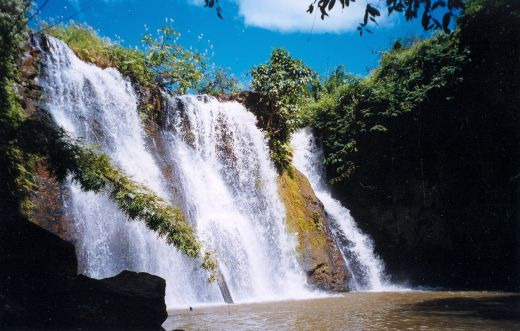
Capital of Ratanakiri province, Banlung opens access to waterfalls, volcanic lakes and Chunchiet villages of northeastern Cambodia. Complete guide.
Green Plateau Lodge
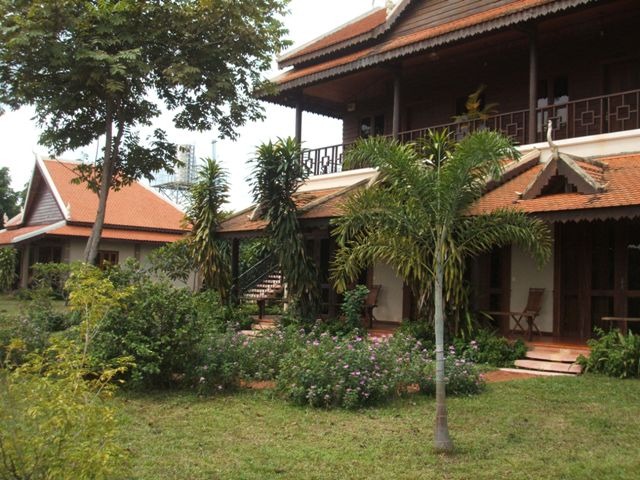
Traditional Khmer-style wooden lodge in Banlung, overlooking Boeung Kansaign Lake. A peaceful base for exploring the remote Ratanakiri Province.
Ratanakiri Paradise Hotel
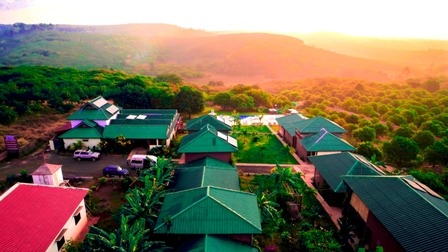
All-wood ecolodge powered by solar energy, a few kilometers from Banlung and the volcanic Yeak Laom Lake, in Ratanakiri Province.