Siem Reap and Angkor
Gateway to the Khmer temples and the Tonlé Sap, Siem Reap deserves at least three days to explore Angkor without rushing through it.
Siem Reap lies 314 km northwest of Phnom Penh, on the banks of the river bearing its name, about ten kilometers from Tonlé Sap Lake. The city was once a simple agricultural village before becoming, in the 1990s, the logistical hub for visiting the temples of Angkor. Today it is home to approximately 230,000 inhabitants, an international airport relocated in 2023 to Sotr Nikum (50 km east of the city center), and an economy dependent almost entirely on tourism and rice cultivation from the surrounding plains.
The Angkor archaeological park, inscribed as a UNESCO World Heritage Site since 1992, covers more than 400 km². It contains the remains of successive capitals of the Khmer Empire between the 9th and 15th centuries: Hariharalaya (present-day Roluos), Yashodharapura, and Angkor Thom. The celebrated Angkor Vat, built under Suryavarman II in the early 12th century, is just one temple among more than fifty major accessible sites. The great circuit (26 km) connects Preah Khan, Neak Pean, Ta Som, and Pre Rup; the small circuit (17 km) links Angkor Vat, the Bayon with its 216 faces, Ta Prohm wrapped in silk-cotton trees, and Banteay Kdei. Allow a minimum of three days to do justice to the entire complex.
Beyond the central zone, several sites warrant a dedicated trip. Banteay Srei, 32 km to the northeast, is a pink sandstone temple from the 10th century renowned for the refined carvings of its lintels. Further along the same road, Kbal Spean offers a 1.5 km forest walk to a river whose bed has been sculpted with lingas and Hindu divinities. Phnom Kulen, a sandstone plateau 48 km from the city, shelters the historical source of the Kingdom of Angkor and a waterfall frequented on weekends by Cambodian families.
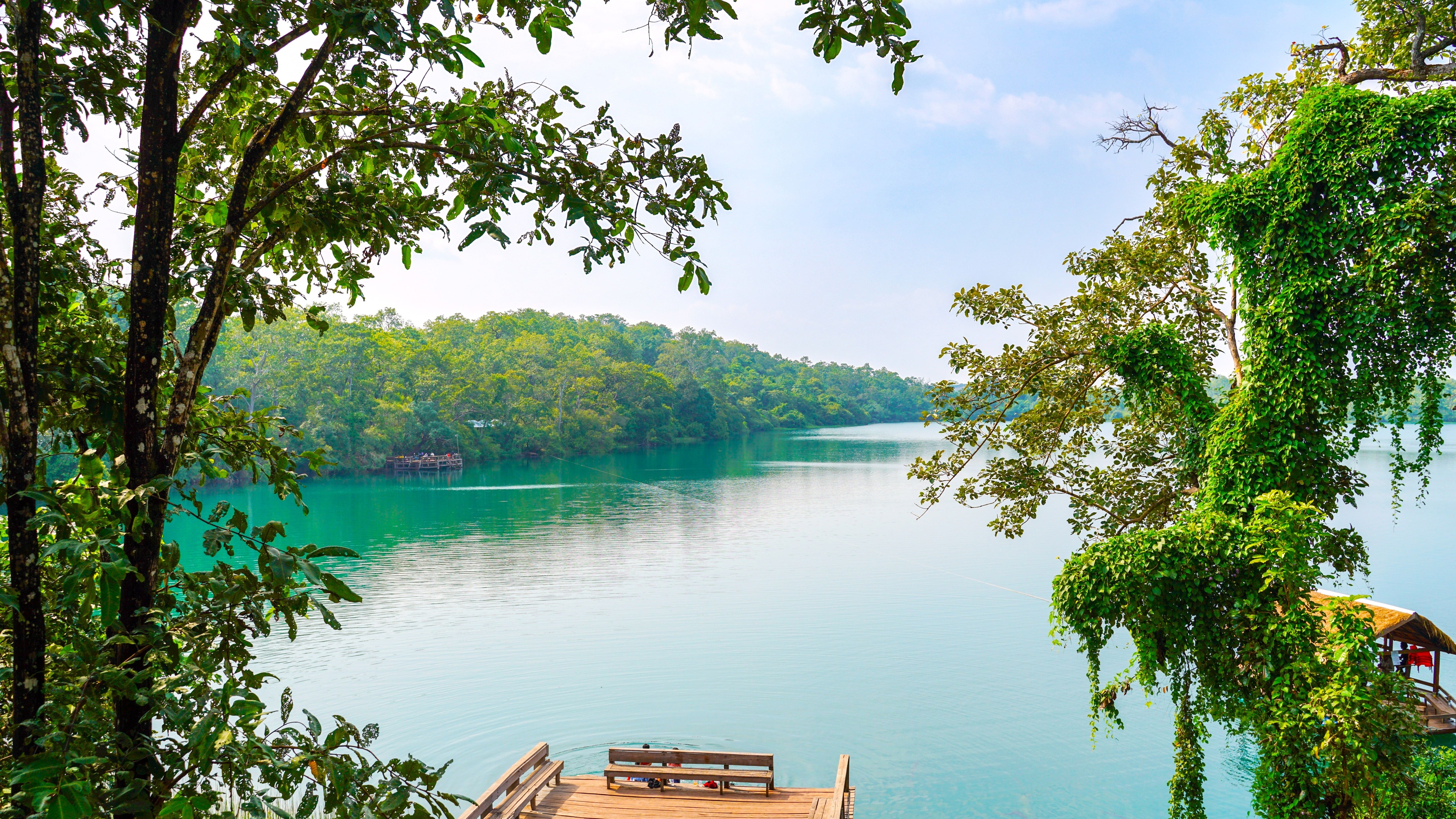
The city itself deserves more than Pub Street and the night market. The Wat Bo district, centered around the pagoda of the same name (18th century), preserves traditional stilt houses and a neighborhood pace of life. Psar Leu market, east of the center, is where locals do their shopping: dried fish from the Tonlé Sap, prahok (fermented fish paste), and num banh chok (rice noodles in fish curry) served at breakfast. The floating villages of Kompong Phluk, Mechrey, and Prek Toal, on the lake, are visited by dugout canoe depending on water levels.
On the crafts front, Artisans Angkor workshops perpetuate stone carving, lacquerware, and silk work; the silk farm in Puok, 16 km west, showcases the entire cycle, from mulberry tree to loom. For cuisine, several schools teach fish amok, lok lak, and kuy teav. Finally, the Bon Om Touk Festival (Water Festival) in November and the Khmer New Year (mid-April) punctuate the year and transform the city's atmosphere.
Our English-speaking team works with guides trained at the School of Fine Arts in Phnom Penh or by the APSARA Authority, which manages the site. This transforms how you read the bas-reliefs: the battle of Kurukshetra at Angkor Vat or the market scenes at the Bayon take on new depth when you understand their iconographic language.
Must-see experiences
Angkor Vat at sunrise. Arrive at 5am on the western causeway to watch the five towers emerge against the pink sky. Then spend two hours walking through the bas-relief galleries before the heat sets in.
Ta Prohm and the Bayon in the same morning. Silk-cotton tree roots embracing the walls of Ta Prohm, then the smiling faces of the Bayon at the heart of Angkor Thom. Two contrasting atmospheres just 4 km apart.
Banteay Srei and Kbal Spean. A day trip northeast: finely carved pink sandstone at the 10th-century temple, then a 45-minute forest walk to the lingas sculpted into the riverbed.
Kompong Phluk floating village. Houses on 8-meter-high stilts, floating school and pagoda. In the dry season (February-April), you walk between houses; in the wet season, you navigate by dugout canoe through flooded forests.
Cooking class and Psar Leu market. Shop for ingredients at the local market with a chef, then prepare fish amok steamed in a banana leaf. A tangible introduction to Khmer cuisine beyond the tourist menu.
When to visit
The best time to visit Siem Reap runs from November to February: clear skies, temperatures between 22°C at night and 30°C during the day, comfortable humidity. December and January are the busiest months—book hotels two to three months ahead. March and April remain dry but heat rises quickly: 35 to 38°C in the afternoon, sometimes 40°C just before the rains arrive. We shift temple visits to 5:30am and resume at 3:30pm.
From May to October, the monsoon brings often brief but intense rains, especially September-October (200 to 300 mm per month). The temples empty out, vegetation turns green again, Angkor Vat's moats fill and offer better reflections. Tonlé Sap Lake reaches its maximum level in October-November, the ideal time for floating villages. Conversely, in March-April, water recedes and some villages become inaccessible by boat.
Practical advice
We recommend a minimum of four nights on site: three temple days (small circuit, great circuit, Banteay Srei and Roluos) plus one day for the lake or a craft workshop. Five nights allow you to add Beng Mealea or Koh Ker (pyramid temple 120 km to the northeast, now on paved tracks). Siem Reap-Angkor airport (SAI) has direct flights from Bangkok, Singapore, Ho Chi Minh City, and Seoul. From Phnom Penh, allow 5.5 hours by road via Route 6 or 45 minutes on a domestic flight.
The most natural combination pairs with Phnom Penh and the Mekong at the start or end of your stay, and with Battambang and Tonlé Sap traveling by boat or road via the lake's northern shore. For a longer trip, extend to the south coast and islands for a few beach days, or to Mondulkiri and Ratanakiri for eastern forests. Accommodation in Siem Reap spans the full range, from family guesthouses to colonial boutique hotels. The region suits families with children from age 6-7 onwards (temples are visited in air-conditioned tuk-tuks), history and architecture enthusiasts, and contemplative travelers willing to return to the same temple at different times of day.