The History of the Khmer Rouge: A Measured Rise (Part 2)
From 1964 onwards, two years after taking control of the Cambodian Communist Party then named the Kampuchean Workers' Party, Saloth Sâr and his associates, many former members of the Paris Marxist Circle, were keenly aware of how weak the party's political influence was, largely due to its clandestine status and illegality in Cambodia.
From 1964 onwards, two years after taking control of the Cambodian Communist Party then named the Kampuchean Workers' Party, Saloth Sâr and his associates, many former members of the Paris Marxist Circle, were keenly aware of how the party's political weight remained fragile, largely due to its clandestine status and illegality in Cambodia. Party cadres thus decided first to retreat to the countryside, then to seek out international allies of substance.
On the ground, while propagating a revolutionary ideology marked by strong identity and anti-capitalist convictions, the Khmer Rouge learned to manage populations. This involved a hardening of security and repressive measures that would later become cornerstones of their governance.
Underground Development
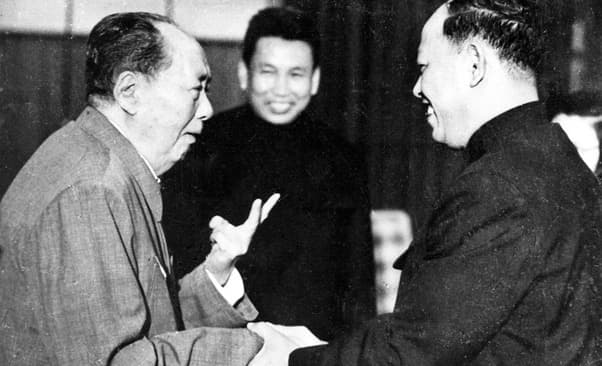
Since 1963, Khmer Rouge leaders had joined rural bastions during their exile, areas contested by Vietnamese forces. Yet their determination was to distance themselves from this tutelage, with Saloth Sâr viewing the Vietnamese as ultimately pro-Sihanouk. During this period, the party's secretary general, alongside the steering committee, convened to establish a line of conduct approving "all forms of struggle" against the Cambodian head of state's government. After settling in Hanoi between April 1965 and February 1966, the future Pol Pot, sensing Vietnamese reluctance to fully commit to his cause, decided to draw closer to Maoist China, which he viewed as ideologically aligned with his convictions. He then secretly renamed the Kampuchean Workers' Party the Kampuchean Communist Party (KCP). The deterioration of their regard for the Vietnamese, and this name change, had to remain confined to party members. Only the Centre, the Khmer Rouge's ruling core, was informed. Many Cambodians knew of communist activity in the country, but those who understood its exact structure and organization could be counted on one hand.
An event would amplify this secretive posture and confirm this was deliberate strategy. Norodom Sihanouk, questioning the leftward-leaning government he had opened to ideological diversity at the decade's start, threatened left-wing ministers Khieu Samphân, Hou Yuon, and Hu Nim with military court summons. The trio escaped the capital in 1967 and joined KCP bases, notably in the Cardamom Mountains. Several media outlets then presumed they had been killed by Sihanouk's men, and a sense of injustice took root among many young activists who organized demonstrations in Kampong Cham and Kandal to pay tribute to these "martyrs". The KCP seized the moment to publicly announce its existence for the first time and presented these men as "the three ghosts", the new leaders of the movement, to lend it legitimacy. Yet true power firmly rested in the hands of Saloth Sâr, Nuon Chea, and Son Sen. They promoted, at this time and only within the KCP, the term Angkar—the Organization.
Allies of Convenience
From that point forward, in Saloth Sâr's mind, it was time to move to action on the ground. The first Khmer Rouge uprisings began in January 1968, gradually joined by some 10,000 Cambodian villagers. From Kampot to Anlong Veng, from southwest to north, numerous guerrilla movements erupted, and those previously called Khmer Rouge became insurgents. The core group needed to expand to control more territory, and by year's end insurgents were reported in 12 of the country's 19 provinces. Ta Mok and So Phim were assigned respectively to the southwest and eastern zones. Both military commanders faced the scorched-earth policy orchestrated by Lon Nol, Norodom Sihanouk's new Prime Minister. These systematic destructions of resources and strategic points completely isolated these contested regions, where Khmer Rouge fighters had to wait long weeks or months for supplies to arrive. Resource scarcity raged on the ground, but behind the scenes the party's high-ranking cadre orchestrated their plan with precision.
Lon Nol, sympathetic to the United States, deposed Norodom Sihanouk as Cambodia's head of state on March 18, 1970. Determined to reclaim his position, Sihanouk traveled to Beijing and met with Phạm Văn Đồng, Prime Minister of communist North Vietnam, who urged him to ally with Saloth Sâr's Khmer Rouge. This request was crucial and reflected the importance the Kampuchean Communist Party had gained amid the Vietnam War. Its leaders, driven by strong nationalist identity, continued to distance themselves gradually from communist Vietnam. Yet the arrangement was mutually beneficial. Their uprisings were stalling and resources were scarce in certain isolated provinces. The Vietnamese could provide the necessary resources, weapons, and ammunition. In return, the Khmer Rouge had to guarantee them access to the Hô Chi Minh Trail in northeastern Cambodia. This route, which also passed through Laos, had enabled North Vietnamese forces to resupply fighters waging guerrilla campaigns in the country's south, an American-controlled zone.
Hours later, on March 23, Sihanouk announced in Beijing the creation of an exile government, the Royal Government of National Union of Kampuchea (GRUNK). Officially established on May 5 that same year and recognized by China, Cuba, North Vietnam, and North Korea among others, it would include, until 1975 and through various reshuffles, a range of Khmer Rouge ministers. Simultaneously on March 23, Sihanouk issued a radio address calling all Cambodians to take up arms and wage guerrilla warfare against Lon Nol's regime. The speech had been reviewed and subtly edited beforehand by Chinese Premier Zhou Enlai, a Maoist, and a certain Saloth Sâr, also present in Beijing but hidden from Sihanouk, whom he feared. Sihanouk would receive only a letter of support, signed not by Saloth Sâr but by Khieu Samphân, Hou Yuon, and Hu Nim—his three former ministers and official KCP leaders.
The Khmer Rouge, still organizing in the shadows, took on paramount importance in Southeast Asian geopolitical affairs. Increasingly substantial Chinese financial support and resources allowed them to be more direct and uncompromising in their relations with North Vietnam, which before 1972 gave them total backing. The Vietnamese would provide, beyond already-allocated resources, military training to insurgent sympathizers in the countryside and would also fight, under KCP command, to support them in their quest for territorial dominance. By 1972, one-third of Cambodia's population, some 2 million people, lived under Khmer Rouge control.