Buddhism in Cambodia
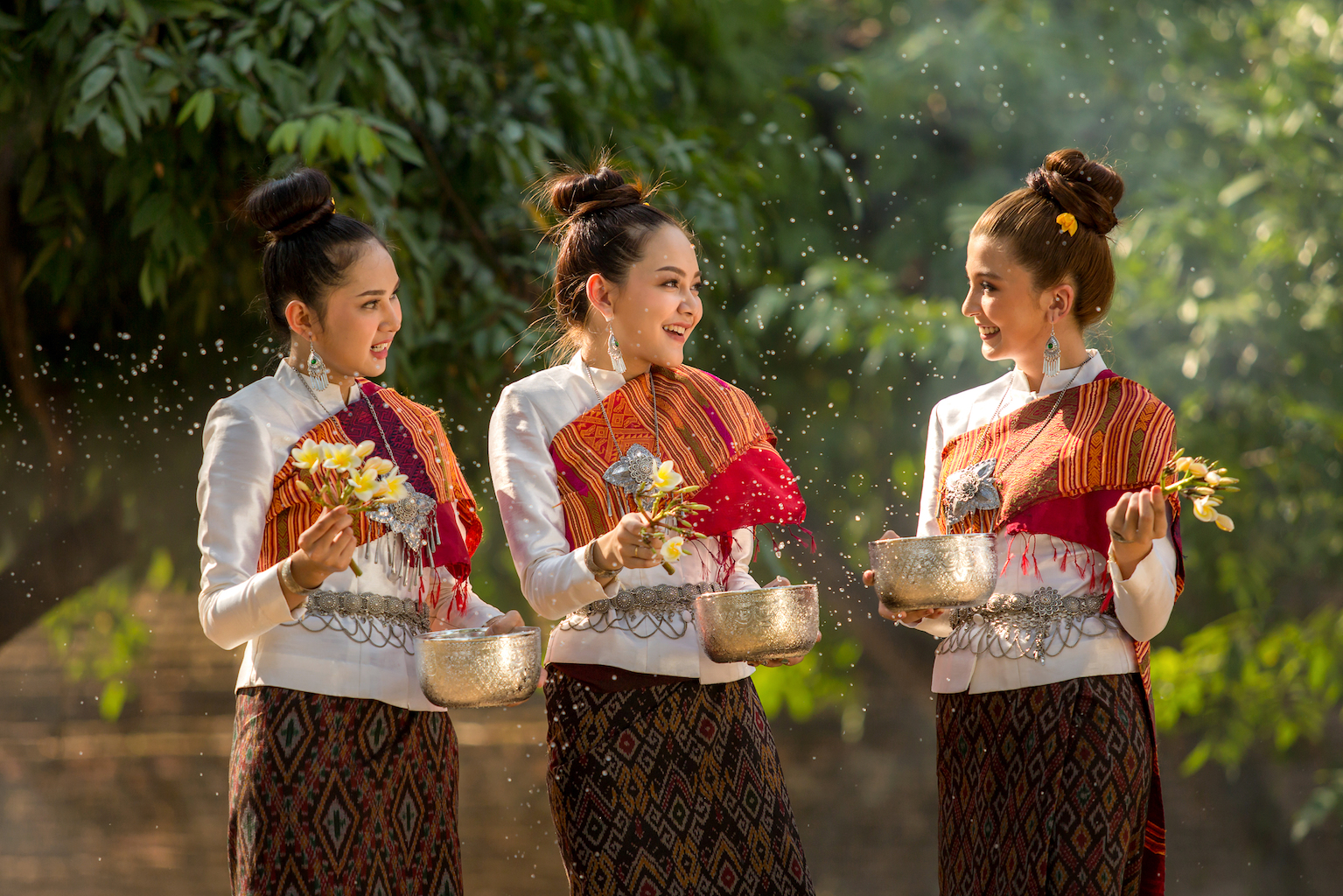
The importance of religion in Cambodia is reflected in the country's national motto "Nation – Religion – King". Introduced by Jayavarman VII (1181–1218) into the Khmer kingdom following Hinduism, Theravada Buddhism became Cambodia's official religion, practiced by 96% of the population.
The importance of religion in Cambodia is reflected in the country's national motto "Nation – Religion – King". Introduced by Jayavarman VII (1181-1218) into the Khmer kingdom following Hinduism, Theravada Buddhism became Cambodia's official religion, practiced by 96% of the population. This Buddhist majority coexists peacefully with just over 2% Muslims (primarily from the Cham ethnic group), 1% Christians, and a few highland tribes (Khmer Loeu) who practice animism. Indeed, freedom of worship is enshrined in the Cambodian Constitution.
Khmer Buddhism
Nevertheless, the Buddhism practiced by Cambodians is a highly distinctive system of beliefs, rooted in a synthesis of Buddhism, animism, and Brahmanism. While the term "animism" associated with popular beliefs is often interpreted, sometimes incorrectly, as a collection of superstitions, within Khmer Buddhism it refers to numerous cosmic forces—such as deities representing the elements (air, water, and so on), spirits including the neak ta who protect the earth and its riches, and the spirits of ancestors. Thus, happiness, health, prosperity, and the organization of daily life depend on these cosmic forces, while Buddhism offers hope for a better life to come. The resilience of the Khmer people surely stems from this unique spirituality.
The Organization of Religious Life
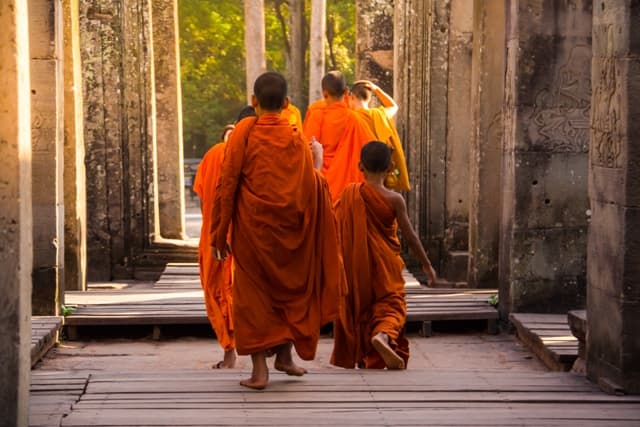
In the practice of Khmer Buddhism, religious life is animated by the Achars of each pagoda. The Achar is a lay person whose role is to intone the prayers that the faithful must recite, to preside over ceremonies, and to guide ritual gestures. He also decides on offerings, sometimes serves as an intermediary with cosmic forces, and may establish and interpret horoscopes. The bonzes, who are forbidden any labor, exist solely as examples and chant prayers that allow each person to find their path to salvation. The faithful acquire merit by making donations (food, clothing, money, flowers, incense, and so forth) and by participating in the construction and maintenance of pagodas. Many offerings are made. First to Buddha, the supreme manifestation of the sacred, who is always invoked first, then to the deities of the rich Khmer pantheon whose protection is sought, notably Indra, Vishnu, Shiva, Ganesha, natural or mythical animals (crocodile, naga, garuda...), and of course various spirits and genies.