Colonial Monuments of Phnom Penh
Exploring Phnom Penh's colonial monuments means traveling through a pivotal period in Cambodian history, between the French protectorate, Art Deco architecture, and heritage still visible today.
A political regime that came into force in 1863 until Cambodia's independence in 1953, the French protectorate shaped the country's history and architecture. A large portion of buildings with French architecture have thus endured through time and remain intact. To learn more about this era and embark on a journey through time, we invite you to discover the colonial monuments of Phnom Penh.
Phnom Penh Central Post Office
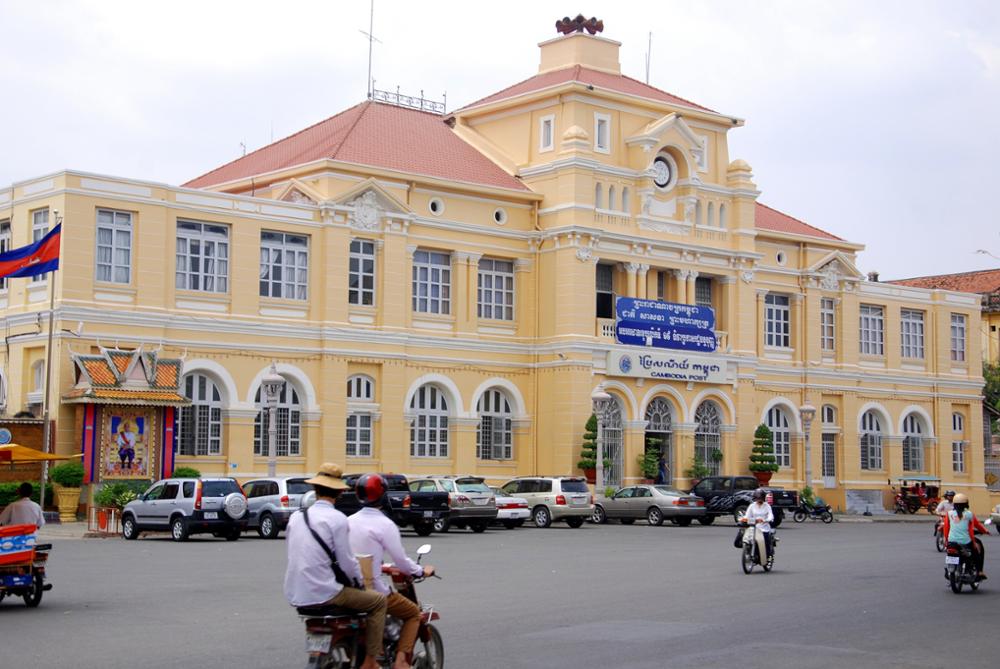
Situated on Post Office Square, in the heart of the former French administrative quarter, not far from Wat Phnom, the Phnom Penh Central Post Office was built in 1890 according to plans by French architect Daniel Fabre. It constituted, at the time, the first administrative building constructed by the protectorate. Formerly known as the "Postal and Telegraph Hotel," it was expanded and renovated several times over the decades.
Since then, it remains Cambodia's largest post office. Today, it continues to provide all public services (postal exchanges, telecommunications, philately, postal box rentals...).
Recognizable by its vibrant yellow, it is characterized by a façade adorned with balconies and balustrades, pediments sculpted in stucco, columns with Corinthian capitals, and Romanesque windows that testify to the neo-classical style.
Phnom Penh Central Market
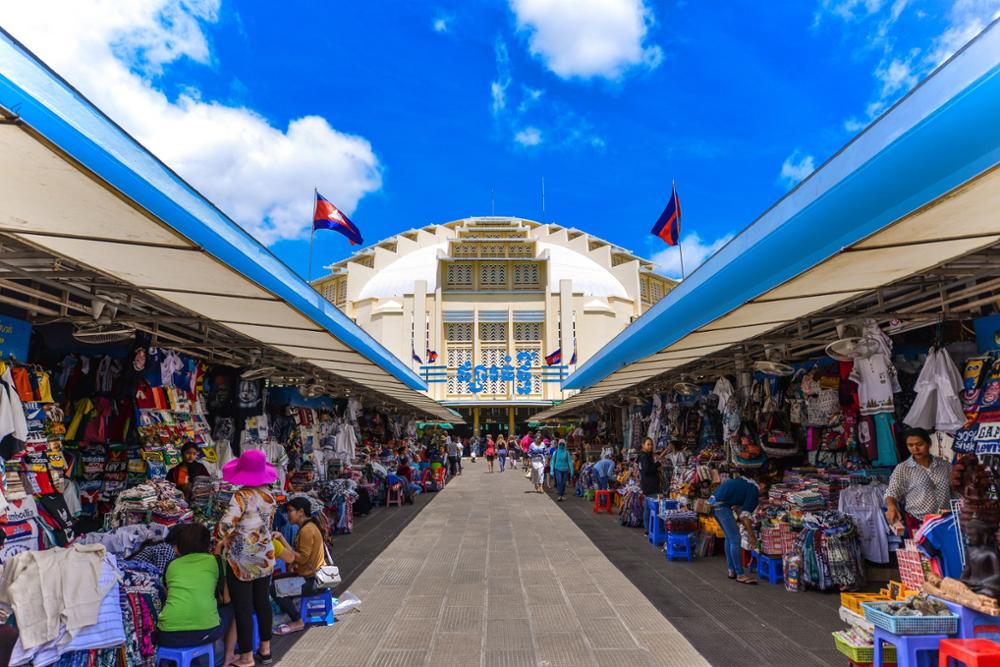
Another emblematic French architectural building in the city: the Phnom Penh Central Market. Also called Phsar Thmei ("new market"), it is the world's fifth-largest market.
Built toward the end of 1930, it is the work of several international architects including Jean Desbois, Louis Chauchon, and Wladimir Kandaouroff. Its Art Deco-style architecture was heavily influenced by French architect Louis Chauchon. Entirely painted yellow and constructed in reinforced concrete, the building is distinguished by a gigantic dome 50 meters in diameter and 4 wings each 50 meters long.
Although it was bombed by Thai aircraft during the Franco-Thai War, causing substantial damage, the building was reconstructed and restored from 2009 to 2011.
Since its creation to the present day, the market houses a multitude of stalls where you can find everything: souvenirs, food, clothing, jewelry... It is, without a doubt, one of the markets not to miss during a stay in Phnom Penh.
National Library of Cambodia
Inaugurated in 1924, the National Library of Cambodia is the work of French architect Louis Chauchon (it was even his first project). Again, this is a building in the Art Deco style.
The National Library of Cambodia housed, upon its opening, a collection of nearly 3,000 books, most in French. After the country's independence in 1954, the number of books in the Khmer language increased. But in 1975, the library closed its doors and the building was used as housing by members of Pol Pot. During this period, the Khmer Rouge destroyed over 80% of the volumes.
Reopened in 1980, it now houses more than 103,000 copies in various languages (Khmer, French, English, German...).
In the Library's periodicals room, you can discover a permanent exhibition of bookplates featuring a collection of periodicals, magazines, and books from the colonial era. Beyond visiting the interior, its beautiful gardens are truly worth seeing.
Practical Info
Discover the National Library of Cambodia through a full-scale escape game
Thanks to Urban Tales, a new tourist activity that has recently arrived in Cambodia, you can discover the National Library of Cambodia during a game to be played with friends or family. The concept? With the help of a period map, a compass, and other authentic documents, slip into the role of explorers to uncover the mysteries discovered by Anatole Pasquier. The objective? Find the lost artifact... So, are you ready for adventure?
Discover more information about this immersive adventure.
Le Royal Hotel in Phnom Penh
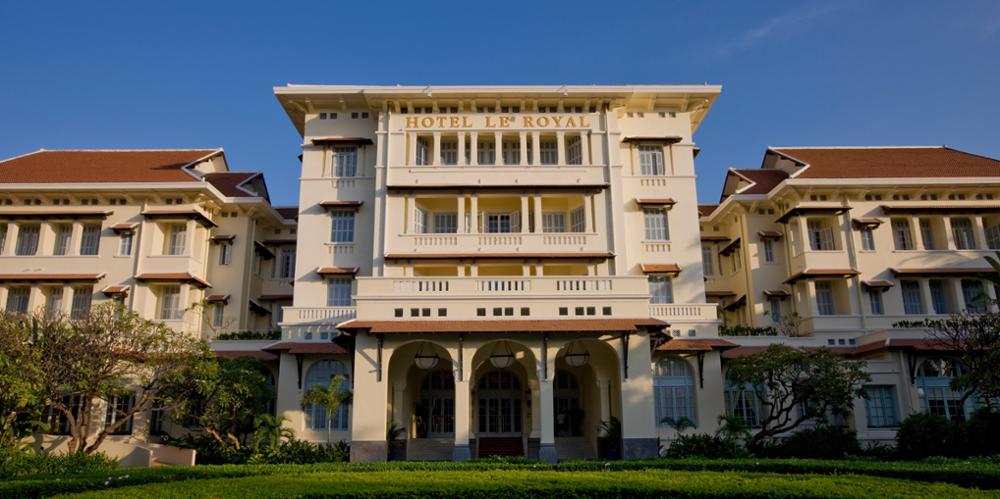
Located in the heart of the capital, just steps from Wat Phnom, the Le Royal Hotel in Phnom Penh was built in the 1920s and designed by architect and urban planner Ernest Hébrard, who wanted to make it the city's tallest building while drawing inspiration from French colonial style.
The hotel opened its doors in 1929 and received as guest of honor at the inauguration, His Majesty Sisowath Monivong, King of Cambodia from 1927 to 1941. It then became one of the most sought-after luxury hotels for celebrities. Among them, Jacqueline Kennedy stayed there in 1967.
In 1975, under the Khmer Rouge regime, the hotel was forced to close. It reopened in 1980 to host international aid agencies before welcoming guests again. Since its creation, the hotel has changed names and been restored several times. It is today under the supervision of Raffles Hotels & Resorts.
Phnom Penh Railway Station
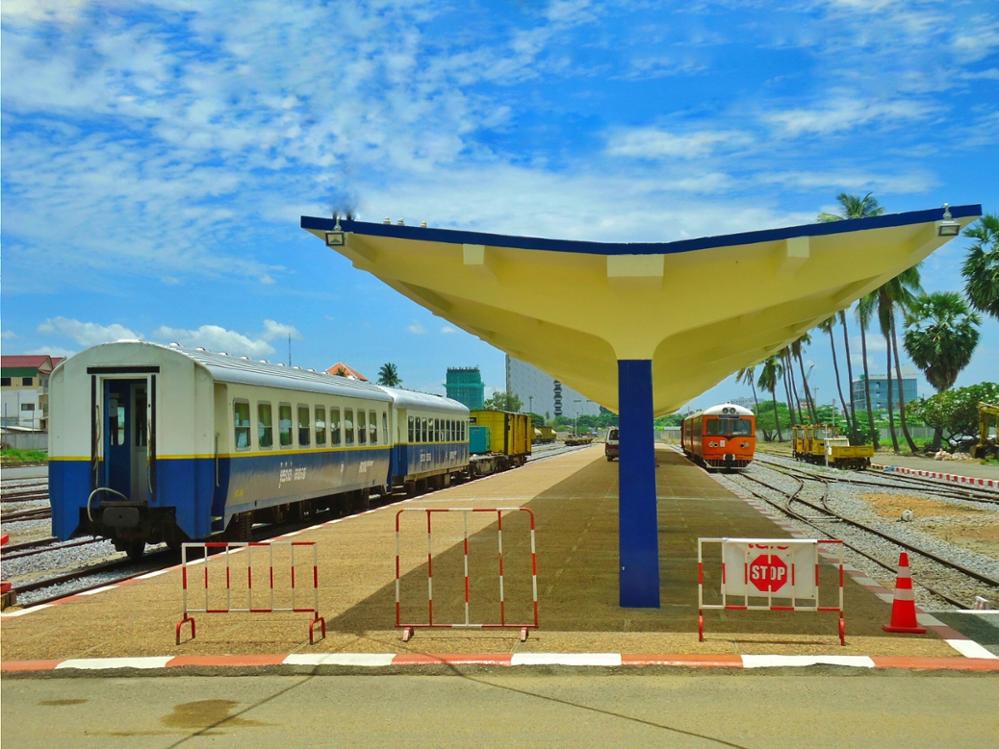
Built by architect Jean Desbois in 1932, Phnom Penh Railway Station is characterized by Art Deco architecture in reinforced concrete (much like Phnom Penh's central market). After its construction, it connected the capital to Battambang. Left abandoned during the civil war, the station and railways have since the 2000s been rehabilitated and once again serve the transport of goods and people. The lines now serve the cities of Battambang, Poipet, Sihanoukville and Kampot.
The Former Bank of Indochina in Cambodia
A private commercial and merchant bank to which the French government had granted the privilege of issuing currency in Indochina, the Bank of Indochina had its headquarters in Paris but had several branches in Cambodia, Laos, and Vietnam. One of them was located precisely in Phnom Penh, on Post Office Square.
The building became the property of the Cambodian Van family home after the country's independence. Beautifully restored, the building now houses Van's restaurant, a gourmet restaurant offering ultra-refined French cuisine.
Do you want to learn more about Cambodia's history and the French Protectorate era? Discover the Phnom Penh Heritage Tour, a circuit to be done by tuk-tuk or cyclo-rickshaw that allows you to discover the essence of the Cambodian capital's colonial heritage. Feel free to contact us for more information.
Frequently asked questions
Allow a full day to visit all of Phnom Penh's colonial monuments. The Phnom Penh Heritage Tour by tuk-tuk allows you to discover them efficiently in a half-day.
Yes, most are accessible: the central post office, national library, and central market are open to the public. Le Royal Hotel and Van's restaurant also welcome visitors.
The central market (Phsar Thmei) is considered one of the most emblematic with its unique Art Deco architecture and status as the world's fifth-largest market.