The Art of Cooking for the Damned
During Pchum Ben, Phnom Penh empties and allows rural villages to repopulate for an extended weekend. At Troh Per Lek, in Kampong Speu province, aprons are tied on for a
During Pchum Ben, Phnom Penh empties and allows rural villages to repopulate for an extended weekend. At Troh Per Lek, in Kampong Speu province, aprons are tied on for a religious celebration that undoubtedly demands considerable culinary talents.
The cement forest of Phnom Penh gives way to banana trees, palm trees, and coconut palms. The asphalt, sometimes dry and sometimes flooded, to dusty rammed earth. Air thick with pollution becomes fresh oxygen. Installed on what she calls a bed but more closely resembles a wooden table, Srey prepares two of the five Khmer rice cakes inseparable from Pchum Ben. They are reminiscent of Yule logs in the West.
Cooking, the beacon of the ancestors' festival
The nom mok, or nom jeal is the first. Call it what you will; its name varies by region in Cambodia. A pastry by any other name would taste as sweet. Protected from the harsh rays of the sun under the porch of her stilt house, the woman in her forties works energetically at her rice paste. "The essential thing in the recipe for nom mok is that the batter sets perfectly," she explains, hands submerged in the black basin. "After pounding the rice into powder, you must moisten it and sweeten it. If you miss this step, the cake will be inedible." The cook adds a cereal called l'ngor, previously pan-fried "to bring out its flavor," adds Kunthea, Srey's young cousin. After lengthy mixing, the pastry maker laboriously spoons the thick rice paste into plastic bags. It's off to the water bath in the cauldron.
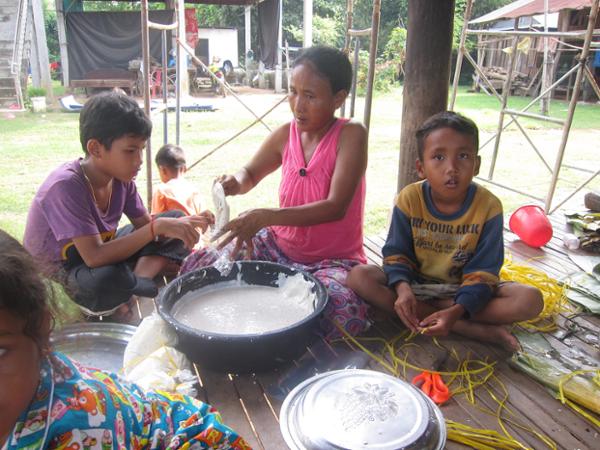
Srey finishes preparing the nom mok
Borin sits beside her. The father of the family wraps the second preparation in banana leaves. On som chek. The other Khmer rice cake the large family prepares this weekend. At Troh Per Lek, this property houses four raised houses. All its residents know each other well; they live together constantly. And they are not alone. Borin prepares his bouquets garnis watched over by roosters, hens, dogs, and cats. The cows retire to the barn five meters away. "The rice soaked for four hours in cold water before being placed on this leaf in the first layer. I add a bean puree, on which I arrange meat—here, chicken. Raw. It will cook in the water bath too," he explains, tying twine to conclude one of his creations.
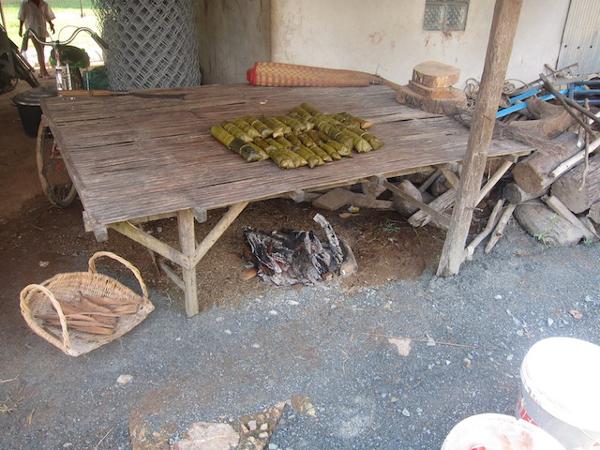
The on som chek keeps warm
Cooking is an art that requires patience to master. The days pass before Wednesday's celebration (October 10), which will mark the end of Pchum Ben. Everyone takes their time to prepare the pastries. They serve both family reunions and religious commemorations. "We must feed those who are no longer with us," assures Sok, 83 years old, the village elder.
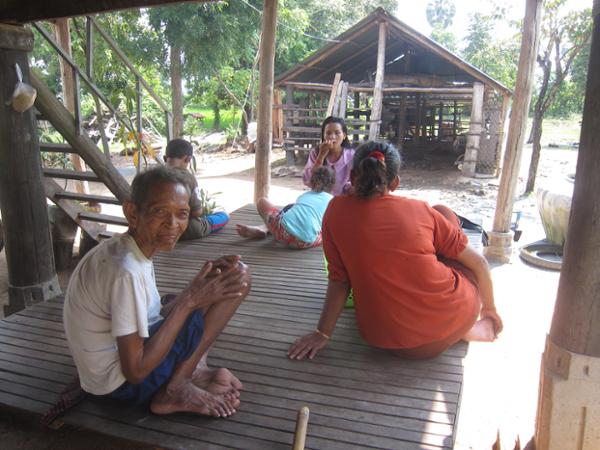
Sok's family prepares to go to the pagoda
Pchum Ben, Fifteen Days of Grace
"We celebrate Pchum Ben to remember the names of our ancestors," he continues. "We believe that those who were good in their lives need nothing where they are today. For the others, it is different. Pchum Ben is devoted to giving them grace and food, because for the rest of the year, they have nothing." Compassion accompanies the families who reunite each year to celebrate the festival of ancestors. This bond between past and present beings unfolds in the company of monks at the pagoda.
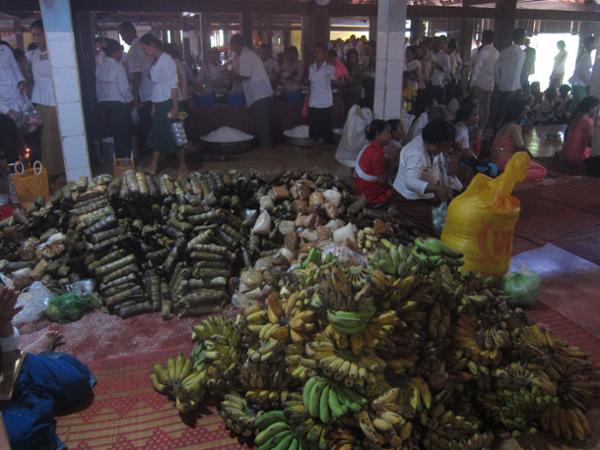
At the pagoda, offerings abound. The on som chek wrapped in banana leaves barricade the nom mok safely in their plastic pocket
The atmosphere changes upon entering the village temple. The impression of arriving in a sterile chamber. The air smells different, much more neutral, even though families enter carrying numerous dishes to offer to the monks. The view becomes uniform. White dominates. A large majority of devotees wear immaculate tops. At first steps, only the prayers and blessings of the bonzes, amplified by speakers, reach the ear. Four nuns smile bravely, making you want to listen to them, to sit by their side. Then everything settles. "Don't worry, the white clothing is merely a traditional style. Look, not everyone follows it; it's not an obligation." Indeed. Striped shirts and French national team jerseys wander through the crowd. Families come to offer Khmer cakes and other local dishes to the monks who serve as intermediaries with the dead. The damned. Those who behaved badly in their lives.
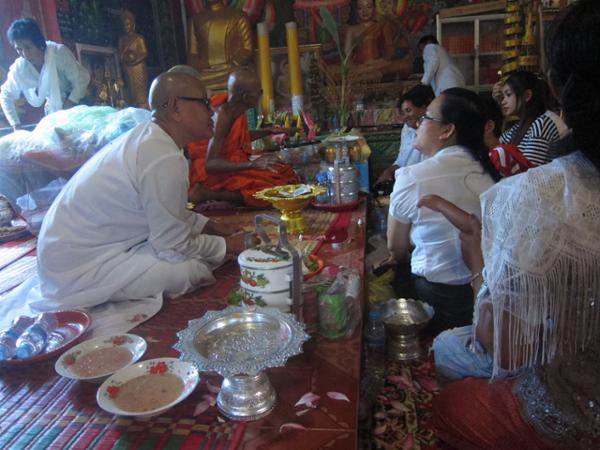
Devotees provide meals to monks so they can transmit them to the damned
Hundreds of devotees now fill the Troh Per Lek pagoda, each following the same path. They queue up and wait their turn to present the dishes they have prepared, accompanied by a few 100-riel notes, each equivalent to two cents.
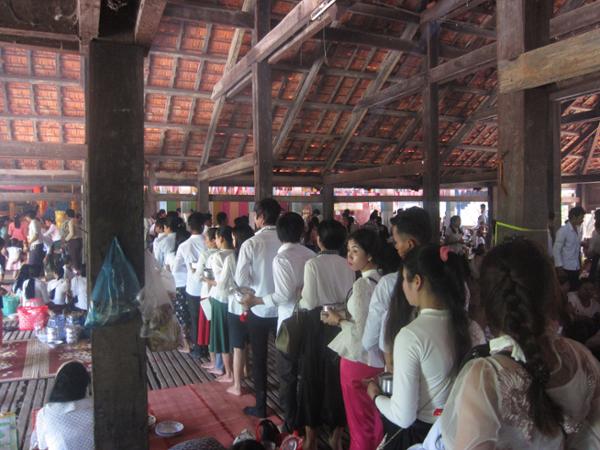
A queue forms in the pagoda to bring food to the monks.
Pchum Ben brings together Khmer families each year, often separated between major cities and the countryside. Amid smiles, conversations, and feasts, they all find joy in spending time with loved ones. All with the purpose of rolling up their sleeves to offer the damned the meals of the country's greatest religious celebration.
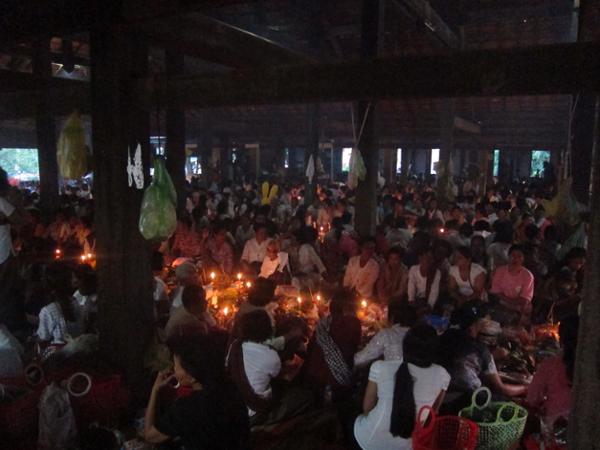
Hundreds of devotees pray as night falls.
Thibault Bourru