Cambodia, Land of Eight Newly Discovered Living Species
The WWF reveals the discovery of 157 new species in the Greater Mekong region, eight of which are found in Cambodia, confirming the extraordinary natural wealth of this Southeast Asian region.
27 Dec. 2018
The international NGO WWF announced in its report released on Wednesday, December 12th, the discovery, during 2017, of 157 new animal and plant species in the Greater Mekong region, which includes Laos, Cambodia, Thailand, Vietnam, and Myanmar. The Khmer kingdom recorded the arrival of 8 new animal and plant species.
The Greater Mekong region, which flows through China, Myanmar, Laos, Thailand, Cambodia, and Vietnam, harbors a treasure trove of biodiversity. The fauna and flora notably include Asian elephants, tigers, leopards, several species of pangolins, ibis, freshwater dolphins in Kratie notably, and more. The Mekong alone is home to three times more fish species than the Amazon River. A total of 2.6 million tons of fish are caught each year, representing 25% of global freshwater catches.
Each year, scientists participate in the description and classification of new species present in the Greater Mekong region. Some are uncovered after meticulous fieldwork, sometimes requiring months of labor on site, and years of laboratory authentication.
A Unique Bamboo!
The report confirms that scientists discovered 8 new animal and plant species in Cambodia. There are in total three new fish species*, the rhacophorus rhodopus, a frog never before documented, and four plant species**. Among them is schizostachyum cambodianum (S cambodianum), a completely new bamboo species, unique of its kind.
« Bamboos are among the most difficult plants to study because many species do not produce the flowers necessary for their diagnosis on a regular basis », points out Dr Khoon Meng Wong, the Singaporean researcher who discovered this specimen. The S cambodianum possesses, according to him, the particularity of having a lobe, a rounded and shallow division of a part of the leaf, singular and entirely unique of its kind in Southeast Asia.
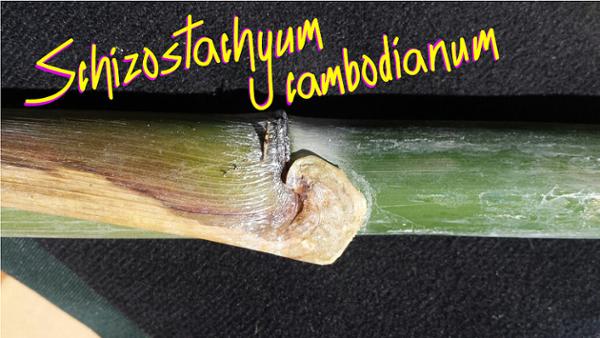
The schizostachyum cambodianum ©WWF
Scientists were able, between 2015 and 2017, to discover, with restraint, specimens of the genus in the Cardamom Mountains chain. The problem is that the majority of S cambodianum developed along national roads, or scattered elsewhere, particularly subject to clearing. Protection work will be undertaken to preserve this new plant species.
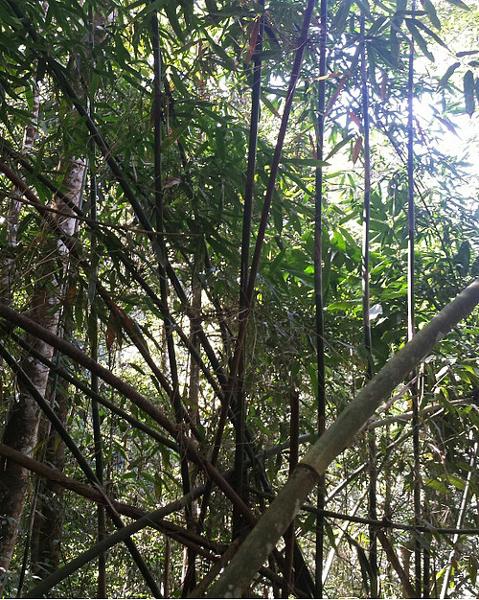
The S cambodianum within the Cardamoms ©WWF
* : acantopsis rungthipae / acantopsis dinema / acantopsis ioa. ** : schizostachyum cambodianum / impatiens bokorensis / tarenna pilosa var. parvifolia / wikstroemia bokorensis.
Thibault Bourru
Thibault BourruA passionate enthusiast of literature and Asia, Thibault shares his experiences through his writing.