The Interreligious Site of Ek Phnom
The Interreligious Site of Ek Phnom
About 10 km north of Battambang, the Ek Phnom site combines a ruined Hindu Angkorian temple from the 11th century, a contemporary Buddhist pagoda, and a monumental Buddha statue.
About ten kilometers north of Battambang, near the Sangkae River, the Ek Phnom site brings together three religious elements from different eras on the same grounds: an 11th-century ruined Hindu Angkorian temple, a contemporary Buddhist pagoda, and a giant Buddha statue. This layering makes Ek Phnom a direct witness to Cambodia's spiritual evolution, from the Shaivite worship of Khmer kings to the Theravada Buddhism that dominates the country's religious practice today.
Why Visit Ek Phnom
Ek Phnom is not a grand Angkorian temple comparable to those in Siem Reap. Its appeal lies precisely in its modest scale and coexistence with a living place of worship. Within a few meters you observe an abandoned Hindu sanctuary, partially collapsed, and an active pagoda where locals come to pray. Cambodian devotees visit especially during Buddhist festivals, making it a locally frequented site rather than an oversaturated tourist stop. It also makes a coherent addition to a day excursion around Battambang, combining well with the bamboo train and local vineyards.
History of the Site
The Ek Phnom temple dates to the 11th century. Historical sources attribute it to the reign of Suryavarman I, ruler of the Khmer Empire between 1002 and 1050, a period of territorial expansion and religious construction throughout the Tonlé Sap basin. Like most Khmer monuments from this era, Ek Phnom was dedicated to Hindu worship, primarily Shiva, before Theravada Buddhism gradually took hold in the region from the 13th century onward.
The temple was surrounded by a baray, a large rectangular artificial basin that traditionally encircles Khmer religious sites and serves both symbolic and hydraulic purposes. Over the centuries, the structure suffered numerous raids, explaining the current state of its partially collapsed sandstone walls and the loss of some sculptures. The contemporary pagoda and monumental statue were added more recently, continuing the sacred vocation of the site under a different faith.
What to See on the Site
The Ruined Angkorian Temple
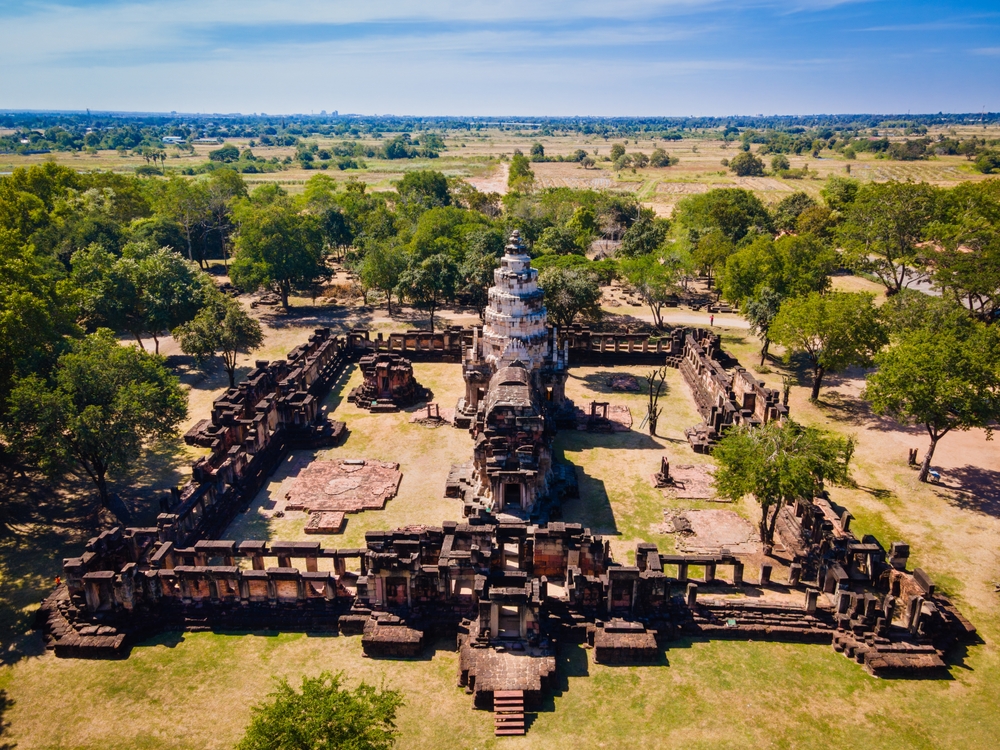
This is the central heritage element. The sandstone structure still preserves several pediments and carved reliefs despite the partial collapse of the walls. You can move around the structures and observe the Hindu motifs still visible on the lintels. The baray surrounding the temple is now partially dry or covered in vegetation depending on the season, but its outline remains visible.
The Giant Buddha Statue
The statue depicts a seated Buddha in the Abhaya Mudra posture: right hand raised, palm facing outward and fingers pointing upward, left arm at the side. This ritual gesture symbolizes courage and protection against fear; it refers to the period following Buddha's enlightenment. The monumental scale of the sculpture makes it the most visible element of the site upon arrival.
The Buddhist Pagoda
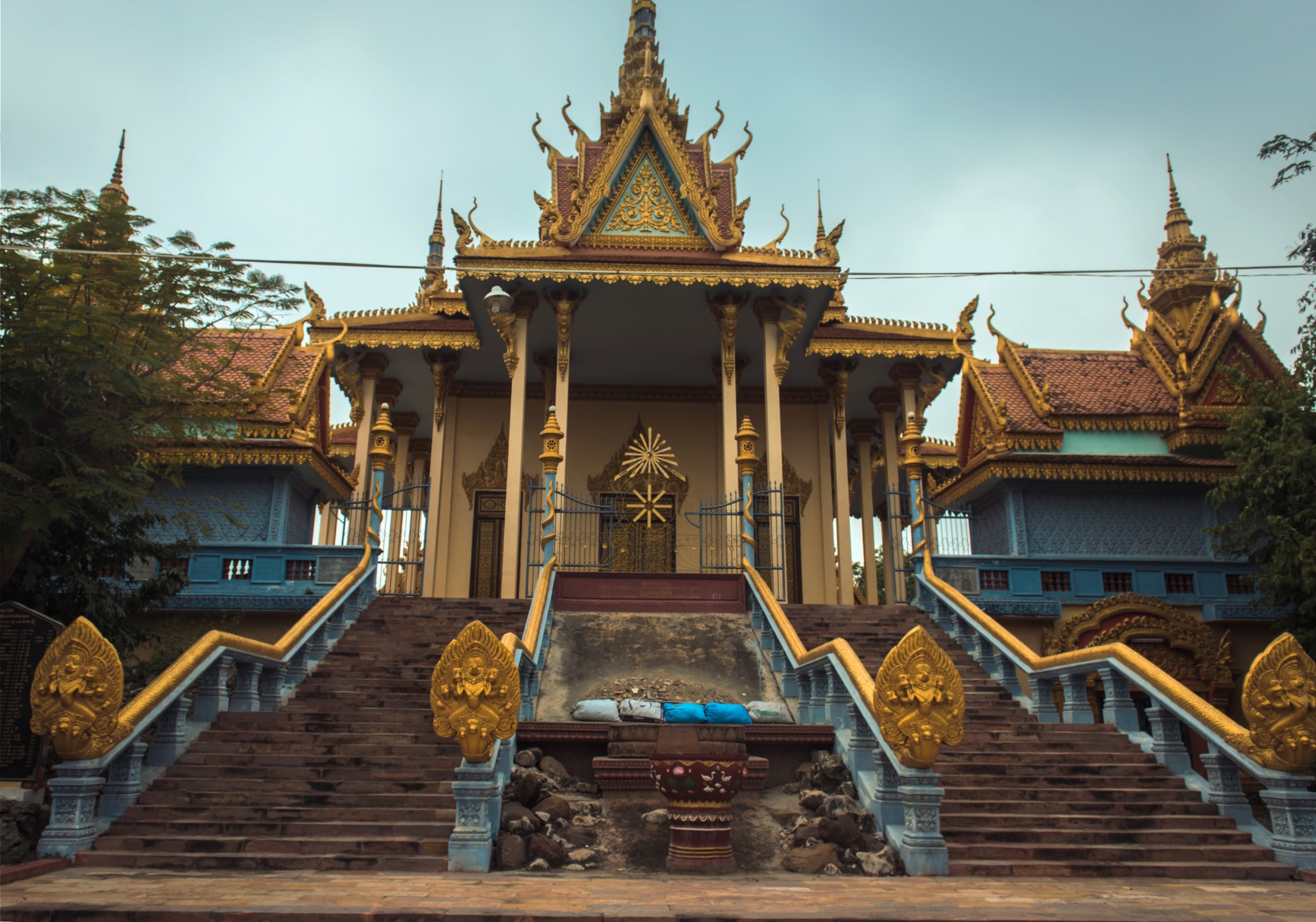
Located a few meters from the ruins, the pagoda is a contemporary structure of the Theravada tradition. Its interior houses murals depicting episodes from the life of Buddha and the Jatakas (accounts of his previous lives), classic themes in Khmer Buddhist iconography. The structure remains an active place of worship: please respect dress codes (shoulders and knees covered) and remove your shoes before entering.
Practical Information
- Visiting duration: plan about 1 hour on site to explore the three elements.
- Entrance fee: modest entry fee, payable in cash (riels or US dollars).
- Best time: early morning or late afternoon to avoid the heat, particularly between March and May.
- Dress code: clothing covering shoulders and knees, essential for entering the pagoda.
- On-site: a few stalls near the parking area offer drinks and snacks; bring water.
How to Get There from Battambang
Ek Phnom is located about 10 kilometers north of Battambang's city center, accessible by paved road running along the Sangkae River. Three common options are available:
- Tuk-tuk: the most practical solution from downtown, often part of a half-day excursion combining multiple sites.
- Bicycle or motorcycle: a journey of about 30 to 45 minutes depending on your choice, pleasant for crossing countryside and villages.
- Car with driver: recommended if you combine Ek Phnom with more distant stops like Banon Temple.
What to See Nearby
Ek Phnom fits naturally into a day excursion around Battambang. Nearby, you can extend your visit with:
- Banon Temple: another Angkorian sanctuary perched atop a hill, located southwest of Battambang.
- The bamboo train: an artisanal attraction typical of the region, on a historic railway section.
- Vineyards: a rare local production in Cambodia, open for tasting.
- The historic center of Battambang: featuring French colonial architecture and contemporary art studios.
To expand your Khmer itinerary beyond Battambang, you can also add Bayon Temple at Angkor or, further south, Choeung Ek Memorial near Phnom Penh.
Planning Your Cambodia Trip
Ek Phnom perfectly illustrates the richness of the Battambang region, often overshadowed by Angkor yet essential for understanding the diversity of Cambodian heritage. To integrate this site into a complete itinerary, consult our tailor-made Cambodia trips.
Nearby
Interested in this visit?
We can include it in your personalised itinerary.