Battambang
Battambang
Cambodia's second city, Battambang blends UNESCO colonial heritage, sacred mountains and a bamboo train. The complete guide to planning your visit.
Battambang is Cambodia's second city. It is a small town that breathes a provincial atmosphere. It is the capital of the Battambang province. It offers visitors a peaceful setting to discover the enchanting beauty of its landscapes, the rural lifestyle of Cambodians, and Khmer cultural values. Off the beaten path, it also provides the opportunity to complement your visit with unique activities.
History
The Khmer word Battambang literally translates the expression "losing the stick." This refers to a local legend about a giant named Ta Dambong. The legend tells that the giant lost his stick when he wanted to fight an enemy. At the entrance to the city, you can still find a large statue erected in honor of this character.
Before World War II, between 1795 and 1907, Battambang was repeatedly dominated by the Kingdom of Siam, known today as Thailand.
The city's history was particularly marked by civil war with the Khmer Rouge under Pol Pot. Between 1979 and 1990, just after the fall of the Khmer Rouge regime, it was at the forefront of civil war. There was genocide and destruction of most of the region's factories.
In 2016, it was designated by UNESCO as a world heritage city thanks to its historic colonial, Khmer, Thai buildings and numerous ancient pagodas and temples.
Geography
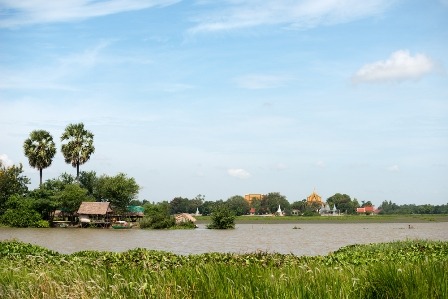
Battambang is located 293 km from Phnom Penh and 171 km from Siem Reap, in the northwest part of Cambodia. It sits near Sangker, a river that flows through the province and empties into the Tonlé Sap. Covering an area of 293 km², the city is crossed by two irrigation canals drawn from the Sangker River.
Today
For over 500 years, Battambang has been the main commercial center of the province. It holds a very important place in Cambodia's economy. With a family-oriented character, the city's economy is based on the production and marketing of wood, bamboo, precious stones, and rice cultivation. It is Cambodia's rice granary. The surrounding regions are surrounded by rice paddies.
Battambang preserves significant architectural heritage. It houses traditional Cambodian architecture in Khmer style and colonial architecture in French or Thai style. Very old, these colonial houses line avenues 1, 2 and 3 along the Sangker River. They testify to the country's history under French protectorate or Indochina rule. French bakeries and cafés remain among the most prestigious and well-known. On foot or by tuk-tuk, it is more interesting to take time to wander through its well-preserved architecture to discover the city's charm.
In 2007, Battambang's population was approximately 250,000 inhabitants. It is characterized by a mix of Thai, Lao, Chinese, and Khmer ethnicities.
Closed to train traffic since 2009, the Battambang railway line is now used for the bamboo train. It is a bamboo wagon topped with metal gears. For Cambodians, this mode of transport serves to carry passengers or local products. Recently, it has become a tourist attraction. Being shaken around for more than 3 minutes has thus become one of the region's flagship activities.
Battambang is flourishing in terms of tourism. It is developing several attraction sites and various tourist activities. It boasts historical, cultural, natural, and religious heritage.
Psar Nat
Psar Nat remains the city's most important point of interest. It is a large market located in the center of town. This market offers you a unique moment to make beautiful encounters with minorities from the surrounding villages. In the morning, this place also allows you to discover local products. Merchants from neighboring villages bring and sell freshly harvested goods.
Phnom Sampeu
Located about 12 km southwest of the city, Phnom Sampeu is a sacred mountain. It remains the highlight of any visit to Battambang. During your visit, you can explore 3 caves including Pkasla, Lakhaon and Aksopheak. Some of these caverns have preserved, for centuries and through the civil war, a bloody history. Discovered in 1993, several very ancient bone fragments are hidden inside. One of the caverns also houses the famous and gigantic reclining Buddha statue.
Phare Ponleu Selpak
Phare Ponleu Selpak is a Cambodian organization created in 1994 and born from post-Khmer Rouge refugee camps. Originally, this place allowed all those oppressed by the Khmer Rouge regime to express themselves artistically or culturally. Today, it has become a children's circus, considered the region's arts hub. It thus brings together a social center, a public school, and 3 arts schools including visual and music arts. Every week, every Monday and Thursday from 6 PM, local young artists organize circus performances.
Wat Banan Temple
Battambang is considered the city of a thousand pagodas. It is home to several temples. After Wat Ek Temple and Ba Set Temple, Wat Banan Temple is the most important in the city. It is a magnificent small temple accessed by a staircase of 350 steps. Located exactly 20 km south of the city, this temple was built in the mid-11th century by King Tak Oui Tit Ut TyaVarman II (1050-1066). It stands as the miniature version of "Angkor Wat".
Climate
According to the Köppen-Geiger classification, the Battambang region is subject to savanna climate with a dry winter. Precipitation is heavy in summer. It records an average precipitation of 1895 mm. In September, the precipitation rate can reach 3647 mm.
Throughout the year, the average temperature is 29.1°C. The best periods to visit the city are therefore January and December. These are indeed the driest months of the year.
Bus
Following National Road 5 connecting Battambang to Phnom Penh, it takes approximately 4 hours to reach this city. This journey covers more than 170 km.
From Sisophon to Battambang, the journey is 68 km and takes 1 hour 30 minutes. This is why the city has numerous bus companies and shared taxi services.
Boat
From Siem Reap, river transport remains the most interesting way to reach Battambang. Boats depart at 7 AM and connect the two cities daily. Depending on the category of boat following the Sangker River, the journey takes between 3 and 8 hours.
Tuk-tuk
It is more convenient to get around Battambang by tuk-tuk. To be safe, it is important to reserve the tuk-tuk and negotiate the price the day before your journey.
What to Do?
- Head to Phnom Sampeu and explore the three caverns to trace the history of the Khmer Rouge.
- Visit Wat Banan Temple and discover the region's cultural value.
- Be tempted by an atmosphere filled with sensations during a few minutes aboard the bamboo trains.
- Admire the physical performance of local young artists by visiting Phare Ponleu Selpak.
Attractions in Battambang
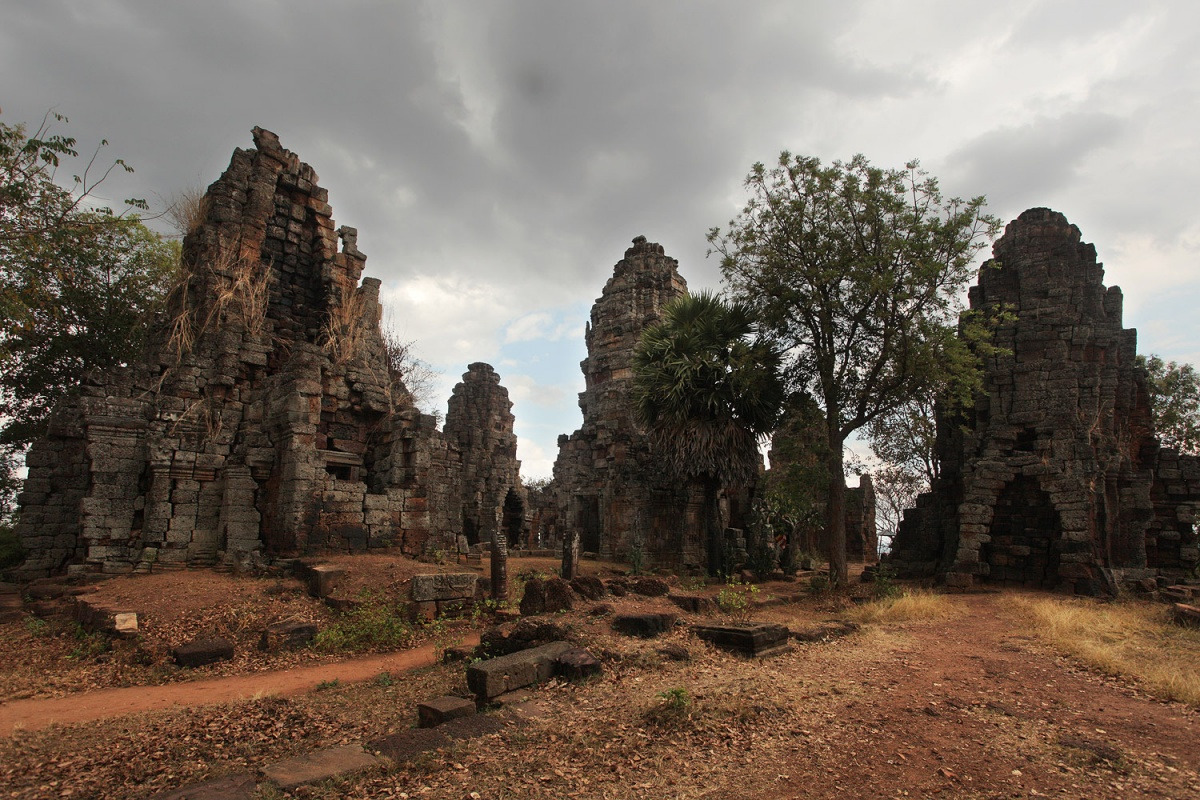
Prasat Banon
Temple-montagne khmer du 11e siècle perché à 400 m d'altitude près de Battambang, Prasat Banon mêle architecture angkorienne, légende locale et vues sur les plaines.
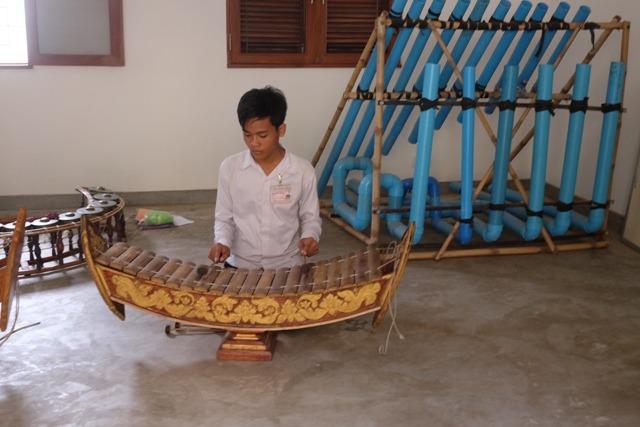
Phare Ponleu Selpak Battambang
ONG scolaire et école d'arts de Battambang, Phare Ponleu Selpak forme des enfants au cirque, à la musique et à la danse, et propose des spectacles plusieurs fois par semaine.
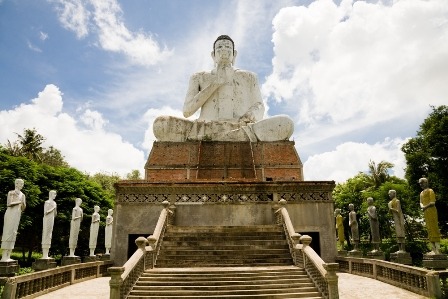
Le site interreligieux d'Ek Phnom
À 10 km au nord de Battambang, le site d'Ek Phnom réunit un temple angkorien hindouiste en ruines, une pagode bouddhiste et une statue monumentale de Bouddha.
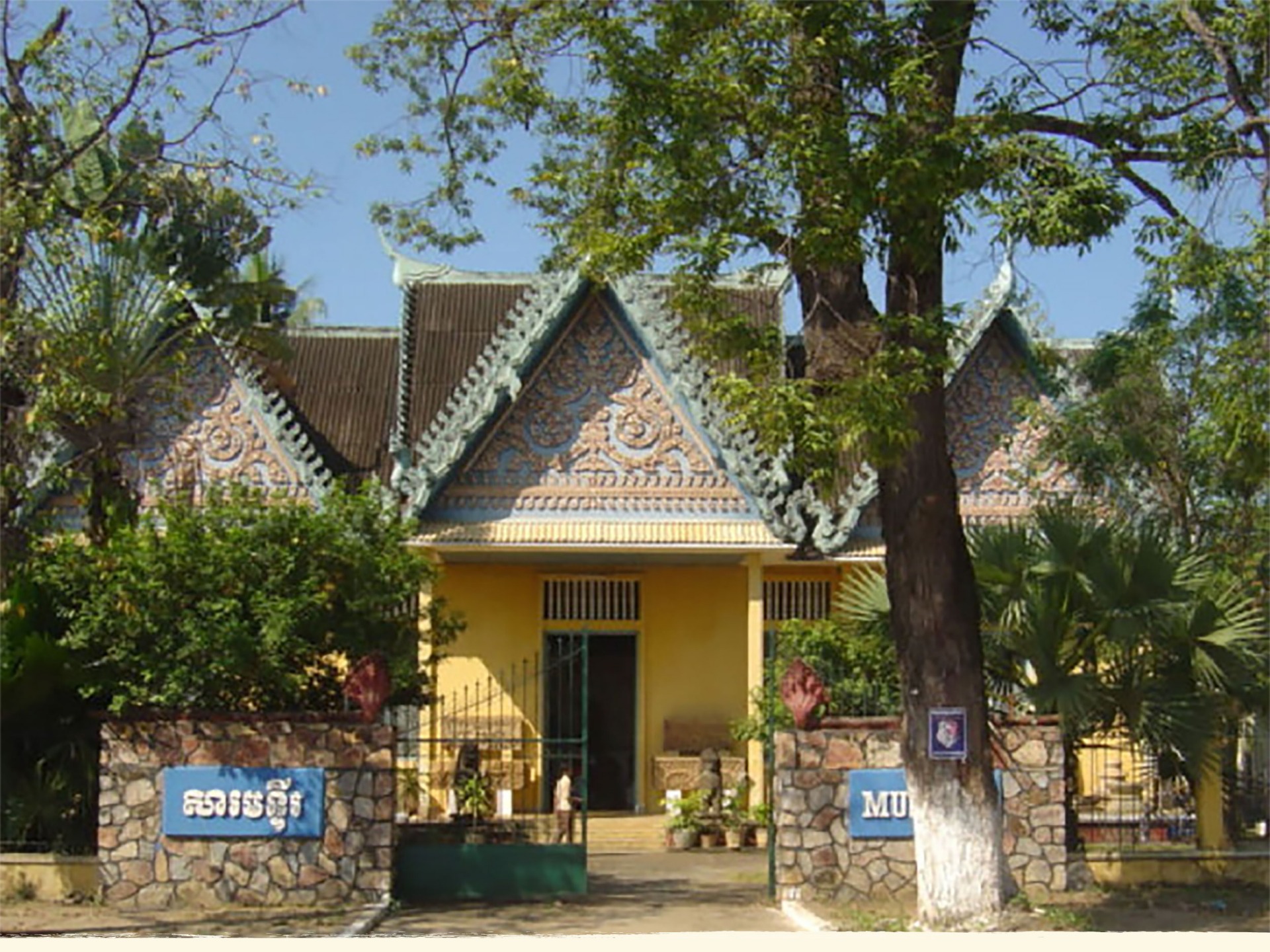
Le musée provincial de Battambang
Bâti en 1963 sur l'initiative de Madeleine Giteau, le musée provincial de Battambang retrace l'histoire de la province, de la Préhistoire au XIXe siècle.
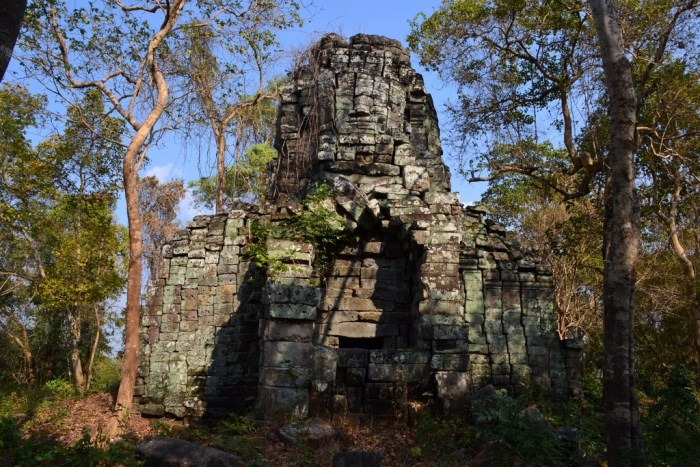
Banteay Chhmar
Vaste temple-cité bâti sous Jayavarman VII, Banteay Chhmar conserve des bas-reliefs proches du Bayon et un baray de 128 hectares, à l'écart des circuits classiques.
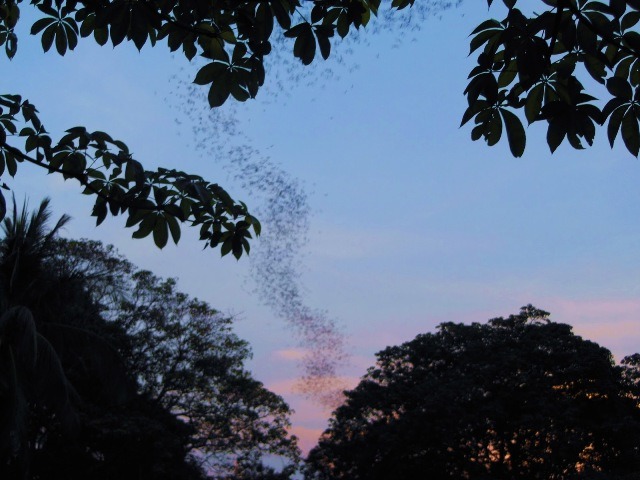
La montagne de Phnom Sampov
À 12 km de Battambang, Phnom Sampov réunit sanctuaires bouddhistes, mémorial des Khmers rouges et célèbre sortie de chauves-souris au crépuscule.
Accommodation in Battambang
See all
Want to discover this destination?
Our local advisors design your tailor-made trip.