Kampot Salt Marshes
Kampot Salt Marshes
Along the road between Kampot and Kep, the salt marshes offer an instructive detour into the artisanal production of iodized salt in Cambodia.
Along National Route 33 that connects Kampot to Kep, vast gridded expanses of shallow basins mirror the sky: the Kampot salt marshes. Less documented than the region's renowned pepper, they nonetheless supply a large portion of Cambodian consumption and offer an instructive detour into the rural economy of the country's south.
Why visit the Kampot salt marshes
The Kampot region is chiefly renowned for its pepper, but salt production plays a major economic and health role here. The marshes stretch near the Gulf of Thailand, across lowlands ideal for evaporation. For the traveller, the appeal is threefold:
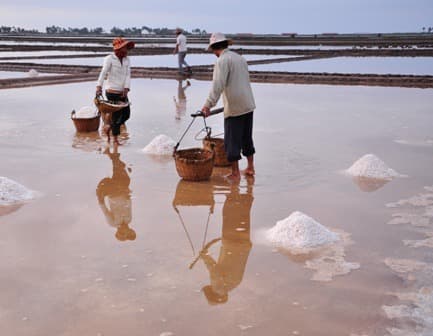
- observe an artisanal craft still practised by hand, with salt workers scraping the salt with wooden tools;
- understand how this iodized salt helps combat iodine deficiency, one of the major preventable causes of mental retardation in rural populations;
- enjoy an unusual geometric landscape, particularly photogenic in late afternoon when light grazes the basins.
The visit remains brief but fits naturally into a day between Kampot and Kep, requiring neither expensive entry fees nor lengthy preparation.
What to see on site
The experience centres mainly around the Salt Exhibition Center, located a few kilometres from Kampot towards Kep. The site combines a working farm and a small explanatory museum detailing each stage of salt production.
The evaporation basins
The principle is simple and visible to the naked eye. During the dry season, salt workers open sluices to let seawater fill the parcels. Water stagnates under the sun, evaporation concentrates the brine, and salt crystals appear on the surface. Depending on when you visit, you'll see basins being filled, others already crystallized and ready to be scraped.
Harvesting and treatment
Once crystals are collected, raw salt is transported to neighbouring sheds. There it is cleaned, iodized, then packed into 50 kg sacks before being distributed throughout Cambodia. This iodization process, inexpensive to implement, is one of the most effective techniques for preventing iodine deficiency in the population.
The explanatory museum
The small museum at the Salt Exhibition Center presents tools, production figures, and health issues linked to iodization. Panels and sometimes a local guide complement the visit, which typically ends with the opportunity to buy salt directly from producers.
When to visit
The visit makes real sense only during the dry season, from December to April. This is when the basins are active, evaporation is working, and salt workers are labouring in the marshes. Outside this season, during the monsoon, parcels are often flooded, production halts, and the landscape loses much of its appeal.
For photography, favour late afternoon: raking light emphasizes the grid of basins and water reflections. Early morning gives you the best chance of encountering teams harvesting.
Practical information
- Duration: allow 30 minutes to 1 hour on site, longer if you take time to observe salt workers at labour.
- Admission: free entry or modest contribution depending on the site; a sack of salt costs just a few thousand riels.
- Accessibility: flat terrain, but intense sun and little shade. Bring a hat, water, and sunscreen.
- Site respect: these are active production zones. Don't wade into basins and ask before photographing workers.
How to get there from Kampot
The marshes sit on National Route 33, a short distance from central Kampot. Several options are available:
- Tuk-tuk: the simplest solution, negotiable from the city centre. Also convenient if you combine the visit with other sites along the Kep road.
- Scooter: the freedom to stop along the road and explore multiple production sites. The road is paved and easy to travel.
- Bicycle: feasible for strong cyclists, starting early to avoid the heat.
What to combine nearby
The salt marshes are rarely visited alone. On the same road, several stops merit a halt:
- the Kep crab market, ideal for a seafood lunch;
- the Phnom Chhngok caves and their pre-Angkorian sanctuary;
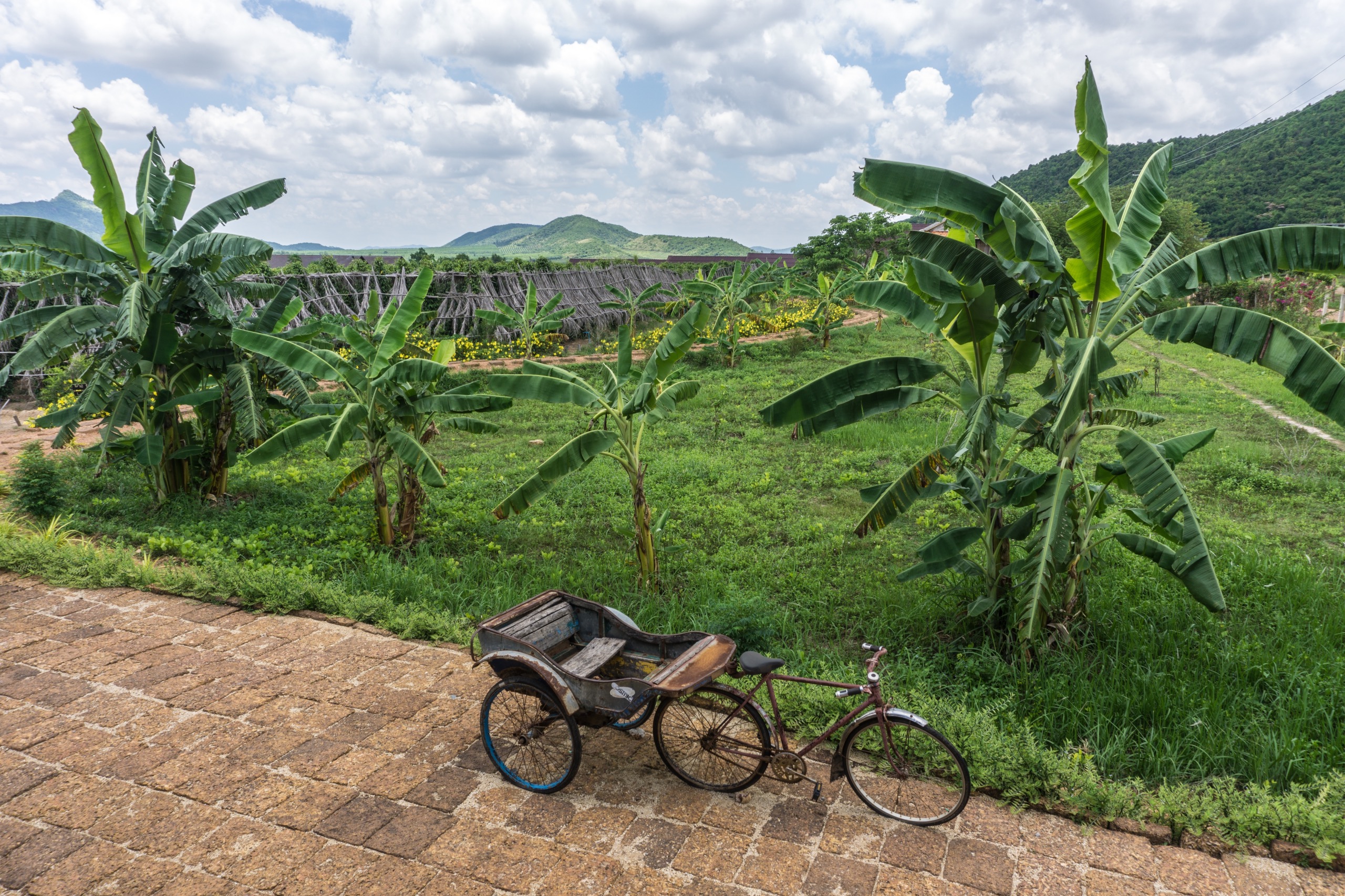
- the Kampot pepper plantations, another agricultural jewel of the region.
More broadly, the region sits within an itinerary that can extend toward Angkorian archaeological sites such as the Bayon temple or the Terrace of Elephants.
Plan your Cambodia trip
The Kampot salt marshes integrate easily into a circuit through the country's south, between coast, pepper countryside, and colonial towns. To build a tailor-made itinerary including Kampot, Kep, and the great Khmer sites, consult our Cambodia journeys and connect with our local specialists.
Nearby


Interested in this visit?
We can include it in your personalised itinerary.