The Water Festival
The Water Festival
The Water Festival or "Bon Om Teuk" in Khmer, is one of Southeast Asia's greatest celebrations. It marks the end of the rainy season and the reversal of the Tonlé Sap river's current. This alternating flow regime is extremely rare in the world.
The Water Festival or "Bon Om Teuk" in Khmer, is one of Southeast Asia's greatest celebrations. It marks the end of the rainy season and the reversal of the Tonlé Sap river's current. This alternating flow regime is extremely rare in the world. From May to October, the waterway flows from its source, the Tonlé Sap lake, Southeast Asia's largest, down to the Mekong at its Phnom Penh confluence, flowing from north to south. From late October onward, the Mekong, normally swollen by monsoon rains, discharges into the Tonlé Sap, and the latter reverses course back to its source for the next 6 months.
This reversal of current is celebrated in proper fashion in Phnom Penh during the three-day Water Festival. The capital is overwhelmed and festivities abound.
A capital transformed
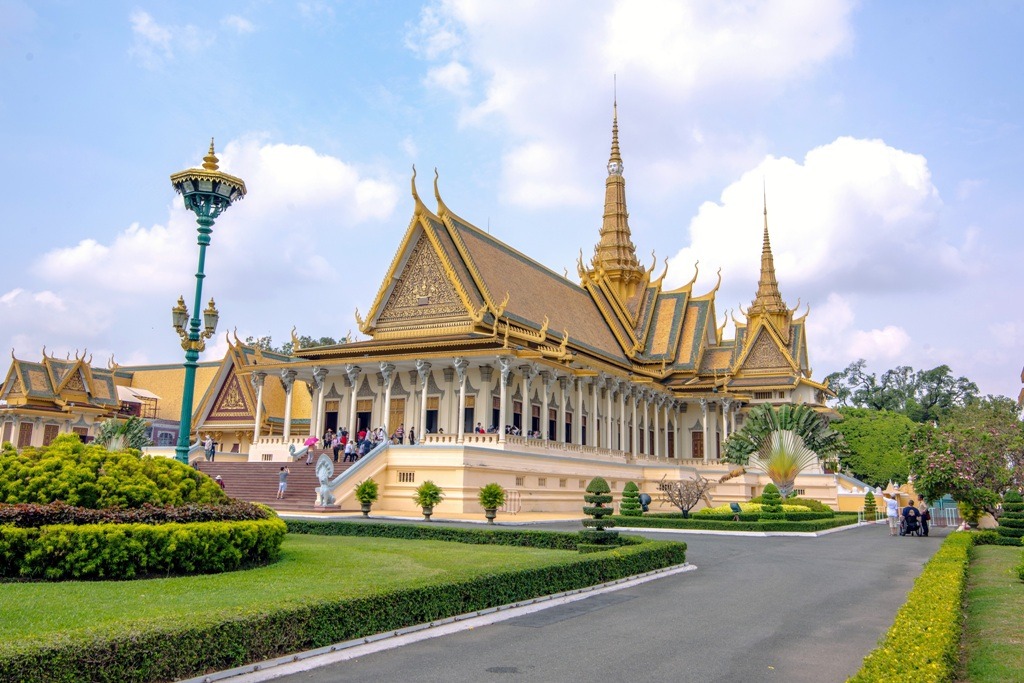
As the Water Festival approaches—three or four days before the festivities begin—the excitement is already palpable on Phnom Penh's streets. The city's asphalt is invaded by minibuses arriving from every province across the country. Because for once a year, it is not the capital's residents who travel to their loved ones in the countryside, but rather the reverse. Provincial families organize themselves to descend upon Phnom Penh for three days. Most Western expatriates, in fact, prefer to leave the capital to avoid the sheer tourist crowds. Numerous streets are cordoned off by barriers, particularly near the Independence Monument, the Royal Palace, and the National Museum.
Sisowath Quay, or Riverside, this promenade along the Tonlé Sap river, becomes completely car-free. This creates a distinctly pedestrian atmosphere, remarkably safe. Much like carnival celebrations, only walkers—costumed, waving numerous flags in many colors—venture along this major Phnom Penh thoroughfare.
The trick here is to gain height. The best approach is to book a table at rooftops or terraces perched atop the buildings lining this street, temporarily pedestrianized. From above, you can linger as long as you wish on a sublime vantage point, and affordably, to admire the festivities below while witnessing the festival's main event…
The great national dragon boat races
For all these Khmer people converging on the capital to properly celebrate the end of the monsoons and the reversal of the Tonlé Sap's current also come to support their respective provinces. Over 3 days, and under the watchful eyes of King Norodom Sihamoni, Queen Mother Norodom Monineath, Prime Minister Hun Sen, and all of Cambodian high society, each of the country's 20 provinces sends one or more dragon boats to compete in the Water Festival's various regattas. Altogether, over 400 pirogues carrying 50, 70, or even 100 rowers compete in the events.
These regattas, held in the heart of the Tonlé Sap river between its confluence with the Mekong and the Chroy Changvar bridge, quite literally captivate the entire nation, whether on site or via television. All Cambodian media cover the event—it is truly the country's greatest sporting event of the year.
Each race matters immensely for provincial pride; see for example our interview with navigator Kosal, who competed for Stung Treng province. The Water Festival is also an excellent opportunity for these navigators, provincial supporters, and families from the countryside to enjoy a stay in the capital, Phnom Penh—something that is not always easy for everyone. A true breath of fresh air and sunshine after the rainy seasons.
Give it a go!
Our local experts arrange this activity for you.