The Provincial Museum of Battambang
The Provincial Museum of Battambang
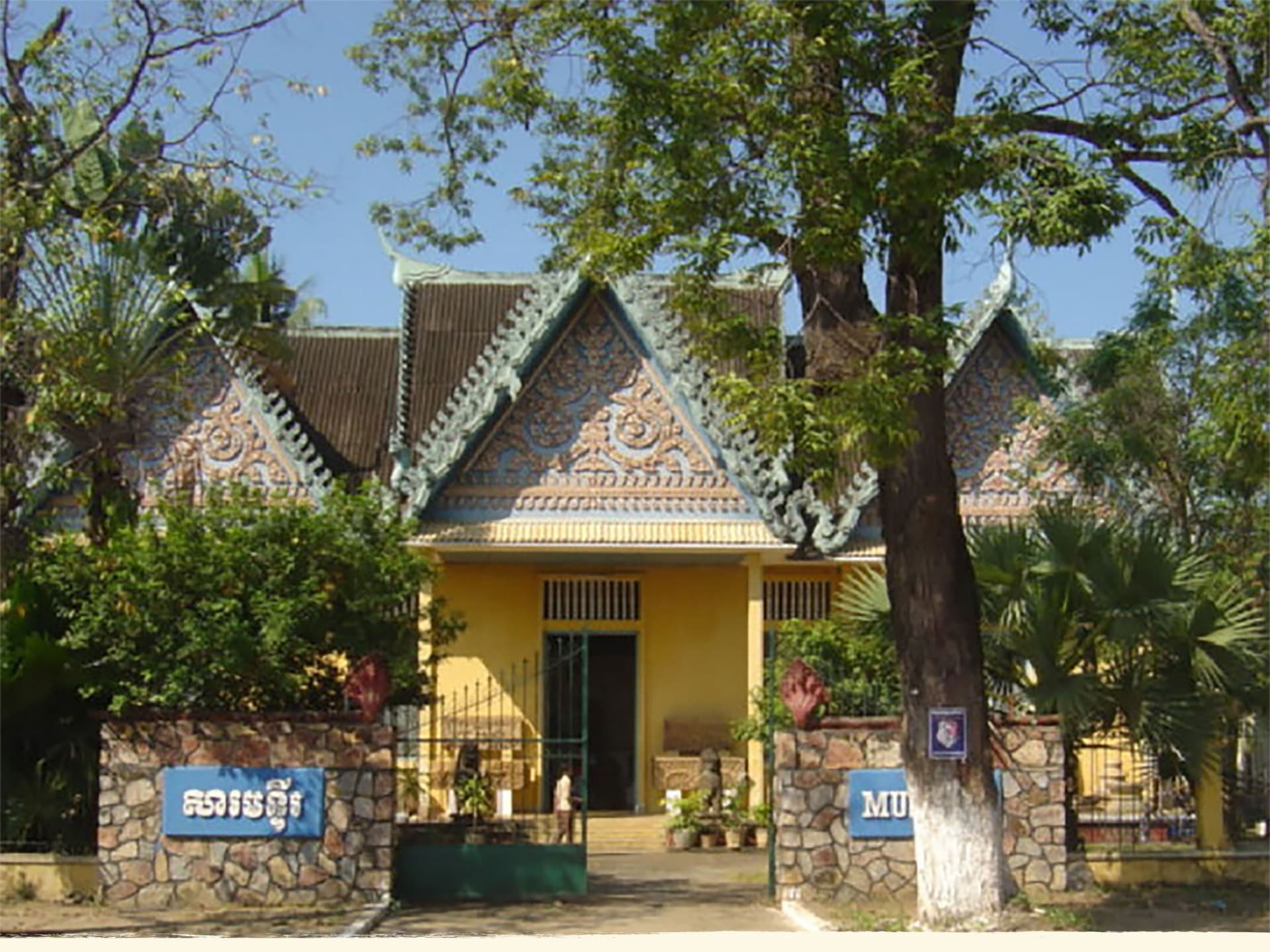
Built in 1963 on the initiative of Madeleine Giteau, the Battambang Provincial Museum traces the history of the province from Prehistory to the 19th century.
The Provincial Museum of Battambang occupies a building constructed in 1963, on the banks of the Sangker River, near the night market. Its creation was initiated by Madeleine Giteau, a French historian and curator of the National Museum of Cambodia from 1956 to 1966. The institution houses pieces that trace the history of the province from Prehistory to the 19th century.
Why visit the Battambang Provincial Museum
A visit provides a valuable complement to exploring Cambodia's second city. The collections span a broad chronological arc, allowing you to situate Battambang within the country's long history: prehistoric occupations, the Angkorian period, and later craftsmanship. The museum remains modest in size, making it a short and well-paced stop to incorporate between a stroll along the Sangker and visits to the region's temples.
Pieces from the Prasat Banon temple take on particular meaning here: they help you understand the neighboring archaeological sites before or after visiting them. For travelers interested in Cambodian archaeology beyond Angkor, it is one of the few places that documents the province's past with precision.
History and origins of the museum
The museum was built in 1963 at the initiative of Madeleine Giteau, then curator of the National Museum of Cambodia in Phnom Penh. The stated objective at the time was to provide Battambang with a venue capable of preserving and displaying the material heritage of the province, which had previously been scattered or stored outside the local territory.
The institution has endured the troubled decades of recent Cambodian history, which makes the preservation of its collections all the more noteworthy. The works on display come largely from excavations and surveys conducted in the region, particularly around peripheral Angkorian sites and the province's prehistoric caves.
What to see in the collections
The tour follows a broadly chronological sequence:
- Prehistory: flint and stone tools discovered in Laang Spean Cave by French archaeologists. The site served both as a dwelling and burial place for the deceased, as indicated by the explanatory diagrams accompanying the display cases.
- Angkorian period: statues, lintels, stelae, and bas-reliefs in sandstone. Several pieces come from the Prasat Banon temple and other sites in the province.
- Post-Angkorian and 19th-century era: ceramics and craft pieces testifying to later local productions.
The labels are in Khmer and English. The museum design remains understated, without digital features, which corresponds to the format of a mid-sized provincial museum.
Practical information
- Location: center of Battambang, on the banks of the Sangker, near the night market.
- Opening days: closed Mondays, open the rest of the week in the morning and afternoon. Exact hours vary; it is best to check on site or with your accommodation.
- Entrance fee: modest entry fee, payable in cash.
- Duration of visit: allow approximately 45 minutes to 1 hour.
- Access: the museum is within walking distance from most central hotels, or a few minutes by tuk-tuk.
What to combine nearby
Downtown Battambang lends itself well to an on-foot exploration. After the museum, several options await you:
- A stroll along the Sangker River, particularly pleasant in the late afternoon.
- The night market, just minutes away, to sample local cuisine.
- An excursion to the Prasat Banon temple, several pieces from which are visible in the museum.
- The colonial and Chinese architecture downtown, a legacy of the early 20th century.
Frequently asked questions
Frequently asked questions
Between 45 minutes and 1 hour is sufficient to tour all the rooms, or a bit longer if you read the labels carefully.
No, it is closed Mondays. It is open the rest of the week in the morning and afternoon, with a midday break.
Reservations are not necessary. You can purchase your ticket directly at the entrance.
Yes, though the content remains fairly traditional (display cases, statues). The short visit and lack of crowds make it an easy stop to fit into a day in Battambang.
The neighboring night market, the banks of the Sangker, the Prasat Banon temple on the outskirts, and the colonial streets downtown make up the main complementary stops.
Preparing your trip
The provincial museum fits naturally into an itinerary that includes Phnom Penh, Siem Reap, and Battambang Province. To create a tailor-made itinerary incorporating this stop, consult our suggestions for travel to Cambodia.
Interested in this visit?
We can include it in your personalised itinerary.