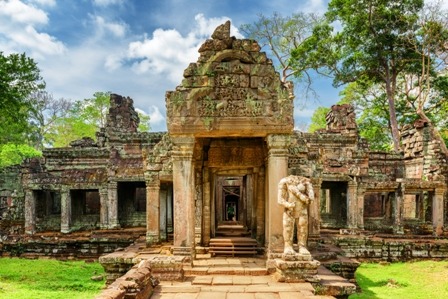
Angkor National Museum
Angkor National Museum
In Siem Reap, the Angkor National Museum unfolds 1,500 years of Khmer history across eight thematic galleries—essential before exploring the temples.
The Angkor National Museum, located in the heart of Siem Reap, spans 1,500 years of Khmer history, from the Funan kingdom in the 1st century AD to the fall of the Angkor empire. Divided into eight thematic galleries, it provides invaluable context before visiting the temples themselves, placing the stones within their religious, political, and social setting.
Why Visit the Angkor National Museum
Before or after exploring the temples, the museum supplies the interpretive framework often missing at archaeological sites. Rather than a purely aesthetic journey, it offers a chronological and thematic approach: successive religions (animism, Hinduism, Buddhism), major dynasties, daily life, and ancient languages. Plan 3 to 5 hours to move through all galleries without rushing.
- Essential context-setting before visiting Angkor Wat, Angkor Thom, and the Bayon
- Eight well-structured galleries allowing you to focus on your interests
- Multimedia support: audio guide, film projection, sound dome with translations
- Central location in Siem Reap, within walking distance of most downtown hotels
Khmer History Told by the Museum
The exhibition opens with the Funan empire (1st–6th centuries), the region's first great maritime power. From the port of Óc Eo, Khmer merchants maintained trade with India, China, and beyond—connections that stretched to the Mediterranean world. Hinduism arrived via these commercial routes, gradually replacing the animistic beliefs that saw mountains as sacred entities.
The Chenla period (7th–8th centuries) marked a shift inland: agriculture, stone temple architecture, and the rise of Sanskrit writing. In 802, Jayavarman II had himself proclaimed god-king atop Phnom Kulen, a founding act of the Khmer empire. Yasovarman I relocated the capital to Angkor in 890.
In the 12th century, two sovereigns dominate the narrative. Suryavarman II built Angkor Wat between 1116 and 1145, dedicating it to Vishnu. Jayavarman VII, late in the same century, steered the empire toward Mahayana Buddhism, founded Angkor Thom and the Bayon temple, and commissioned hospitals, rest houses, and a vast network of roads connecting the provinces to the capital.
The Eight Galleries in Detail
Gallery of 1,000 Buddha Statues
An introductory hall bathed in soft light, punctuated by roughly one thousand individually illuminated statues. The works display the seven mudra, the codified positions of Buddha, and the sculptural techniques characteristic of each era and region: wood, stone, and gilded metals.
Gallery A — Origins of the Khmer Empire
Devoted to the Funan and Chenla periods. Discover how maritime commerce shaped the first political and religious structures of ancient Cambodge.
Gallery B — The Reflection of Khmer Beliefs
The transition from animism to Hinduism, then Buddhism, is documented through sculptures and ritual objects. Vishnu, Shiva, and Brahma take center stage, accompanied by mythological narratives and folk tales.
Gallery C — The Great Kings
A hall dedicated to the figures who shaped the empire: Jayavarman II and the 802 founding, Yasovarman I and the shift to Angkor, Suryavarman II and the construction of Angkor Wat, followed by Jayavarman VII, builder of Angkor Thom.
Gallery D — Angkor Wat
A monographic gallery focused on the temple itself. A film projection captures the solar phenomenon at the equinox, when sunrise aligns with the central sanctuary. Excellent preparation for visiting the site.
Gallery E — Angkor Thom
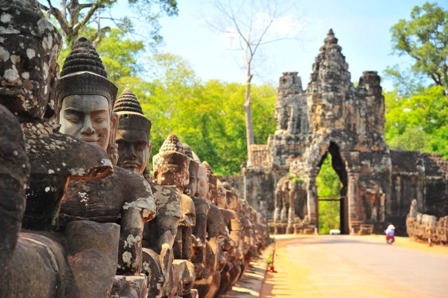
The city founded by Jayavarman VII is presented from architectural and urban planning perspectives: hydraulic design, water management, religious programs blending Hinduism and Buddhism. This gallery usefully supplements a visit to the Bayon temple.
Gallery F — Evidence of the Past
Steles and inscriptions in Sanskrit and ancient Khmer: royal decrees, battle accounts, descriptions of society. A sound dome allows you to hear translations of major inscriptions, accessible to both specialists and curious visitors.
Gallery G — The Apsara
The final gallery celebrates the Apsara, heavenly nymphs of Hindu mythology, now embodied by dancers of the Royal Ballet of Cambodge. Costumes, adornments, and jewelry are presented through sculptures and textiles, alongside traditional Khmer dress across the centuries.
Practical Information
- Location: downtown Siem Reap, within walking distance of most central hotels, or accessible by tuk-tuk, motodop, or taxi.
- Duration: 3 to 5 hours to tour all galleries thoroughly.
- Hours: open daily during daytime. Check seasonal hours before your visit, as they vary by season.
- Admission: paid entry; audio guide available for an additional fee. Children's rates apply.
- Best time to visit: late morning and early afternoon are busiest. Visit at opening or closing time to avoid large groups.
- Tip: touring the museum before the temples helps you better interpret the bas-reliefs and iconography.
Nearby Attractions
The museum fits naturally into a circuit around Siem Reap and the Angkor Archaeological Park:
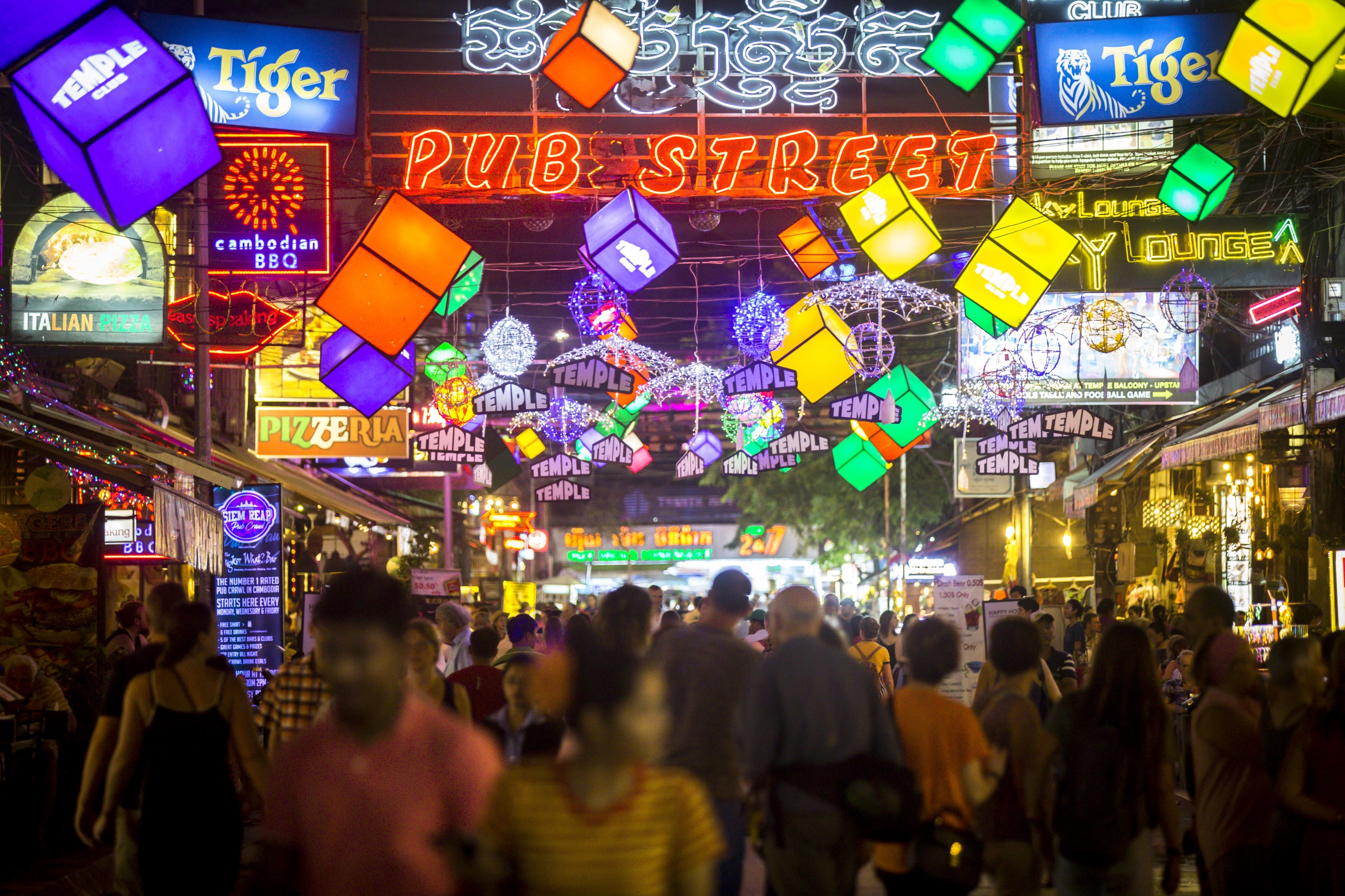
- Siem Reap: the base city for exploring the region, rich in markets, restaurants, and craft workshops.
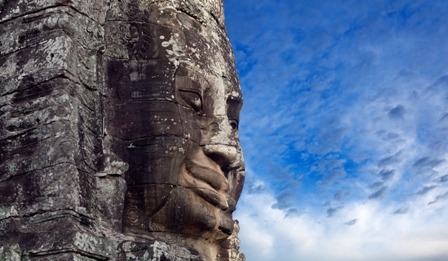
- The Bayon Temple: heart of Angkor Thom, famous for its face towers.
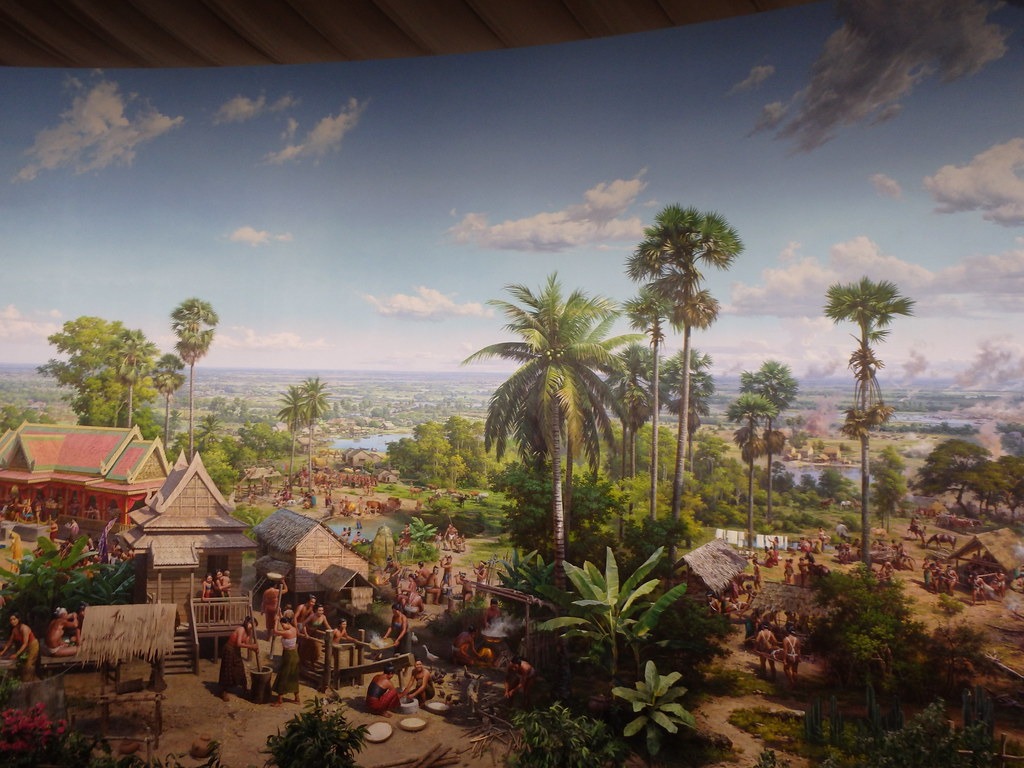
- Eastern Mebon: a 10th-century Hindu island temple, less crowded.
Frequently Asked Questions
Frequently asked questions
Before, ideally. The exhibition provides the chronological, religious, and iconographic context needed to read the temple bas-reliefs. A visit afterward remains enriching for exploring points in greater depth.
Allow 3 to 5 hours to thoroughly explore all eight galleries. A quicker visit is possible if you focus on two or three galleries.
Yes, audio guides are available in multiple languages, including English. Gallery labels are also translated.
The museum is located downtown. Depending on your starting point, you can walk, take a tuk-tuk, motodop, or taxi. Tuk-tuk trips from major hotels typically take less than fifteen minutes.
Yes, provided you adjust the pace. The gallery of 1,000 Buddhas and the Angkor Wat projection usually hold their attention. A focused 1.5 to 2-hour visit works better than a full tour.
Planning Your Trip
The Angkor National Museum fits easily into an itinerary combining Siem Reap, the Angkor Archaeological Park, and other regions of Cambodge. To build your journey, explore our Cambodge travel experiences and work with our advisors to craft a stay suited to your pace.
Nearby
Interested in this visit?
We can include it in your personalised itinerary.