Phnom Sopor Kaley
Phnom Sopor Kaley
Near Kratié, the hill of Phnom Sopor Kaley blends animist legend, Buddhist pagoda and panoramic views of the Mekong after climbing 800 steps.
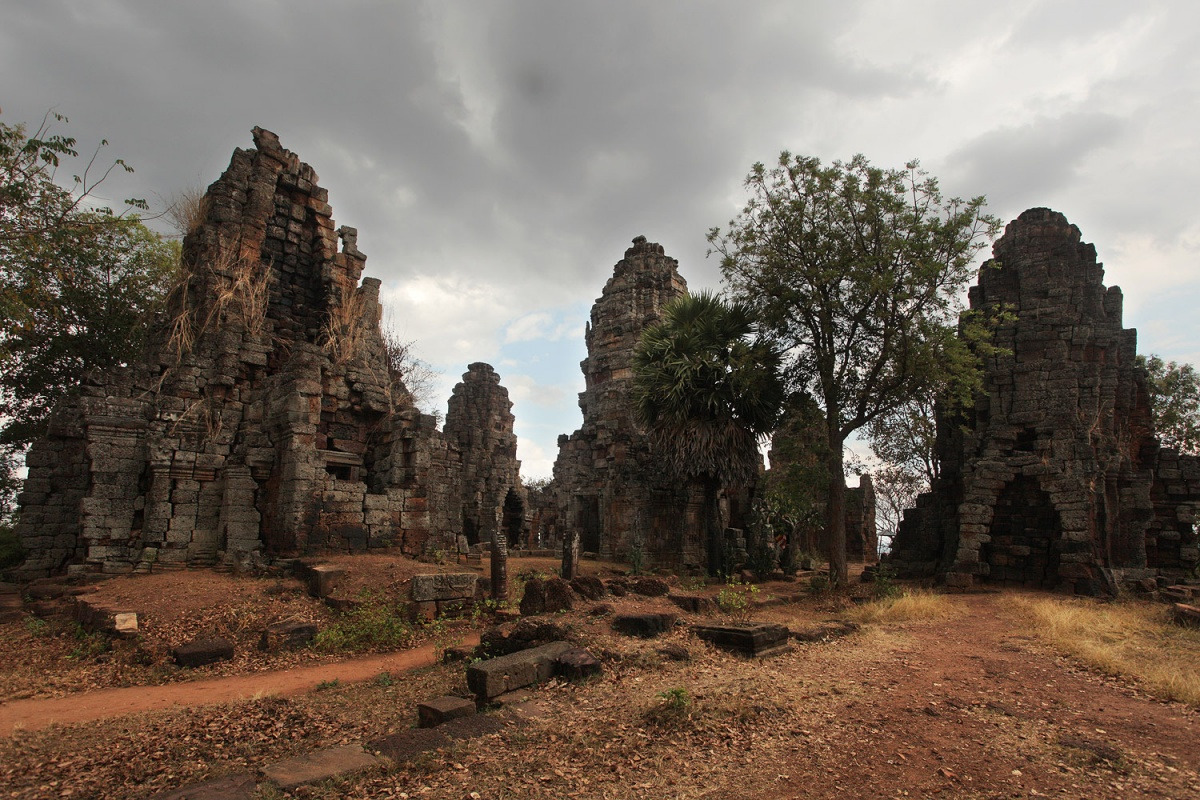
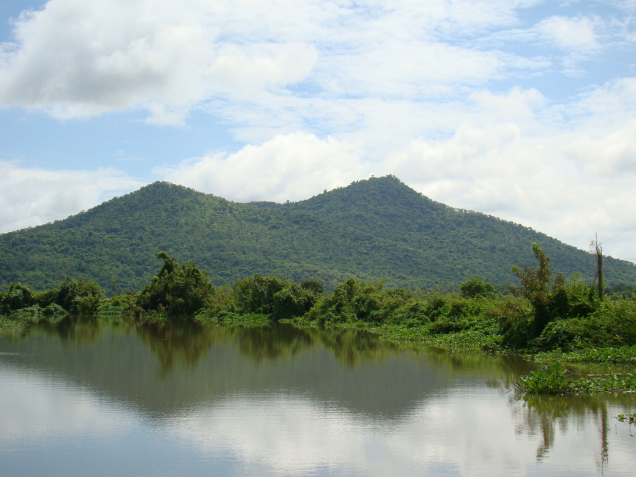
On the eastern bank of the Mekong, in Kratié province, Phnom Sopor Kaley rises with its wooded silhouette approximately 45 kilometers southwest of the provincial capital. This hill, crowned by a Buddhist pagoda, combines an ancient animist legend, sweeping views over the river, and a staircase ascent that makes it a cherished stop for travelers descending the Mekong.
Why visit Phnom Sopor Kaley
- A legendary site associated with the myth of the crocodile Sopor Kaley, predating the Hinduization of Cambodge.
- An expansive panorama over the Mekong, the river island of Koh Tasui, and surrounding rice fields.
- An active pagoda that bears witness to rural Cambodian Buddhism.
- A cultural stop off the beaten path, often included in river cruises.
History and the legend of the crocodile Sopor Kaley
The name Phnom Sopor Kaley literally means "the mountain Sopor Kaley." According to local oral tradition, a crocodile named Sopor Kaley terrorized villages along the Mekong riverbanks. A renowned hunter, Nen Thun, managed to defeat and kill the beast. The animal then reputedly reincarnated as the landform we see today, giving the hill its name and sacred aura.
This belief in the incarnation of spirits within natural elements—hills, stones, trees—stems from animism. This spirituality preceded the arrival of Hinduism in the region, which took hold with the development of the kingdom of Funan from the 1st century CE onward. The legend of Sopor Kaley thus likely draws from a religious foundation very ancient indeed, probably predating that period.
What to see and do on site
The ascent
Access to the summit is via a red laterite path extending into a staircase of over 800 steps. The climb winds through tropical vegetation, with several shaded landings offering a chance to catch your breath.
The pagoda at the summit
At the top, the Buddhist pagoda remains an active place of worship frequented by villagers. Should a monk or English-speaking guide accompany you, they can explain the pagoda's role in community life and certain local rituals.
The panorama
The summit platform offers views over the Mekong riverbed and the river island of Koh Tasui, situated to the south. Below, the traditional village of Chrauy Banteay spreads amid its rice fields and pastures, offering a clear picture of Cambodian rural organization.
Practical information for your visit
- Average duration: plan 1.5 to 2.5 hours on site, including ascent and descent.
- Difficulty: moderate but sustained climbing; the 800 steps require reasonable fitness.
- Dress code: shoulders and knees covered when approaching the pagoda, closed-toe shoes recommended.
- What to bring: plenty of water, sun protection, hat.
- Entry fee: free admission or modest donation to the pagoda depending on the season.
When to visit
The site is open year-round, but the dry season from November to March remains most comfortable: bearable temperatures, practicable laterite paths, and clear views from the summit. Between June and October, the monsoon makes steps slippery and often-clouded skies limit the panorama, though the water-saturated rice fields offer strikingly green landscapes in compensation. Favor early morning or late afternoon to avoid midday heat.
How to get there
From Kratié, take national route 73 westward to the town of Chloung. Once there, a ferry crosses the Mekong; it then remains a dozen kilometers west to reach the foot of the hill. The final stretch of road, partly unpaved, may require a sturdy tuk-tuk or motorbike depending on the season.
Phnom Sopor Kaley also features among the frequent stops on Mekong river cruises, making it a logical halt between Kratié and Kampong Cham.
Nearby combinations
The Kratié region and the Mekong corridor offer several natural extensions to this visit:
- Observation of Irrawaddy dolphins at Kampi, north of Kratié.
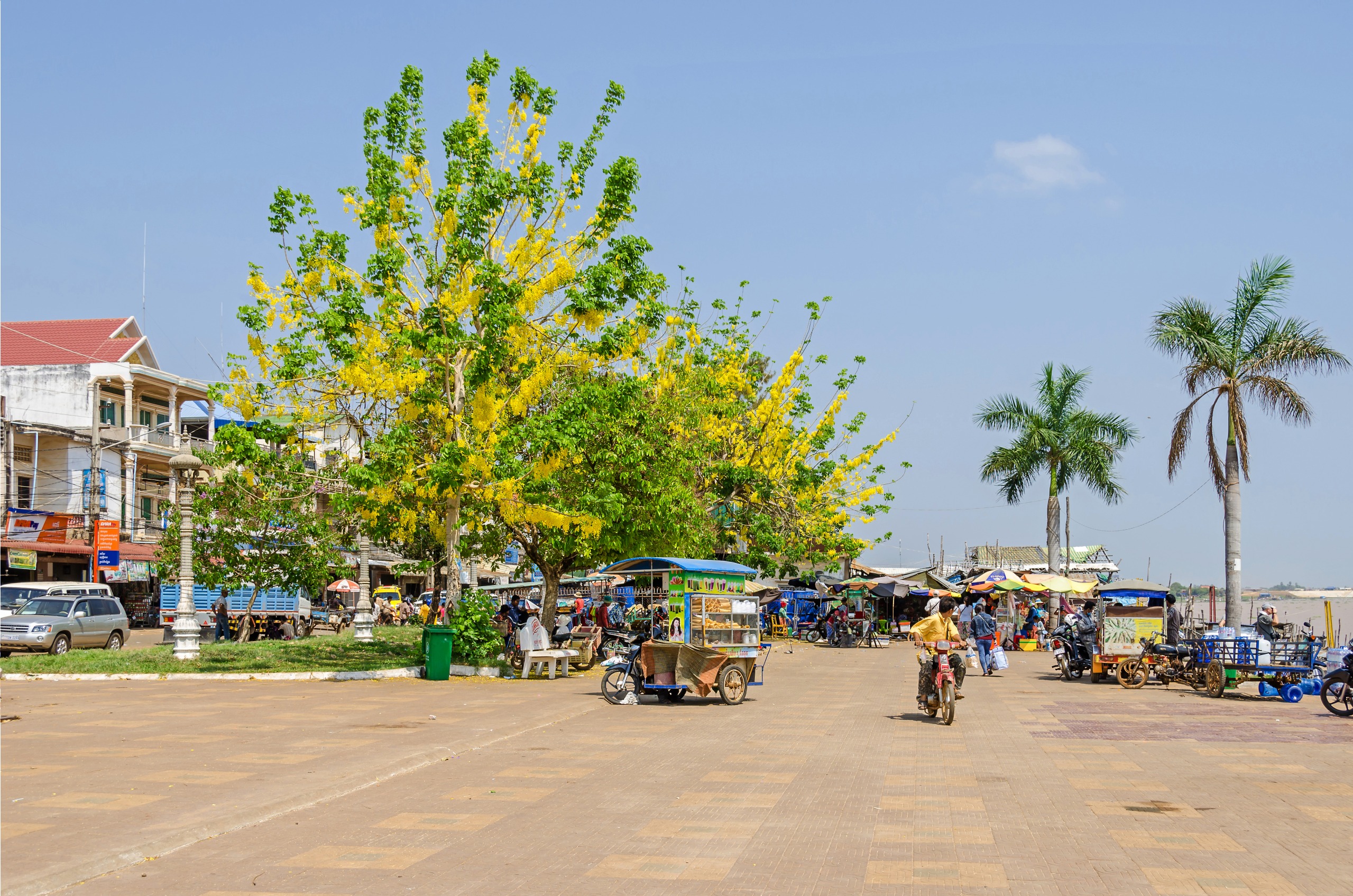
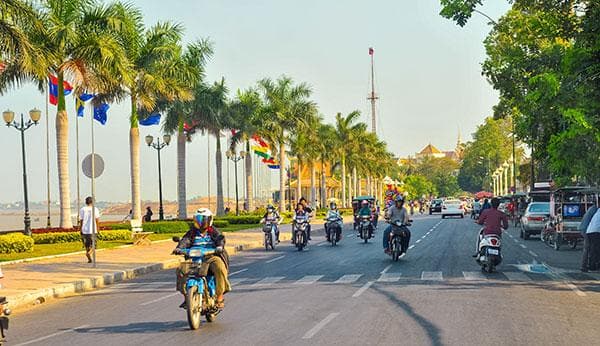
- A stroll through Kratié town, its riverfront and colonial-era houses.
- An excursion to Koh Trong island, opposite Kratié, to discover a typical rural village.
- To venture further east, the coffee plantations of Mondulkiri reveal another rural facet of Cambodge.
- On the Khmer heritage front, the Bayon temple and the Terrace of the Elephants at Angkor remain major stops.
Frequently asked questions
Frequently asked questions
The staircase contains over 800 steps, preceded by a red laterite path. The ascent requires reasonable fitness but remains accessible to an occasional hiker.
"Phnom" means mountain in Khmer. Phnom Sopor Kaley thus translates to "the mountain Sopor Kaley," named after the legendary crocodile which, according to tradition, reincarnated as this landform.
Yes. Phnom Sopor Kaley is a regular stop on river cruises between Phnom Penh and Kratié, typically offered as a half-day shore excursion.
The dry season, from November to March, is most pleasant. Steps are dry, heat remains bearable, and views from the summit are clear.
Children old enough to hike can climb the staircase at their own pace, but the 800 steps and lack of continuous shade make the effort demanding for younger visitors.
Plan your trip
Phnom Sopor Kaley integrates naturally into an itinerary combining Kratié, the Mekong, and rural regions of eastern Cambodge. To build a tailor-made journey including this stop, consult our suggestions for travel to Cambodge.
Nearby
Interested in this visit?
We can include it in your personalised itinerary.