The Kep Butterfly Farm
The Kep Butterfly Farm
Private ecological garden in the Jasmine Valley, near Kep, the butterfly farm raises over 35 varieties and offers a short educational visit.
The Kep butterfly farm occupies land in the Jasmine Valley, a few kilometers from the center of Kep, in southern Cambodge. This private ecological garden combines lepidopteran breeding, educational trails, and conservation efforts. The visit is short and accessible, fitting easily into a day of cycling between the coastal town and the neighboring national park.
Why visit the butterfly farm
The site stands out for its dual purpose: preserving local butterfly species and training a Cambodian team in breeding techniques. Revenue from chrysalis exports finances garden maintenance and staff salaries.
For visitors, the appeal lies in three key points:
- A clear educational approach, suited to families and curious travelers alike;
- A well-maintained botanical setting, with host plants and nectar-bearing flowers that attract wild butterflies;
- A leisurely activity, a welcome break in a region often explored by bicycle or scooter.
What you will see on site
The garden and enclosure
The heart of the farm is a net-enclosed flight house where over 35 recorded butterfly varieties roam freely. You walk among flowering beds at your own pace with no set route. The visible species vary by season and current emergence cycles.
The breeding trail
Part of the visit focuses on the lepidopteran life cycle: egg-laying, caterpillar, chrysalis, emergence. Staff present breeding boxes, explain host plants associated with each species, and show chrysalises near hatching when available. Explanations are given in English, sometimes in French depending on available guides.
Environmental commitment
The farm is run by foreign managers who champion local environmental preservation and employment for Jasmine Valley residents. Part of the production is exported to butterfly houses in Europe and North America, funding local operations.
Practical information
- Visit duration: allow approximately 1 to 1.5 hours, including educational content.
- Admission: moderate entry fee, payable in cash (riels or US dollars).
- Hours: open during daylight hours, daily in principle; check locally before visiting, as hours may vary.
- Suitable for: children, no physical difficulty.
- Bring: water, hat, and closed-toe shoes if extending to the national park.
The best light for observing active butterflies is late morning, when warmth draws insects from the foliage.
Getting there
The farm is located in the Jasmine Valley, set back from Kep's coast. Several options depending on your pace:
- By tuk-tuk from Kep town center: short journey, to be negotiated with the driver (one way or waiting time).
- By bicycle: 10 to 25 minutes from the center depending on your starting point. The road is paved but offers little shade.
- By scooter: convenient if you combine the farm with other stops in the valley.
- On foot: possible from the national park entrance following the trail connecting both sites.
What to combine nearby
The farm works well for a half-day loop around Kep:
- Kep National Park: forest trail loop, views over the Gulf of Thailand, accessible on foot or mountain bike from the farm.
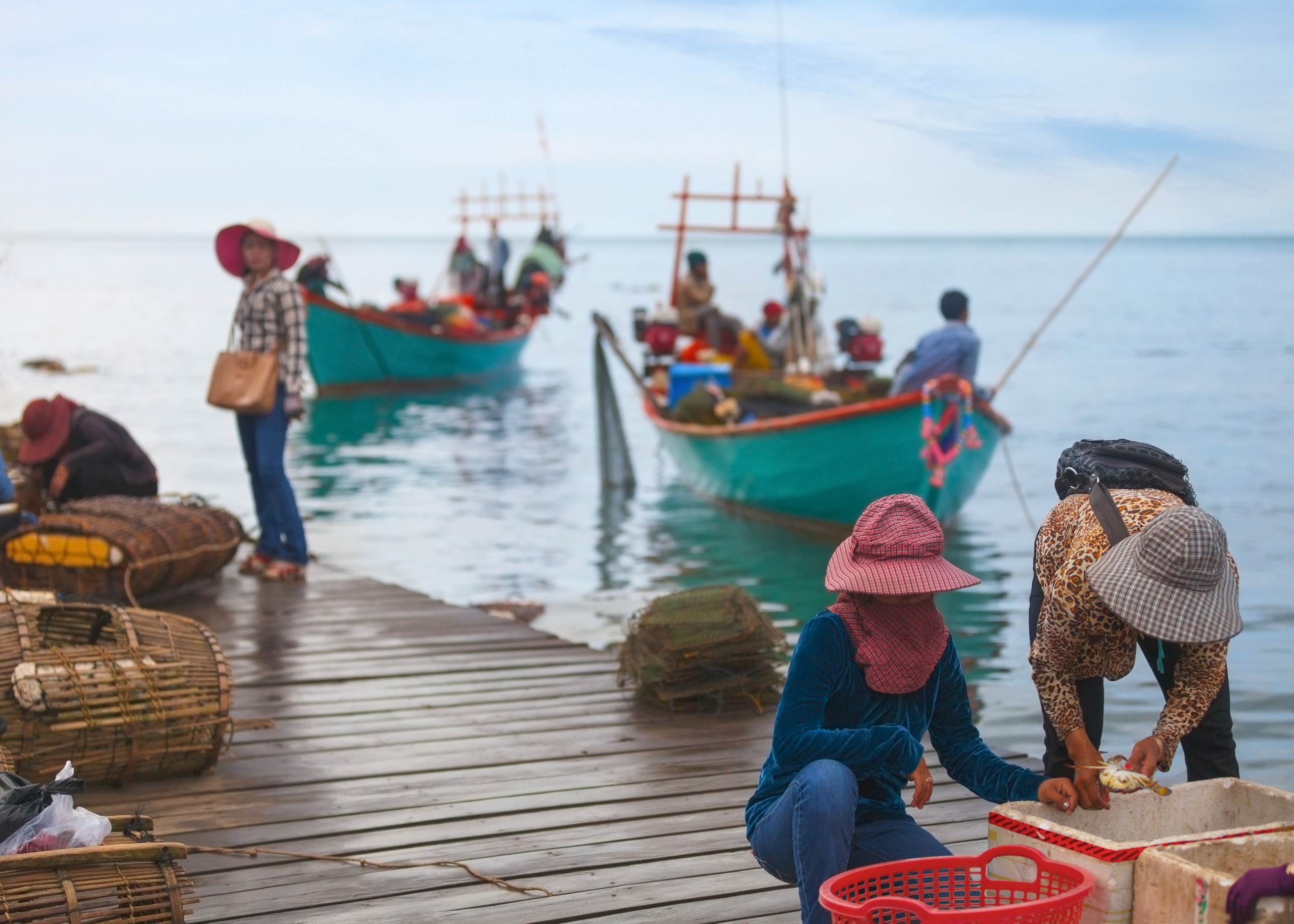
- The crab market: on the waterfront, ideal for lunch after your visit.
- Rabbit Island (Koh Tonsay): boat excursion from Kep pier.
- Kampot pepper plantations: about thirty minutes by car, a logical extension for the following day.
If planning a wider itinerary across the country, major sites like Angkor Wat, Angkor Thom, or Beng Mealea are located in the Siem Reap region, at the other end of the country.
Planning your trip
To include the Kep butterfly farm in a custom itinerary through Cambodge, explore our Cambodge travel ideas and connect with an English-speaking advisor who will tailor the itinerary to your pace.
Nearby
Interested in this visit?
We can include it in your personalised itinerary.