The Caves of Phnom Kampong Trach
The Caves of Phnom Kampong Trach
East of Kampot, the Phnom Kampong Trach caves form a sacred karst network, complete with an open-air clearing, a reclining Buddha, and an underground lake.
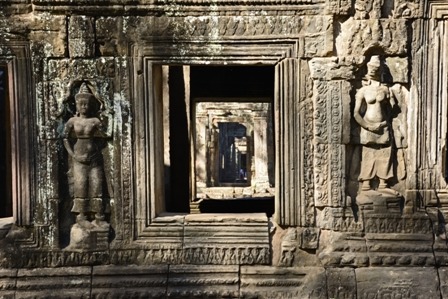
About forty kilometers east of Kampot, in Kampong Trach district, the Phnom Kampong Trach caves form a network of karst cavities carved into the foot of a limestone mountain. The site blends spectacular geology with Buddhist worship: for local inhabitants, these underground chambers are natural temples, frequented by pilgrims and monks from the monastery stationed at the entrance.
Why visit Phnom Kampong Trach caves
The complex stands out from most Cambodian caves through its dual nature: geological and religious. Visitors discover both spectacular rock formations (stalactites, collapsed vaults, interconnected galleries) and active religious practice, with votive altars scattered throughout the chambers and ceremonies held several times a year. Unlike more trafficked sites in the country, visitor numbers remain modest, allowing for a peaceful experience. The proximity to Kampot and Kep makes it an easy excursion to slot into a southern Cambodia itinerary.
What to see on site
The monastery and cave entrance
Access is through the grounds of a Buddhist monastery situated at the foot of Kampong Trach mountain. Monks reside here year-round, and it's common to encounter novices near the caves. The monastery serves as the landmark for entering the underground network.
The chambers and galleries
Once inside, the route winds through chambers of varying dimensions. Votive altars, sometimes tucked into alcoves, alternate with limestone concretions. Some galleries remain dark: a headlamp or phone flashlight proves useful.
The open-air clearing and reclining Buddha
At the heart of the complex, an ancient collapse of rock has created an open-air clearing bathed in natural light. Regarded as a temple in its own right, it shelters a statue of a reclining Buddha—one of the most striking elements of the visit. The tropical vegetation growing in this opening reinforces the atmosphere of the place.
The underground lake
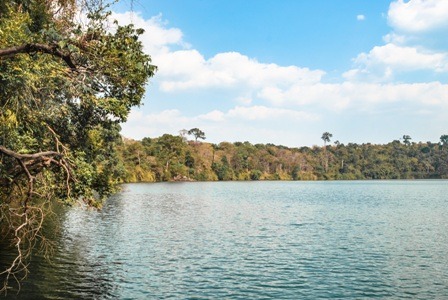
Further into the network, a small underground lake occupies an enclosed cavity. Swimming is not practiced here, and the site remains primarily contemplative.
Religious ceremonies
At certain times of year, particularly during major Buddhist festivals, the caves host ceremonies drawing local worshippers and pilgrims from further afield. Attending one offers an authentic glimpse of Cambodian religious practice, provided you remain discreet and respectful.
Practical information
- Dress code: knees and shoulders covered, as in any Buddhist place of worship.
- Visit duration: allow 1 to 2 hours on site, depending on your pace and desire to explore all the galleries.
- Equipment: closed shoes with good grip (the ground can be wet), headlamp or flashlight, water.
- Local guide: at the entrance, village children or young adults often offer to guide visitors through the network; a small tip is customary.
- Admission fee: modest entrance fee, payable on site in local currency or US dollars.
- Best time: the dry season (November to April) makes access and progress through the galleries easier.
How to get there
The site is located in Kampong Trach district, approximately 38 km east of Kampot. From town, follow Route 33 toward Kep; about 7 km past the White Horse Monument, a turning leads toward Kampong Trach and the mountain base. The journey takes around one hour depending on your mode of transport.
Several options are available:
- Tuk-tuk from Kampot: the simplest option for a day trip, with waiting time included.
- Car or minibus with driver: recommended if you combine the visit with other stops in the region.
- Scooter: feasible for travelers experienced with local driving; the route is well-marked.
Combining with other regional attractions
The visit integrates naturally into a southern Cambodia circuit. About thirty kilometers away, the coastal resort of Kep and its famous crab market offer an opportunity to extend the day with a seafood meal. The town of Kampot itself merits a stop for its colonial architecture, riverside setting, and pepper plantations—among the most renowned in Asia. Further east, the Cambodia-Vietnam Friendship Monument can round out the itinerary for travelers continuing toward the border.
Planning your trip
To incorporate Phnom Kampong Trach caves into a tailor-made itinerary and discover southern Cambodia beyond the most well-known sites, consult our Cambodia journeys designed with our English-speaking local teams.
Nearby
Interested in this visit?
We can include it in your personalised itinerary.