Money in Cambodia
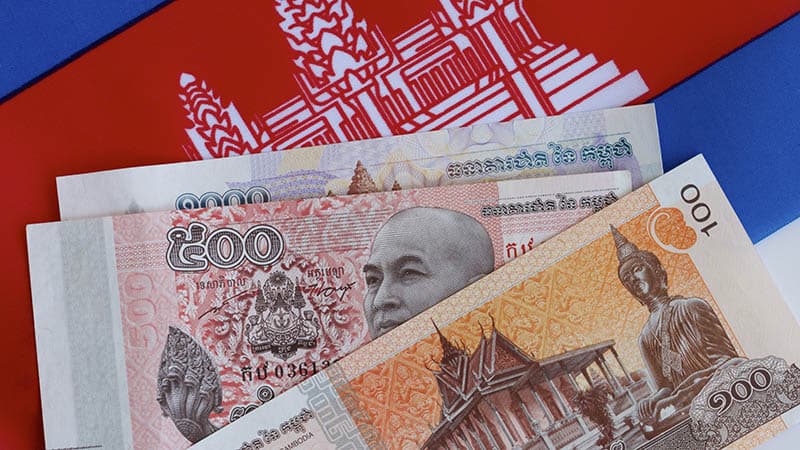
Money in Cambodia, or the national currency, is the Riel. Banknotes come in denominations of 100, 500, 1,000, 2,000, 5,000, 10,000, 20,000 and 50,000 riels. The 2,000 and 20,000 riel notes are much more recent than
Money in Cambodia, or the national currency, is the Riel. Banknotes come in denominations of 100, 500, 1,000, 2,000, 5,000, 10,000, 20,000 and 50,000 riels. The 2,000 and 20,000 riel notes are significantly more recent than the others: 2007 for the 2,000 riel notes and 2008 for the 20,000 riel notes.
The US Dollar in Circulation
However, the US dollar is widely accepted; all merchants accept it and even display their prices in dollars. Similarly, they may give you change in riels or a combination of riels and dollars. Since Khmers do not use coins, riels are frequently used in place of cents. To give you an idea of the exchange rate, 1 $ equals approximately 4,000 Riels (as of June 2017). Ten cents would therefore be worth about 400 riels in most establishments. Be aware, however, that in many tourist areas such as Siem Reap, it is not uncommon to find establishments that apply a slightly different exchange rate—for example, 1 $ for 4,100 or 4,200 riels.
Withdrawing Cash
ATMs in Cambodia charge a commission on each withdrawal, typically between 4 and 6 $ depending on the bank. Keep in mind, this is before your own bank's fees! You can choose to withdraw either dollars or Riels. We recommend making withdrawals as infrequently as possible to avoid charges. ATMs generally dispense large denominations—you'll need to "break" these notes in major commercial areas, since small restaurants and shops often lack sufficient change for bills larger than 20 dollars.
Cost of Living: A Guide
That said, prefer riels in rural areas and small denominations for tuk-tuks. For reference, a beer in a shop costs on average 2,000 Riels, or about 50 cents. In Cambodian "canteens" or street stalls, you can eat for less than 2 $. Expect 5 $ per person in Khmer or international restaurants; 15 $ or more in upscale establishments. In heavily touristic areas such as Koh Rong or Siem Reap, prices can increase by two or three dollars. In certain border areas with Thailand, such as Poipet, Koh Rong or Pailin, Thai Baht is accepted. The same applies to Vietnamese border provinces where you can pay in Dong. Be careful with damaged or torn banknotes. Do not accept them, as most Khmers will refuse them when you try to use them for payment!