The Future of Tuk-Tuks
In Cambodia, the tuk-tuk remains a symbol of travel, yet the arrival of ride-hailing apps, Indian auto-rickshaws, and sustainable mobility projects are gradually reshaping its future in the cities.
No need to search for a tuk-tuk to get around Cambodia—the tuk-tuk comes to you! Sometimes from down the street, you'll hear the famous and unforgettable "Hello Sir, tuk-tuk Sir?" ringing constantly through the air. In recent years, the country's rapid economic growth has brought more than 10,000 tuk-tuk drivers to Phnom Penh! The tuk-tuk is the most widely used means of transport in Cambodia, commonly called "Reumok," derived from the word "trailer." A question arises today: are tuk-tuks as we know them destined to disappear?
The history of the tuk-tuk, a traditional vehicle?
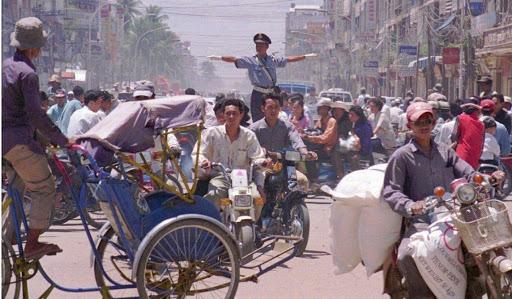

At the end of the twentieth century, people traveled on foot, used canals or hand-pulled rickshaws—the hand-drawn carriages that were the ancestor of the tuk-tuk! The hand-drawn carriage was an important Japanese export product and spread throughout Asia, particularly within European colonies. It became the preferred means of transport for colonists.
In the very early twentieth century, this form of locomotion was replaced by the pedal-powered tricycle (cyclo-rickshaw). After World War II, it evolved with the addition of a two-stroke Japanese-made engine. This marked the birth of the tuk-tuk as we know it today, alongside motorcycle taxis that proliferated massively in the 2000s!
In Cambodia, the tuk-tuk consists of a scooter to which a two-wheeled carriage is attached via a coupling system in which the trailer fits.
The tuk-tuk revolution
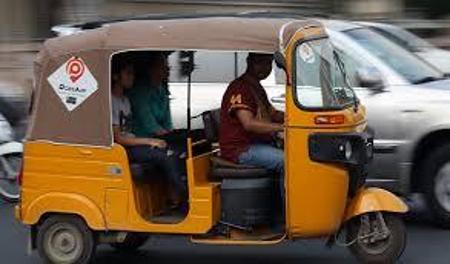
For the past 3 years, the company Taxistartup, operating worldwide, has revolutionized transport in Cambodia by offering a turnkey app similar to Uber for $20 per driver per month or 5% + $0.20 per ride. Companies such as Passapp and Exnet Taxi have seized the opportunity! They now offer users the ability to travel by auto-rickshaws imported from India, the three-wheeled vehicle previously powered by petrol engines but now equipped with gas motors.
Never has it been easier to catch a taxi thanks to this app: simply enter your pickup location and board the vehicle, especially since the switch to gas has dramatically reduced costs for passengers. No more haggling—the fare is set according to time and distance traveled.
As Indian auto-rickshaws connected to transport apps flood the Cambodian landscape, traditional tuk-tuks struggle to survive the competition! Passengers prefer to abandon the tuk-tuk's authenticity for practical and economic reasons.
The tuk-tuk, unshakeable!
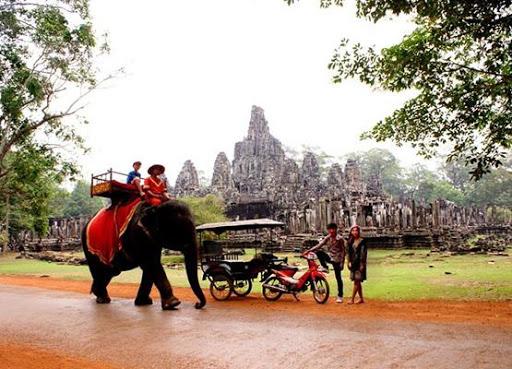
Even if the number of tuk-tuks has fallen sharply, they remain complementary to new means of transport! Indeed, aware of the effects this produces, Passapp decided to add the traditional Khmer tuk-tuk to its app to support drivers who don't have auto-rickshaws and thus give passengers the choice between authenticity and new technology.
However, this place alongside new transport options is increasingly under threat!
In June 2018, the United Nations Development Programme (UNDP) and Grab, a taxi and rickshaw booking company, launched a joint initiative. The project, named SUMAI (Sustainable Urban Mobility for All Initiatives), aims to make Cambodian cities cleaner, safer, and more livable in order to cope with the 4.5 million registered vehicles in the capital!
Thus, just as the hand-drawn carriage gave way to the pedal-tricycle, the pedal-tricycle to the motorized version, the auto-rickshaw could well be replaced in the coming decades by an electric and more robust auto-rickshaw, similar to those already seen in Paris, putting an end to the tuk-tuk as we know it in order to improve living conditions and traffic flow in the city.
But this does not mean the tuk-tuk would disappear from the landscape. On the contrary, it will be highly visible within tourist destinations and will soon become not a means of transport but truly a tourist attraction in its own right! Mr. Pov, president of the tuk-tuk drivers' association, has stated that he wishes 50% of parking spaces outside tourist sites to be specially reserved for tuk-tuks in order to preserve this heritage.
Indeed, former drivers now offer guided city tours by tuk-tuk. Don't hesitate to contact Mr. Soma, a witty driver and gifted geographer near Wat Koh. He speaks fluent English and will be delighted to take you on a tour of the capital and its surroundings away from the usual tourist circuits!
Frequently asked questions
Prices vary depending on distance and time. With apps like PassApp, fares are fixed based on kilometers. For traditional tuk-tuks, expect to pay between $2 and $5 for a downtown trip, but don't hesitate to negotiate.
No, traditional tuk-tuks won't disappear entirely. They are evolving toward a more tourist and heritage-focused function while coexisting with new auto-rickshaws connected to transport apps.
You can use apps like PassApp, which now include traditional tuk-tuks. Simply download the app, enter your destination, and choose between a modern auto-rickshaw or a traditional tuk-tuk.
The Cambodian tuk-tuk consists of a scooter with a detachable two-wheeled trailer. The Indian auto-rickshaw is a one-piece three-wheeled vehicle, often more robust and now equipped with gas engines that are more eco-friendly.