Cambodia's 3 UNESCO World Heritage Sites
Angkor, Preah Vihear, and Sambor Prei Kuk form the Cambodian trio recognized by UNESCO. Three distinctly different sites, linked by Khmer architecture, history, and heritage.
Cambodge, renowned for its traditions and ancestral monuments, is among the 193 member countries of UNESCO, the UN specialized agency for education, culture, and science since its admission in 1991. Since then, the kingdom has sought to present many of its architectural monuments and historical sites for inscription on the prestigious World Heritage List, with the glorious archaeological site of Angkor leading the charge. Only 3 entities have so far been inscribed and recognized by UNESCO, one for each decade: Angkor in 1992, Preah Vihear in 2008, and Sambor Prei Kuk in 2017.
These three sites, visited countless times over several decades, were part of a broader list submitted to UNESCO by Cambodge that also contained 8 other notable places spanning material, cultural, and natural heritage.
This list includes:
Angkor Borei and Phnom Da
Banteay Prei Nokor
These eight sites remain pending UNESCO recognition on the World Heritage List since 1992, and cannot currently be considered as part of it. Let us focus here on the three sites officially listed by the specialized agency and which, as a result, benefit from more extensive conservation and restoration programs.
The Archaeological Site of Angkor
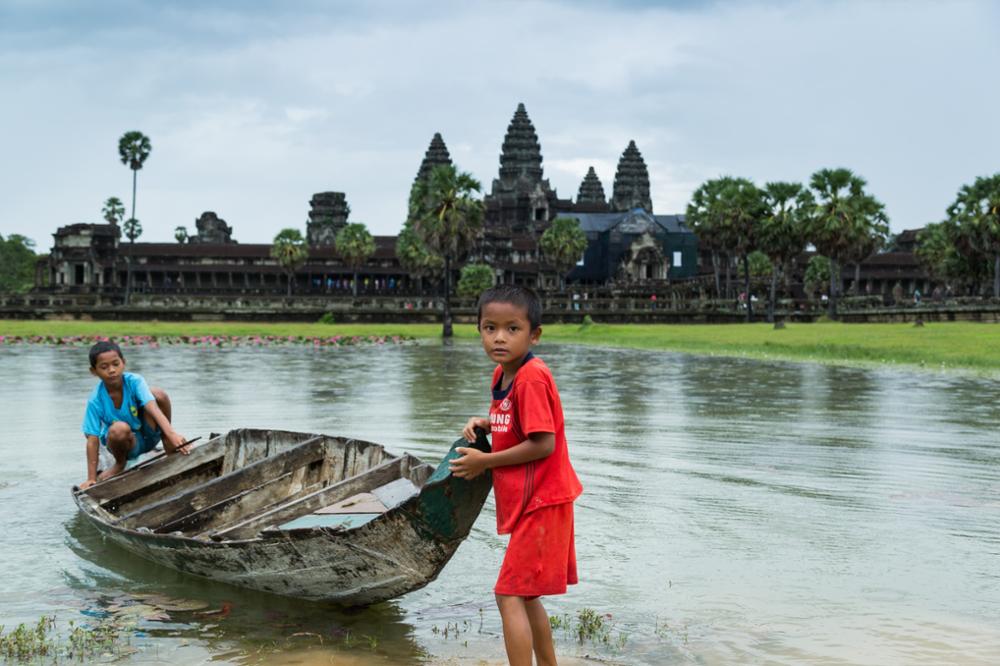
The most iconic site of Cambodian culture, Angkor and its temple-mountains such as Angkor Wat or Phnom Bakheng, was the first to be recognized by UNESCO as a World Heritage Site in 1992. Located just outside Siem Reap, it sprawls across a forested area of more than 400 km² and harbors the remains of the Khmer empire. A prosperous era in Khmer civilization's development that lasted 600 years between the 9th and 15th centuries, notably thanks to the construction of hydraulic systems and gigantic water reservoirs called baray, which captured and stored water during heavy monsoon seasons. Devices that many villages nested within Angkor still use today, a place where rice cultivation predominates.
UNESCO, alongside the APSARA National Authority and the CIC-Angkor, work daily on Angkor's preservation. A site that can face numerous pressures, particularly from the 100,000 inhabitants living within it who naturally seek to expand their living space, as well as the proximity of Siem Reap city, which represents the peak of mass tourism in Cambodge. These three organizations successfully removed Angkor from the List of World Heritage in Danger in 2004.
The Temple of Preah Vihear
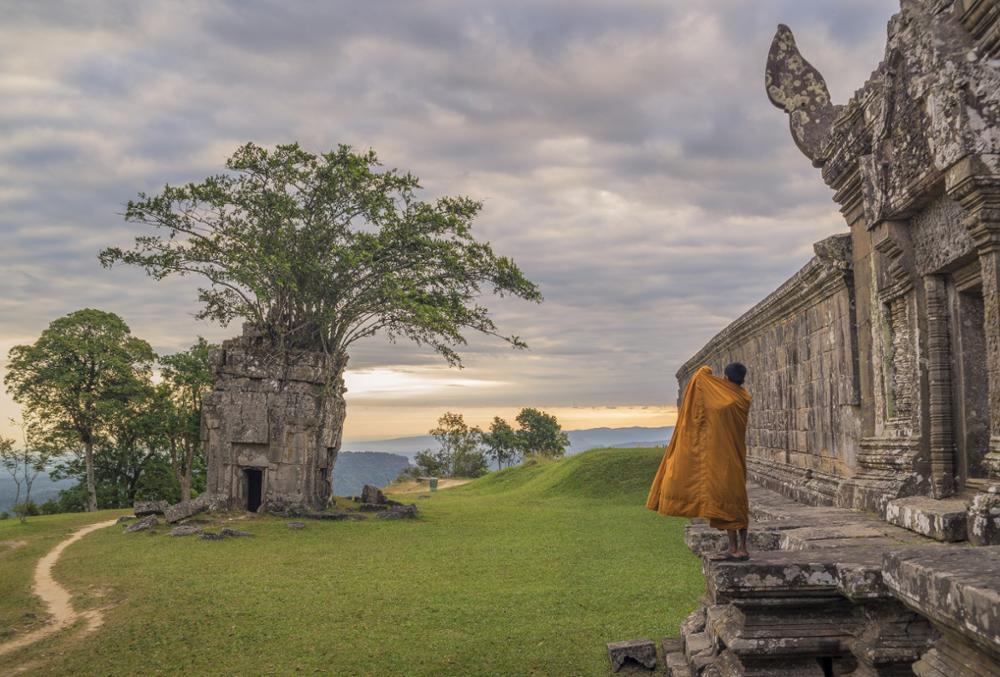
The Preah Vihear site sparked intense geopolitical tensions between Cambodge and Thailand for half a century. Situated on the border between these two neighboring countries, the site was indeed the theater of territorial conflicts since Cambodge's independence in 1953, the year Thai forces occupied the temple. After much turmoil, and 55 years later, the two countries recognized the remarkable universal cultural value of the Preah Vihear temple. They agreed for Cambodge to present the site, with Thailand's support, to the World Heritage Evaluation Committee in 2008 in Quebec. UNESCO decided to inscribe it on the World Heritage List because of its history and the fact that it represents a masterpiece of Khmer architecture.
The natural setting of this series of sanctuaries and religious buildings, linked together by an 800-meter road, greatly worked in its favor. Perched on a plateau in Preah Vihear province, it offers a remarkable view of the surrounding rural landscape.
The Site of Sambor Prei Kuk
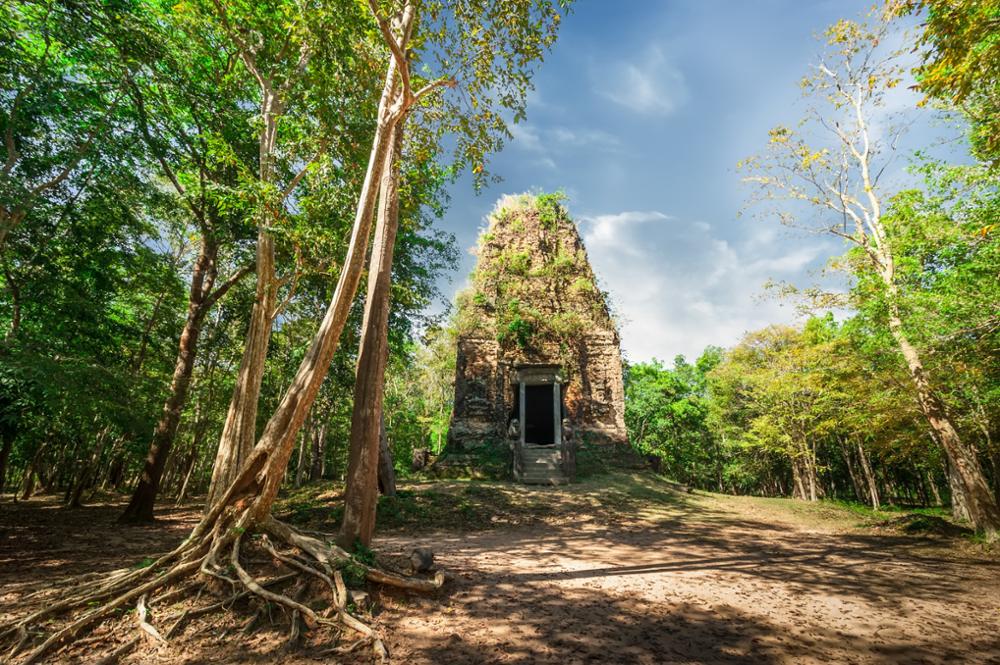
Called in Khmer, "the temple in the lush forest," Sambor Prei Kuk, constructed in the early 7th century, represents the genesis of pre-Angkorian architecture, widely used later at Angkor. The site, then called Ishanapura, was the capital of the Chenla empire, which ruled Southeast Asia before the Khmer empire, between the 6th and 9th centuries. The lintels and pediments, widely used during the Angkor era, built at the site, are evaluated by UNESCO as true masterpieces. The site's architecture laid the foundations for a distinctive future Khmer style in Southeast Asia.
The site was, in 2017, the last in Cambodge to be recognized by UNESCO on the World Heritage List. Awaiting the eight currently on the Tentative List, which consequently remain in pending status.
Frequently asked questions
The 3 Cambodian sites inscribed on UNESCO's World Heritage List are Angkor (1992), the temple of Preah Vihear (2008), and Sambor Prei Kuk (2017).
Prices vary by site. For Angkor, expect around $37 for a one-day pass. Preah Vihear and Sambor Prei Kuk have different rates.
The dry season, from November to March, offers the best climate conditions for exploring these historical sites.
Yes, but plan for at least a week as the sites are geographically dispersed throughout the country.