5 Majestic Angkor Temples Away from the Crowds
At Angkor, certain temples remain off the beaten path. Banteay Samre, Ta Keo, Ta Nei, and Phnom Bok offer quieter visits, allowing you to better appreciate the richness of Khmer heritage.
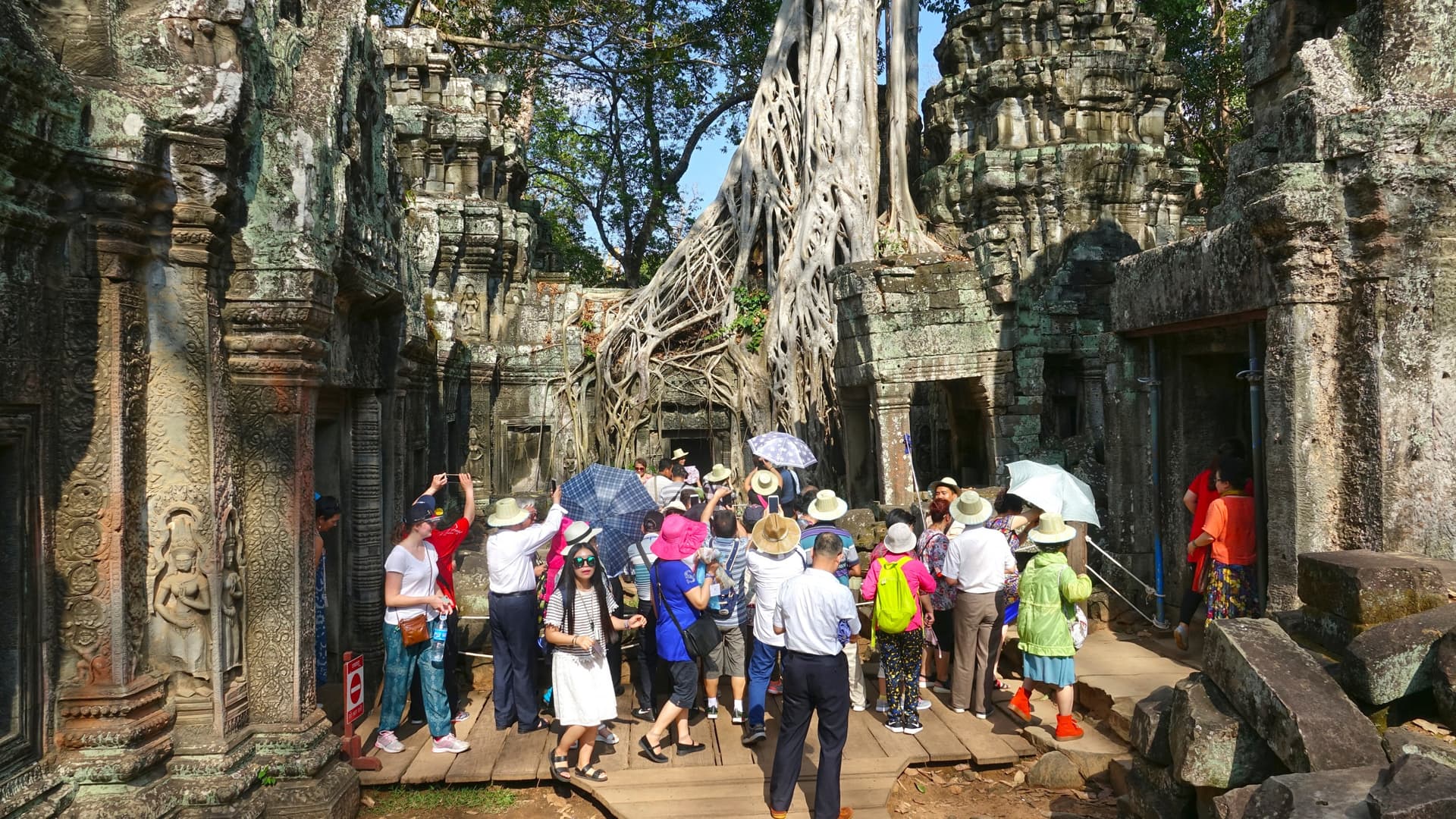
Although visitor numbers tend to decline this year, the Angkor archaeological site still receives countless tourists. For example, 158,000 visited in August alone, and 1,650,000 since the beginning of the year have walked Angkorian soil. A positive sign for Cambodge's development, but one that can lead to significant congestion. Asian travel operators don't hesitate to send large groups to visit the same temples at the same times of day. Consequently, several structures remain completely deserted and may suit you perfectly during your visit to Angkor.
The end of the rainy season proves to be the most opportune time to visit Angkor's temples in Cambodge. Both logistically and climatically. From February onward, mass tourism picks up in the area, and intense heat combined with the absence of rain can pose problems during a day of walking in full sun. This period begins around mid-February, coinciding with the Chinese New Year date. The best period thus appears to fall between mid-November and mid-January. At that time, the past rainy season has filled the moats and barays of Angkor's temples, and the surrounding vegetation displays its finest face. This seems to be the ideal period to encounter fewer visitors in the temples below.
The Marvel of Banteay Samre
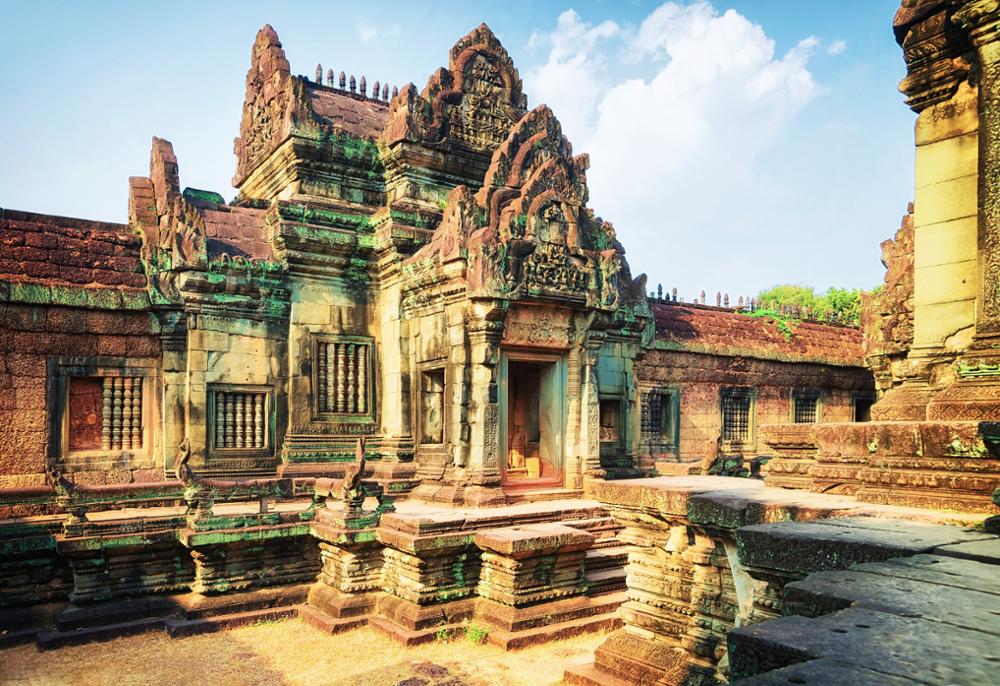
The temple-mountain of Banteay Samre is considered one of the finest structures at the Angkor archaeological site, on par with Banteay Srei, the Bayon, and Ta Prohm. The great difference with these last ones, crowded throughout the year, lies in the fact that virtually no one visits it. In fact, it's quite possibly the most beautiful deserted temple in the entire Angkorian basin. Hindu in style, this small fortified city will immerse you, through its pediments, lintels, and towers, in the mythological history of the kingdom. It is, along with Angkor Wat, considered the most interesting temple on the site in terms of iconography. It's even recommended to visit it in the morning rather than the afternoon to fully enjoy the light across all of its decorated walls.
The Nature of Preah Palilay
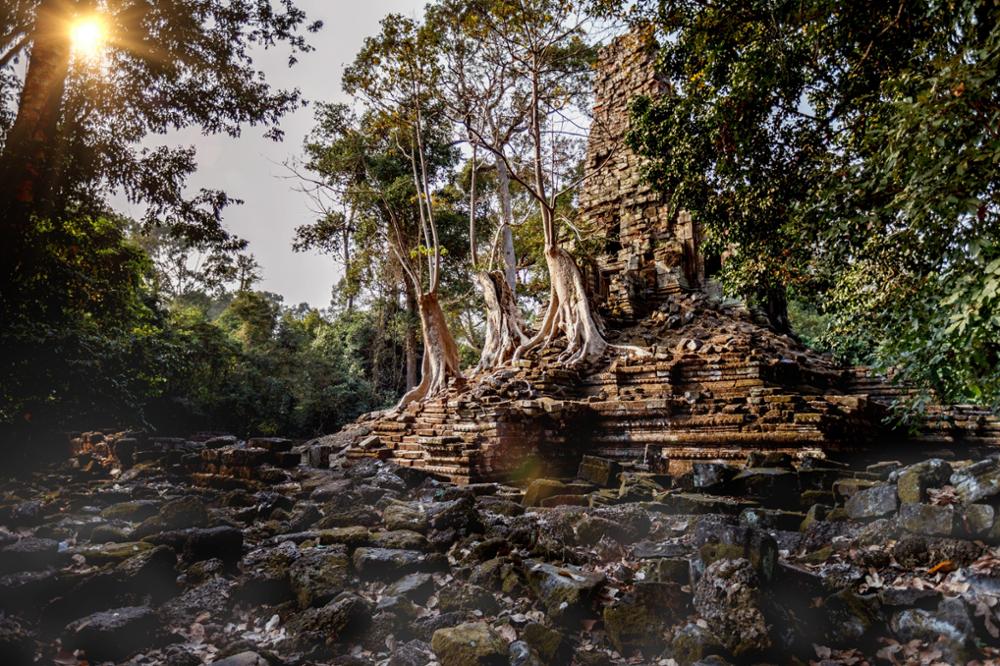
Preah Palilay is one of the most recent temples built at Angkor. Buddhist in inspiration, the structure was erected around the 13th century. Located a few hundred meters northwest of Phimeanakas, Preah Palilay boasts one of the best-preserved terraces across the entire Angkor site. The presence of a sanctuary and numerous Buddha representations, combined with elephant statues and the two dvarapalas synonymous with temple guardians, reinforce the Buddhist character of the place.
Ta Keo, The Unfinished
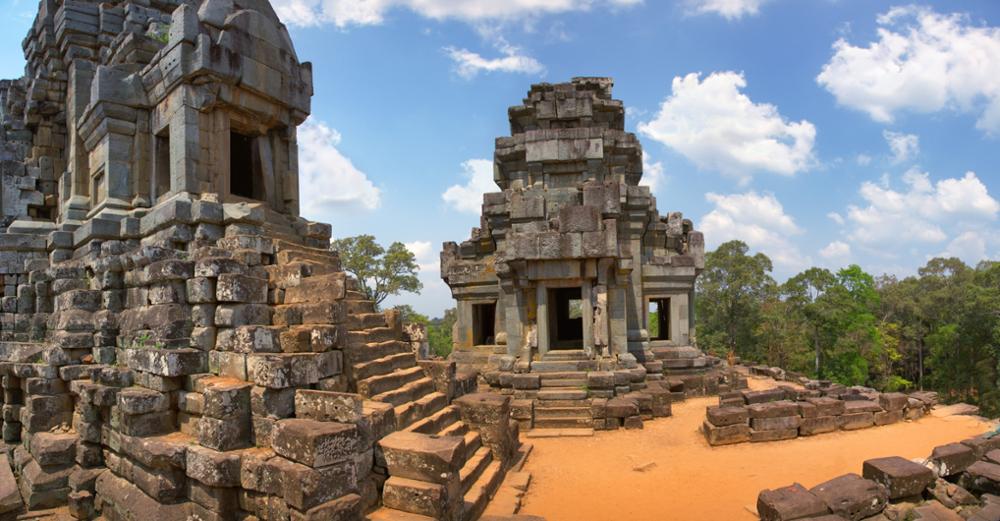
The temple of Ta Keo, partially constructed in the late 10th century but left unfinished, stirs many legends and speculation. The myth suggests that its construction was halted after the temple's foundations were struck by lightning. The most plausible hypothesis suggests that the death of Jayavarman V brought construction to an end. In any case, work was abandoned before builders began finishing touches and artists started wall decorations. Lintels and pediments were generally sculpted on-site for each Angkor temple. The temple's current appearance is therefore unique and particularly intriguing because its towers and walls are bare. Many experts believe that had Ta Keo been completed, it would have been surpassed in scale and beauty only by the great Angkor Wat.
The Basins of Ta Nei
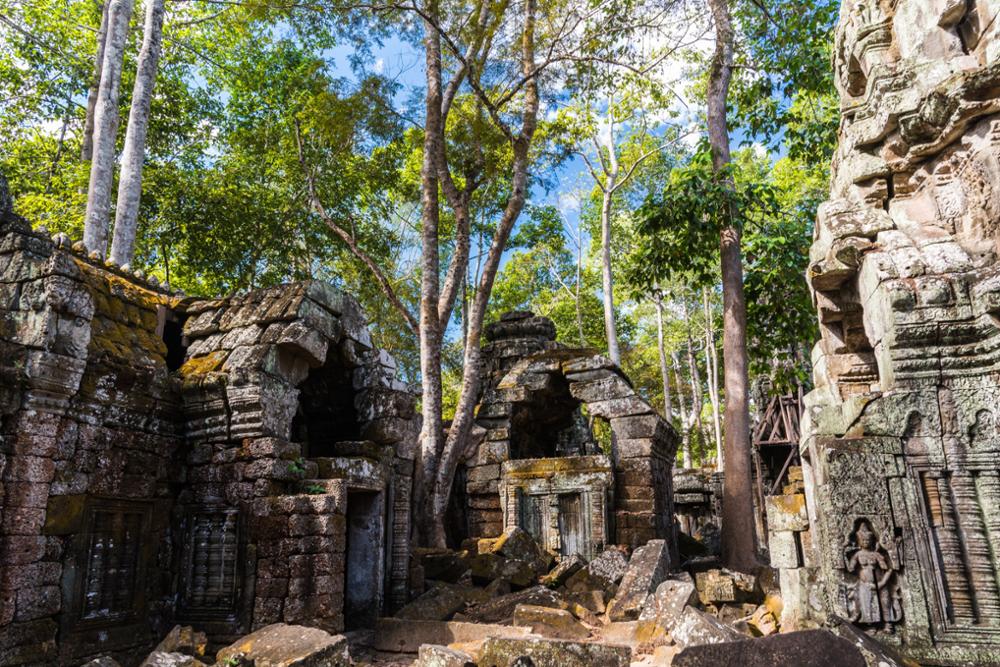
The temple of Ta Nei sits deep in nature, lost in the jungle north of Ta Keo. Because of its isolation, Ta Nei is a temple very few visit, making it particularly pleasant to explore. You'll once again be delighted to discover the numerous pediments adorning the temple's walls. This temple is particularly original because it's surrounded by trees and two water basins, filled thanks to small waterfalls. A peaceful and very refreshing visit.
The Breathtaking View from Phnom Bok
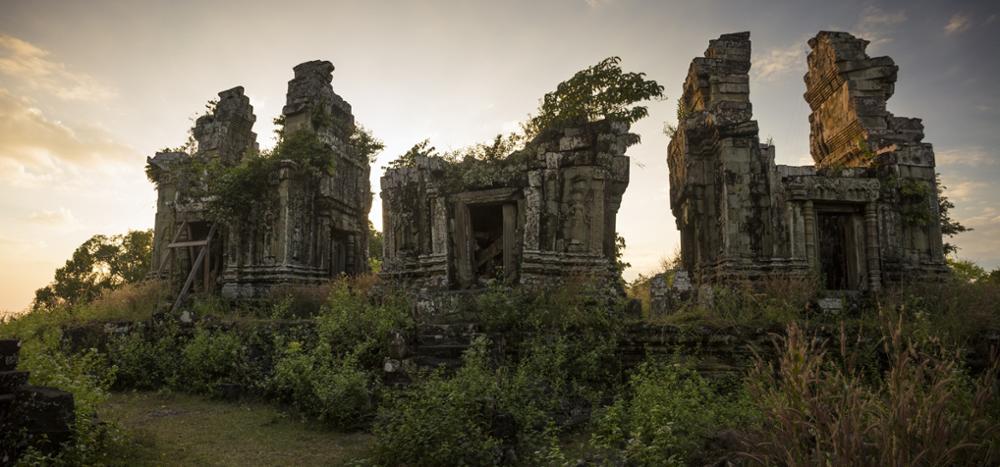
This Hindu temple once housed the heads of Vishnu, Shiva, and Brahma, now displayed at the Musée Guimet Asian Arts Museum in Paris. You'll discover this temple after climbing 600 steps to reach the summit of Phnom Bok hill. Take in this breathtaking view over the surrounding countryside, at 180 meters altitude.
The temple's interior is decorated with devata statues and dancers, and houses four libraries, two of which are built in sandstone. Nature has indeed grown inside these latter structures, creating a beautiful symmetry effect. Take this moment to step 100 meters west and contemplate the enormous linga resting on a laterite platform.
Frequently asked questions
The ideal period falls between mid-November and mid-January, after the rainy season and before the Chinese New Year tourist influx.
These 5 temples are part of the Angkor archaeological site accessible with a standard pass. Some, like Ta Nei and Phnom Bok, require more walking.
Plan for a full day to visit these 5 temples at leisure, including travel time and breaks.
A local guide can enrich your visit with historical explanations, especially to understand the complex iconography of these temples.