A day to the summits of Phnom Chisor!
An hour from Phnom Penh, Phnom Chisor offers a simple escape to Takéo: a Khmer temple perched on high, rice fields stretching to the horizon, and a cave tied to Cambodge's recent history.
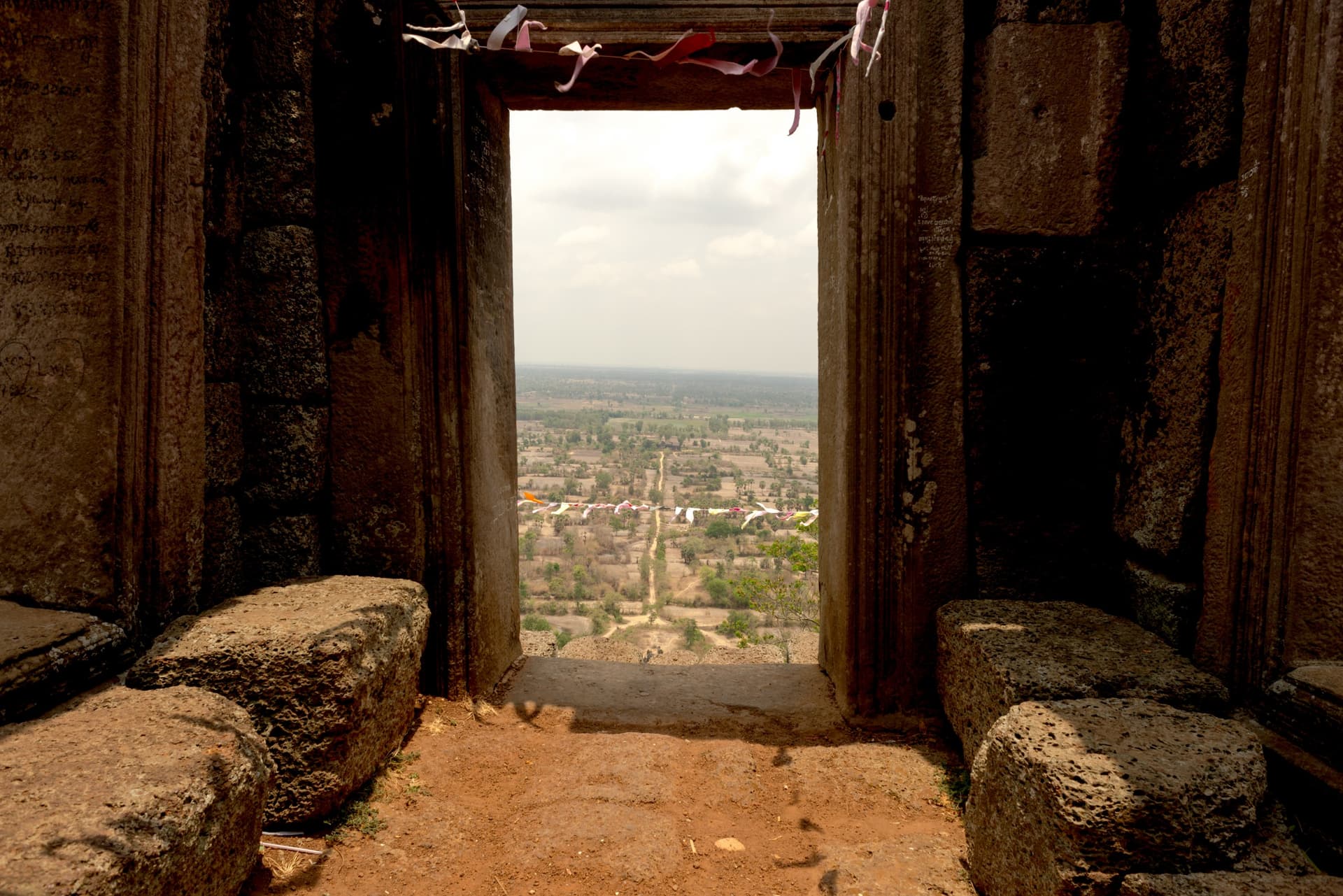
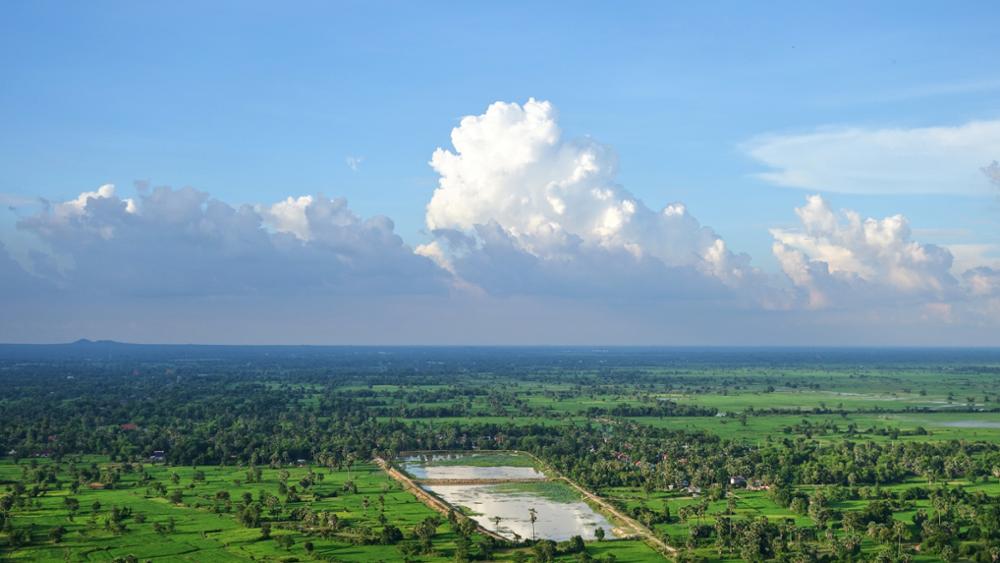
The hill of Phnom Chisor, located in Takéo province south of Phnom Penh, offers an ideally open viewpoint to admire the thousand-year-old architecture of Phnom Da and Angkor Borei, a presumed ancient capital of the Funan kingdom (1st-6th century), as well as the agricultural plains of the province. Its proximity to the capital, just an hour's drive away, makes day-long visits easily organized. Religious buildings and traditional ornaments also conceal a mysterious cave below... it's worth stopping by.
Arriving midway between Cambodia's capital Phnom Penh and Takéo province's capital, Doun Kaev, you spot Phnom Chisor's hill rising above the rice fields, coconut palms, and other vegetation typical of the Khmer countryside. Staircases wind through the site, leading you to each part of the temple, with its main building at the hilltop. You're welcomed at the foot of the steps by smiles, characteristic of this Southeast Asian region and Cambodge in particular. Here, street vendors sell chicken—roasted, fried, or on skewers, it hardly matters—all at very affordable prices. Children arrive too, wearing that same joyful expression, offering their services as guides. They know Phnom Chisor like the back of their hand and wouldn't mind earning a little pocket money. Take time to observe the activity at the foot of the stairs—you have a full day of exploring ahead, no rush. Once you're ready, you can climb these 413 steps to reach, at the hilltop, the temple of Phnom Chisor.
Still standing
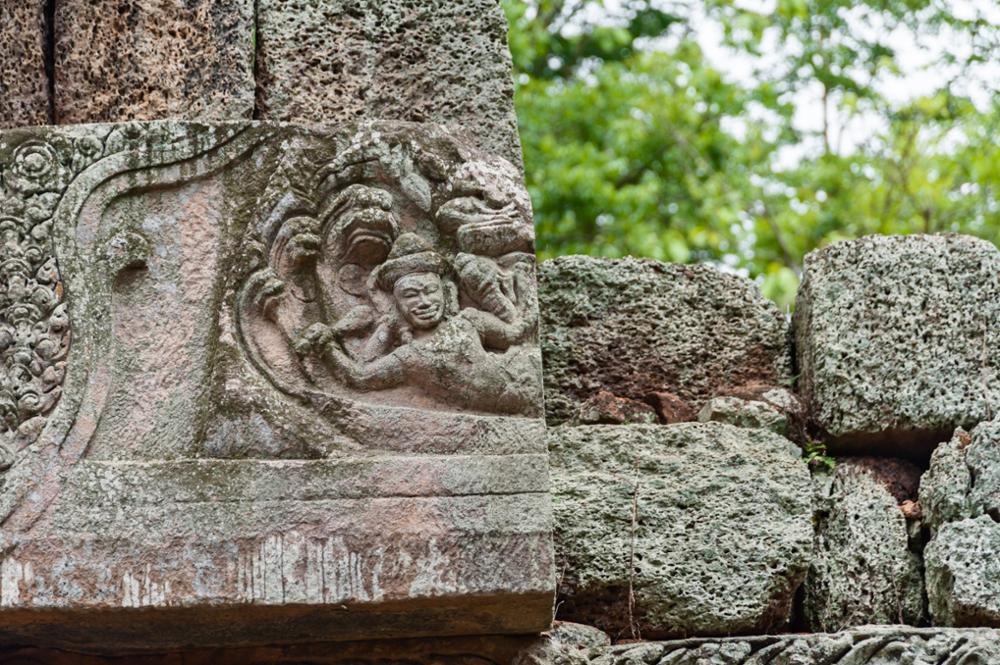
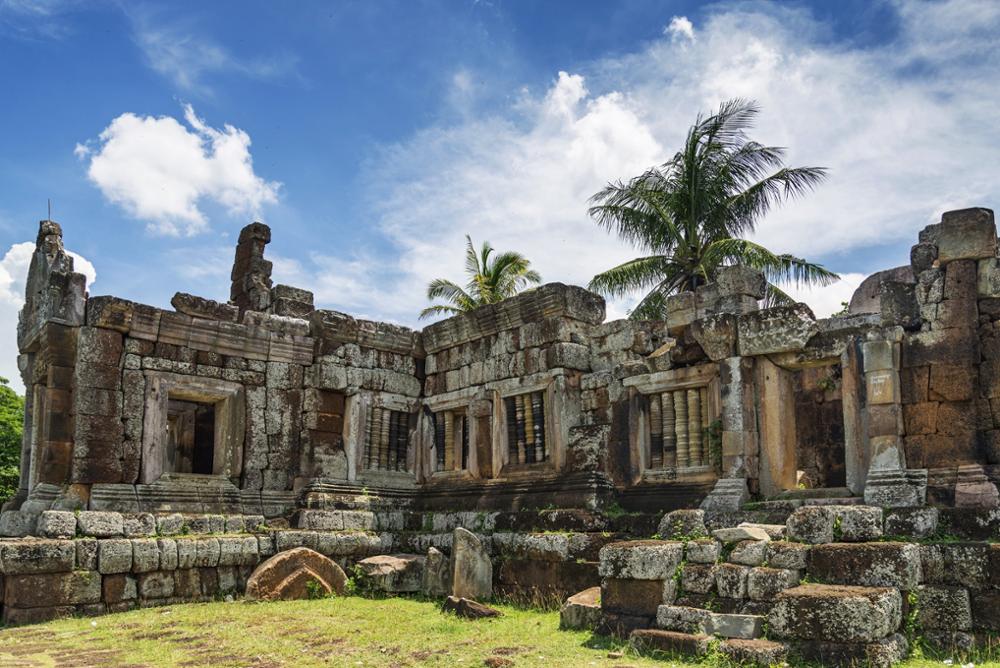
Drawing on Hindu influences, the Phnom Chisor temple was built in the 11th century by King Suryavarman I, sovereign of the Khmer empire during one of its most flourishing periods. A thousand years later, the structure is in poor condition but still displays unique pediments and lintels bearing witness to the beliefs and culture of that era. The site appears somewhat scattered, with stones occasionally overturned on the ground.
The elevation nonetheless lends charm to this place. The wind and open horizon create a particular allure over kilometers of rural landscape, sometimes crowned by other religious buildings like Phnom Da or Angkor Borei. The calm felt at the summit encourages contemplation of the ornaments, which remain intact and original. After visiting the main worship hall with its two galleries within the temple, head toward the temple's edges to glimpse a pagoda, built here several years after Buddhism became dominant in the region.
This building was first reconstructed in 1917, before being destroyed in the 1970s, then restored in 1979. Still standing today, the pagoda awaits your visit.
The bombed cave
You can end your visit south of the temple. Precisely 150 meters away lies a cave named Vimean Chan, known as an ancient meditation
Frequently asked questions
You must climb 413 steps to reach the hilltop where Phnom Chisor temple stands. The ascent takes approximately 15-20 minutes depending on your pace.
Plan for a half-day to visit Phnom Chisor: 2-3 hours on-site including the climb, temple visit, pagoda, and Vimean Chan cave.
Phnom Chisor is located 1 hour's drive south of Phnom Penh, in Takéo province. You can get there by tuk-tuk, taxi, or moto-taxi.
You can combine your visit with Phnom Da and Angkor Borei, two other Khmer historical sites visible from Phnom Chisor's summit.
Images restored from the source site — reposition manually if necessary.