Cambodia's History Through Its Flag
Through its colors, symbols, and successive versions, the Cambodian flag reflects the major political upheavals of the nation since 1863, leading to the present-day Khmer kingdom.
The flag, called tung cheat (Cambodian ensign) in Khmer, is a powerful symbol of a nation, intrinsically linked to the history and politics of its country. The recent history of Cambodge has been marked by coups d'état, invasions, and occupations that have not only sparked regime changes but have also prompted numerous transformations of the flag. Since 1863, there have been more than nine different national flags, including periods when multiple Cambodian flags were in use simultaneously!
The Pre-Protectorate Era
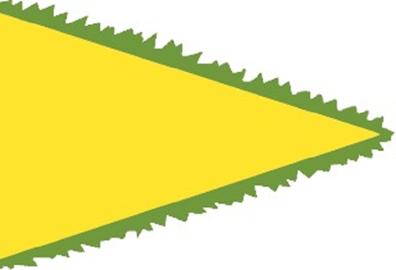
In 1863, following past events such as the conquest of Siam from the west and Annam from the east, the Khmer "nation" found itself weakened. The French protectorate, established at the request of King Norodom, granted Cambodge a political distinction.
The pre-protectorate flag is better described as a pennant, a small flag typically used as an emblem and rallying sign. It was a uniquely styled flag, rarely adopted by other nations over the past centuries.
The French Protectorate of Cambodge
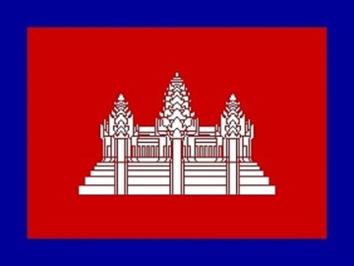
Cambodge became a French protectorate in 1863 and unveiled its flag that same year.
Blue, white, and red are three colors common to many East and Southeast Asian nations. They are also the colors of the French flag, so it comes as no surprise that they were adopted during the protectorate period.
Indeed, red and blue are the traditional colors of the Khmer Empire from the 9th century. The blue of the flag encircles the design and symbolizes the royalty of Cambodge, the red in the center represents the nation, while white is reserved for religion, primarily Buddhism.
Japanese Occupation

During World War II, from March to October 1945, Cambodge became part of the Greater East Asia Co-Prosperity Sphere, administered and occupied by Japan until its surrender, giving way to a new flag.
This flag remains something of a mystery to this day—it resembled neither the national flag nor the war flag of the Japanese military. Japanese occupations in other Asian countries typically used Japan's national flag.
The Kingdom of Cambodge
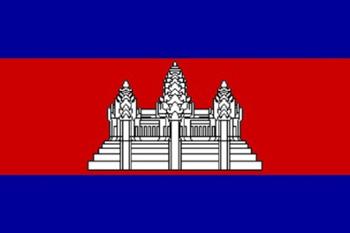
Though the flag was first used in 1948, Cambodge's official independence as the Kingdom of Cambodge occurred in 1953 when Norodom Sihanouk became king, prime minister, and head of state simultaneously. This marked the debut of the nation's current flag!
The Cambodian flag is the only national flag in the world to feature an actual building in its design. The depiction of Angkor Wat is outlined in black. Buddhism was a major theme under Sihanouk's reign, both as king and as a politician after his abdication in 1955. Angkor Wat temple is considered a symbol of national, cultural, and religious pride within the legendary capital of the Khmer empire: Angkor. It stands as the nation's greatest architectural and archaeological treasure!
"In a world without mercy," Sihanouk told a New York Times journalist, "the survival of a country as small as Cambodge depends on your god and my Buddha."
The Khmer Republic
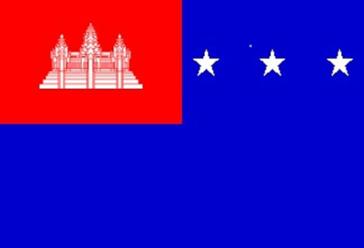
The nation's sovereign, King Norodom Sihanouk, was overthrown in March 1970 by General Lon Nol, whom Sihanouk had appointed as prime minister in 1966.
In contrast to Sihanouk, Lon Nol's regime facilitated American foreign policy in Southeast Asia, as crafted by Nixon and Kissinger. Throughout the Vietnam War, the U.S. military bombarded eastern Cambodian provinces for eight years. This also drove many peasants into the arms of Pol Pot's Khmer Rouge guerrilla movement, based in the countryside.
Angkor Wat now bore red outlines similar to the French protectorate flag. According to the constitution, the three stars represented three elements: the nation, the republic, and Buddhism. They also alluded to the three branches of government (legislative, executive, and judicial) and the three jewels of Buddhism (Buddha, Dharma, and Sangha).
Democratic Kampuchea
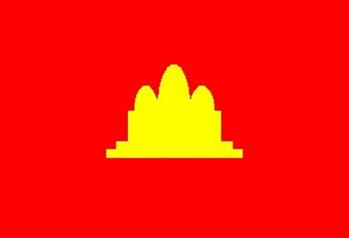
After months of fighting, the Khmer Rouge seized Phnom Penh in April 1975 and forcibly evacuated the capital. Millions were displaced, disappeared, and killed, decimating over 20% of the population.
The flag used was remarkably similar to the Vietnamese flag. Instead of a single gold star on a red background, it featured a representation of three towers of Angkor Wat without any border or outline. The flag's elementary design reflected a political philosophy that preached simplicity and constrained creativity.
The People's Republic of Kampuchea
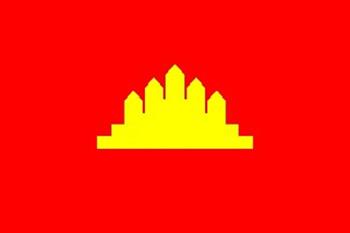
In January 1979, Heng Samrin and Hun Sen invaded Cambodge with Vietnamese troops to drive the Khmer Rouge from power. When the People's Republic of Kampuchea was declared, the nation was devastated: the educated class, food, and medical care were nonexistent while infrastructure was severely degraded.
The People's Republic of Kampuchea's flag retained a design similar to that of Democratic Kampuchea, with one notable exception: the towers of Angkor Wat were modified from three to five.
This flag had initially been used by the anti-French Khmer resistance Issarak ("Free Khmer") after World War II until Cambodge's official independence in 1953. It was later employed by the Vietnamese-aligned group, the Kampuchean United Front for National Salvation. They viewed the struggle against the Khmer Rouge as akin to the fight against imperial France.
The State of Cambodge
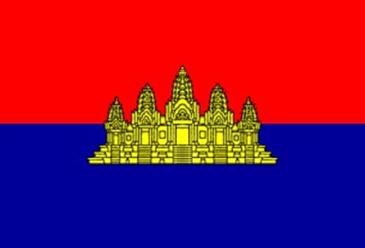
In 1989, Hun Sen's administration renamed the country the State of Cambodge, likely to turn the page and distance itself from the negative connotations associated with the word Kampuchea.
The new flag reincorporated the intricate design of Angkor Wat, outlined in black once more, while maintaining five towers representing various sectors of Cambodian society: soldiers, merchants, laborers, farmers, and intellectuals.
The nation remained embroiled in civil war, with Khmer Rouge strongholds clustered around the Thai border on one side and the new State of Cambodge government on the other. This continued until the signing of the Paris Peace Accords in 1991.
The United Nations Transitional Authority in Cambodge (UNTAC)
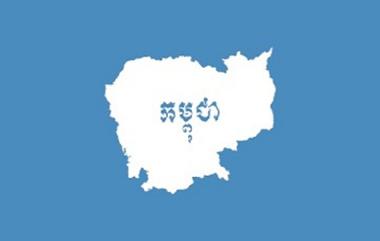
UNTAC marked the first time the United Nations took charge of administering a sovereign member state. The diplomatic staff, led by Sergio de Mello, traveled throughout Khmer Rouge territory to negotiate disarmament, which ultimately failed. Following the 1993 elections, a coalition formed between the royalist FUNCINPEC party, led by Prince Norodom Ranariddh, and the Cambodian People's Party, led by Hun Sen.
The UNTAC flag followed United Nations convention: a blue background with Cambodge's geographic outline in white and the word "Kampuchea" spelled in Khmer script.
This marked the first step toward resolving decades of conflict in Cambodge. However, the arrival of international institutions left Cambodge heavily dependent on foreign aid.
The nation was renamed the Kingdom of Cambodge following the UN's departure, and the flag reverted to the version used during the previous Kingdom of Cambodge period. The Cambodian people and their flag have endured years of instability and upheaval. The perseverance represented by the blue on their banner saw them survive those difficult years and emerge free from those devastating decades.
Frequently asked questions
Blue symbolizes royalty, red represents the nation and its people, while white is dedicated to religion, primarily Buddhism.
Angkor Wat represents Cambodia's national, cultural, and religious pride. It is the only flag in the world to feature an actual building in its design.
Since 1863, Cambodge has used more than 9 different national flags, reflecting the nation's numerous political changes.
The current flag was first used in 1948 under the Kingdom of Cambodge, then readopted after the UN's departure in 1993.