4 Key Cambodian Figures You Should Know Before Arriving
Before traveling to Cambodia, discovering its artists and builders will help you better understand Khmer cultural pride, beyond Angkor and the most famous historical sites.
Arriving in Cambodia with cultural preparation will be a real asset to your journey. Cambodians are often genuinely delighted to see that travelers and expatriates are curious about popular culture that remains largely unknown to the international community, notably setting aside the globally recognized Angkor archaeological site. This effort will not only open doors to conversation but will certainly earn you warm, heartfelt smiles. Here we present a non-exhaustive list of figures who have shaped Cambodia's history across different domains.
On the surface, today's Cambodia may appear heavily influenced by distant lands. The country experienced numerous exiles in the 1970s and has since seen the gradual return of many binational citizens, children of Khmer parents who grew up elsewhere and now wish to contribute to their country of origin. While Cambodia is far from alone in this regard, the nation and its people move to the rhythm of American social media, particularly Facebook and YouTube. The former is used intensely by a large portion of the population as a free and accessible way to connect, share their lives, romances, and frustrations through photos, instant messages, and status updates. Under French protectorate for 90 years between 1863 and 1953, the country still retains many aspects of French culture. Without belaboring examples, pétanque is notably considered one of the national sports here. And how could we overlook China's influence, which is building entire cities from the ground up and investing heavily throughout the territory.
Despite this, Cambodians possess a strong sense of identity and take pride in a history that is sometimes vague and little-known because it is ancient and rarely taught to the general public. They will readily bring up Angkor with you, knowing that travelers come today to visit it and that it enjoys worldwide recognition. More discreetly, at least with foreigners, they also show pride in their post-independence history (1953), which in several domains has shaped generations still alive today. This popular culture is, by definition, more internal and reserved to the country itself, and therefore less widely broadcast to the eyes of the international public, though still dusted with foreign influence. You will be pleasantly surprised by their reaction when you mention Sinn Sisamouth, Pen Ran, and their contemporaries. These personalities marked their era and brought their people glimpses of a renaissance, unfortunately crushed just as it was taking flight by Democratic Kampuchea. Your curiosity will in any case be greatly appreciated and will likely earn you some wonderful moments during your stay.
The Golden Age of Cambodian Song
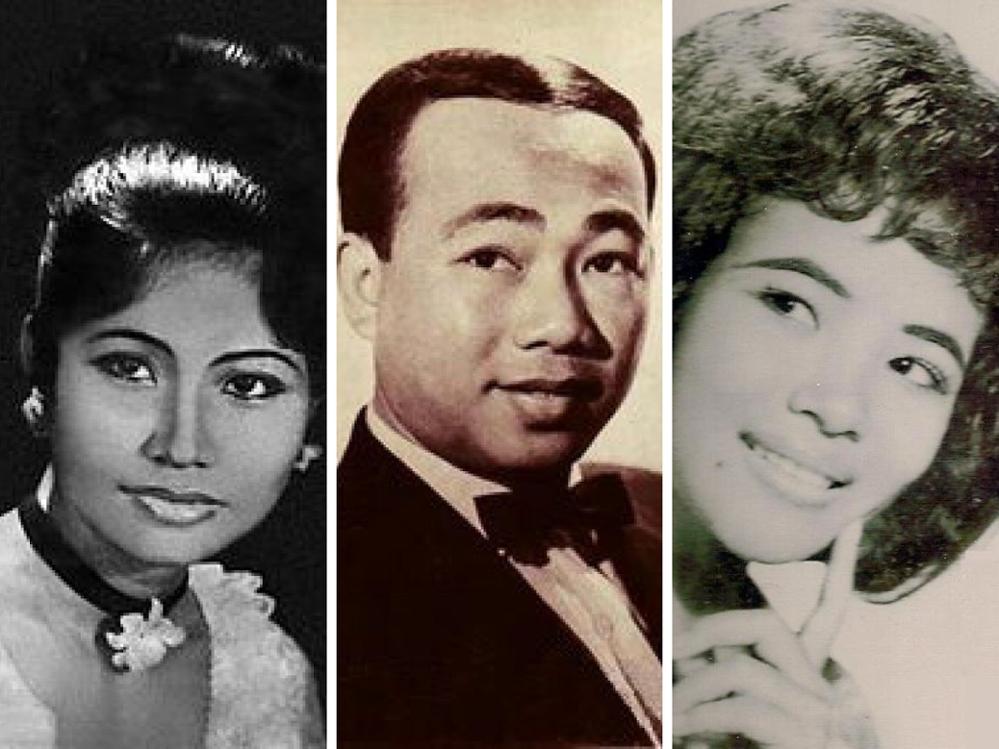
Cambodian music reached its zenith after the country's independence, from the early 1960s until April 17, 1975, when the Khmer Rouge entered the capital, Phnom Penh, bringing with them the destruction of art and popular culture. This movement was orchestrated from beginning to end by one man: Sinn Sisamouth, the "king of Khmer music," who drew in his wake a stream of local artists who became national stars such as Pen Ran and Ros Sereysothea, both originally from Battambang and schoolmates. This golden age can be divided, quite schematically, into two parts not necessarily consecutive. First, a period where traditional music samples reigned, and where Ros Sereysothea excelled, carried by a high, perfectly clear voice—she whom King Norodom Sihanouk called the "queen with the golden voice." Then a second phase, from the late 1960s into the early 1970s, when the impulse of Western rock came to upend existing musical codes in Cambodia. It was in this context that Pen Ran found her calling. Fundamentally rejecting prevailing societal assumptions about women, she adopted several hairstyles, one of which remained etched in memory—similar to Jacqueline Kennedy's. She composed numerous titles that caused scandal, some tinged with sexuality, others challenging traditional imagination such as "Chnam oun 31" (I am 31 years old), which described her life as a single woman in her thirties, a situation already unthinkable at the time.
These two divas rose to fame in the 1960s (1963 for Pen Ran, 1967 for Ros Sereysothea), when Sinn Sisamouth had already been stirring Cambodian hearts for a decade since the country's independence. The legendary status of the king of Khmer music has never been challenged since his death in 1976. He was, and remains today, the undisputed star of Khmer song. He even achieved international success by covering major hits, particularly in France. Try playing Christophe's "Aline" to people you meet in Cambodia. They will likely tell you: "Sinn Sisamouth!"
This trio even recorded numerous melodies together, such as Smak oun mouy, Som neak mok niss, and Kromom tang bey. All three were killed under the Khmer Rouge dictatorship, which specifically targeted purging the country of its artists. Ros Sereysothea was 29 in 1977, Pen Ran was 33 in 1975, and Sinn Sisamouth was 43 in 1976.
Builder of a New Identity
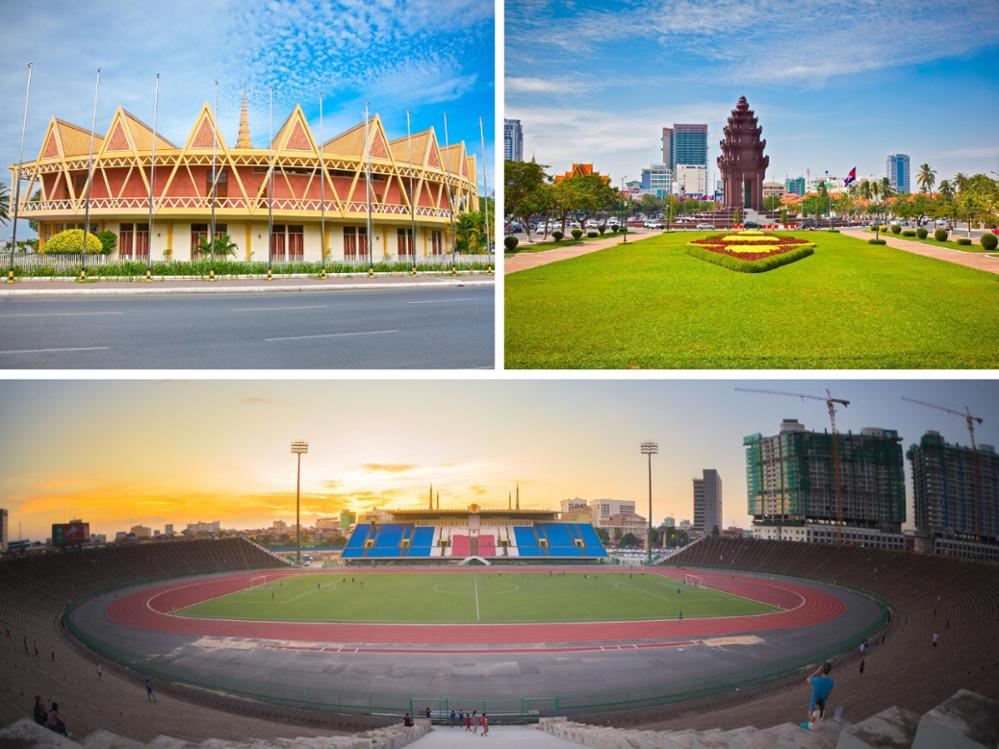
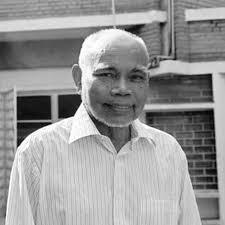
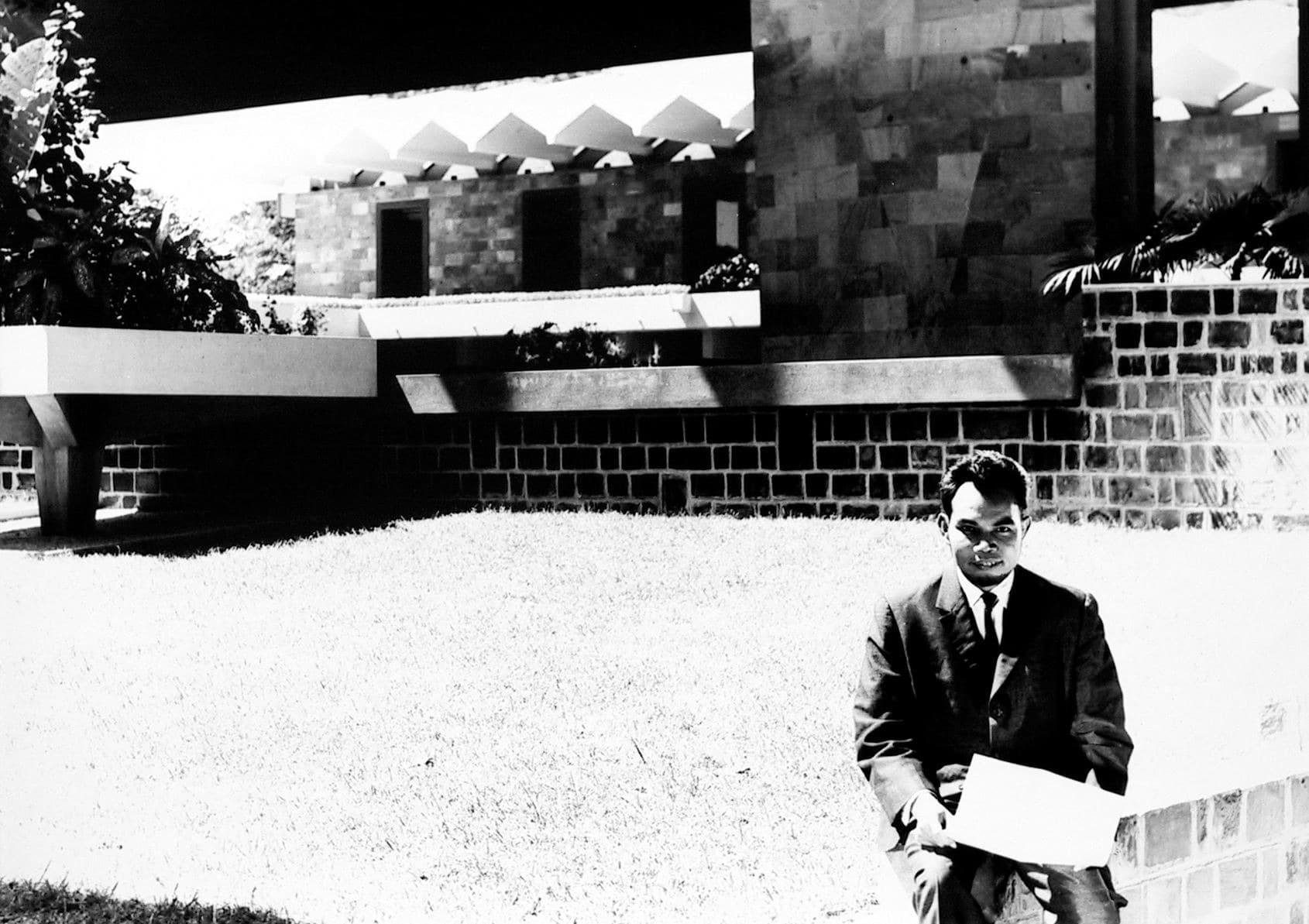
King Norodom Sihanouk became head of state after obtaining his country's independence in 1953 until his overthrow in 1970. This period, commonly known as Sangkum, aimed to build a new Cambodia around the pursuit of national identity and economic development centered on art, culture, and urbanism. Close to Sihanouk, the celebrated Khmer architect Vann Molyvann was the principal builder of this renewal. Returning to his native country in 1956 after completing his architecture studies in France, Vann's objective was to awaken a somewhat dormant Cambodian spirit under the Protectorate and give it fresh vigor and dynamism, positioning Cambodia as an active and even influential player in Asia.
His first notable work, which perfectly aligned with this search for identity, was the construction of the Independence Monument in Phnom Penh in 1958. Others followed, such as Chaktomuk Theatre in 1961, which still hosts performances by the Royal Ballet of Cambodia today, and the Olympic Stadium, built to IOC standards and inaugurated in 1964. This architectural genius, who passed away on September 28, 2017, was the author of roughly a hundred architectural works that modernized and developed Cambodia economically and urbanistically, with the aim of rekindling the flame of a nation that had remained under external influence for far too long. Yet he always maintained a careful eye on history.
Vann went into exile between 1970 and 1991, escaping the dictatorship and multiple civil wars. Upon his return, he was appointed president of the Authority for the Protection of the Angkor Site and the Development of the Angkor Region (APSARA) and was pressured to resign in 2001 for attempting to oppose the multiple hotel constructions being built around Angkor.
Good to know
* : In Cambodia, the family name is placed before the given name. (Vann is his family name).
Frequently asked questions
Sinn Sisamouth is considered the 'king of Khmer music'. Active since Cambodia's independence in 1953, he shaped the golden age of Cambodian song until 1976, the year of his death under the Khmer Rouge regime.
These 4 personalities represent Cambodia's cultural golden age in the post-independence period (1953-1975). Learning about Sinn Sisamouth, Pen Ran, Ros Sereysothea, and Vann Molyvann will help you better understand Cambodian identity and engage in enriching conversations with locals.
The golden age spans from the early 1960s to April 17, 1975, marked by a blend of traditional Khmer music and Western rock influences. This period came to an abrupt end with the arrival of the Khmer Rouge.