Wat Botum Pagoda
Wat Botum Pagoda
Nicknamed the 'lotus flower pagoda', Wat Botum is a 15th-century monastery neighboring the Royal Palace of Phnom Penh, rich in murals and stupas.
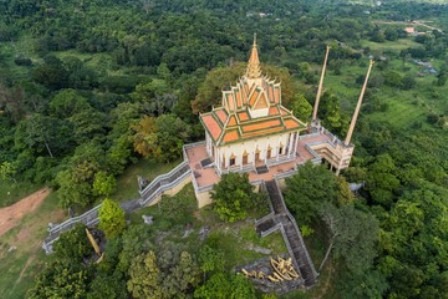
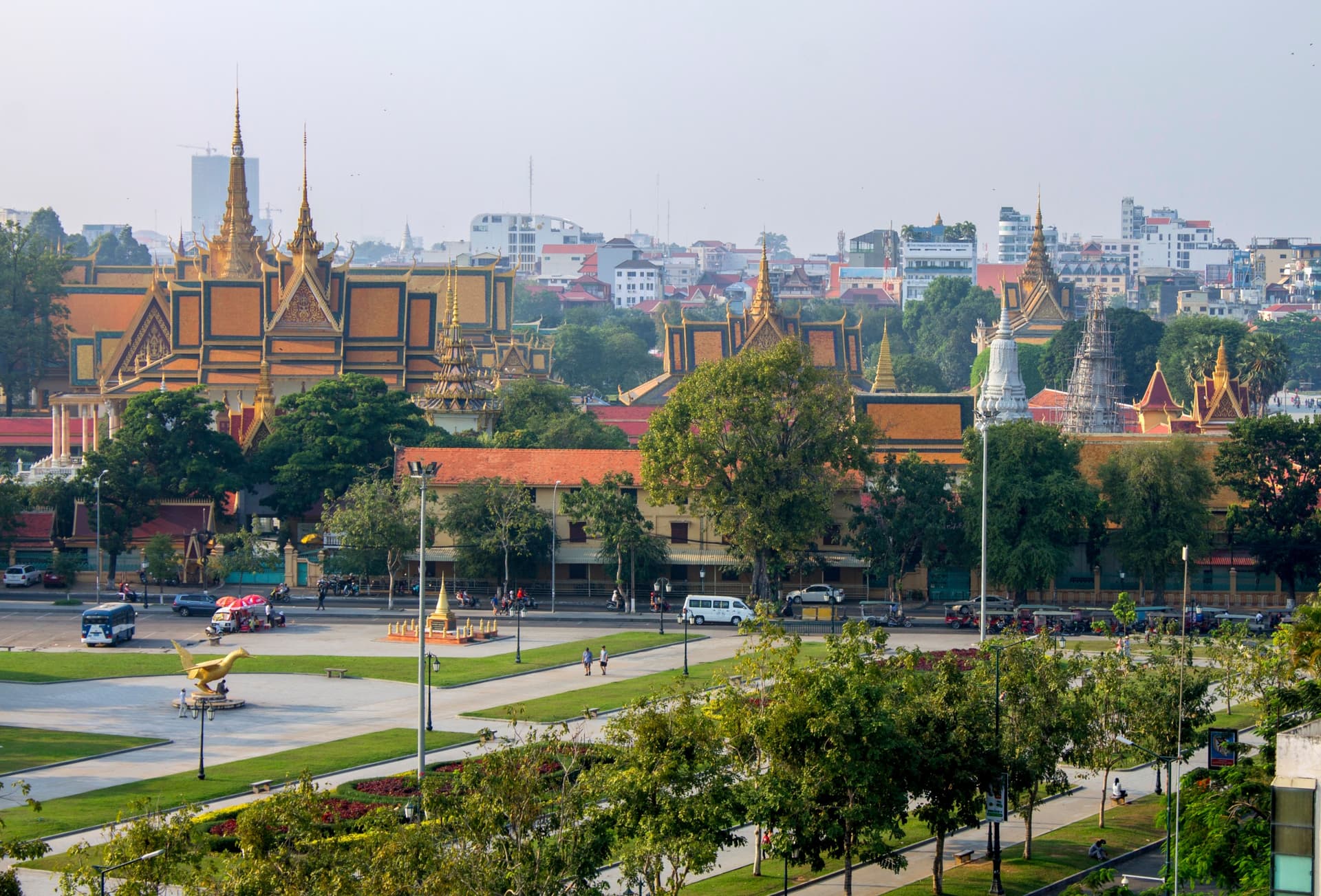
Known as the 'lotus flower pagoda', Wat Botum is a Buddhist monastery located in the heart of Phnom Penh, immediately south of the Royal Palace. Its history dates back to the 15th century, and its grounds preserve today a rich iconographic program devoted to the life of Buddha.
Why visit Wat Botum?
Less frequented than the neighboring Royal Palace, Wat Botum offers a tangible glimpse into contemporary monastic practice in Phnom Penh, within a complex of approximately 260 meters long housing temples, stupas and a religious school. The site's principal appeal lies in its murals, which unfold a complete narrative cycle around Buddha and the Jataka tales, rarely developed so extensively in the capital's pagodas.
A brief visit (allow 30 to 45 minutes) pairs well with a stop at the Royal Palace or the National Museum, both within a few minutes' walk.
History of the pagoda
Wat Botum is believed to have been established in 1442 during the reign of Ponhea Yat, regarded as the last king of the Khmer Empire and founder of Phnom Penh. Its original name was Khpop Ta Yang (or Tayawng).
Around 1860, the monastery came under the direction of the Dhammayuttika Nikaya. It was renamed Botum Wathei by the monk Kanite Topodae, in reference to its former lotus pond. The complex as it stands today corresponds essentially to the reconstruction carried out in 1937 under King Sisowath Monivong.
Closed by the Khmer Rouge in the 1970s, the pagoda was not destroyed. It reopened in 1979, taken over by the Mohanikae sect. The site now houses the headquarters of the Khmer Writers' Association (You Bo).
What to see on site
The main entrance stupa
To the left of the main gate stands a large stupa adorned with a figure holding a dagger between its teeth, supported by two nagas, the mythical serpents omnipresent in Khmer iconography.
The Vihara and its surroundings
In front of the Vihara (the main worship hall), a commemorative plaque recalls the history of the founding and successive restorations. Behind it, life-sized statues of tigers and lions, rendered in a highly realistic style, frame the building.
Interior paintings
The interior of the Vihara is entirely painted. The frescoes, relatively recent and in vivid colors, illustrate several classical episodes:
- the story of Ou Li Rie, the enraged elephant who bows before Buddha;
- the episode of Cheng Cha, who falsely accuses Buddha of fatherhood (a well-known Pali tale);
- Buddha in levitation, surrounded by stones, demonstrating his powers;
- the combat of the disciple Mokalean against a naga;
- the story of Prince Anaan renouncing his fiancée to become a monk, accompanied by two golden sandals symbolizing Yasa.
The five animal reincarnations
A small room outside the Vihara is devoted to the five reincarnations of Buddha as animals: the rooster, the tortoise, the naga, the ox, and the lion-dog. Two white tigers guard its entrance. A large painting of Angkor is also displayed there.
The Jataka scenes
Other buildings in the complex develop Jataka tales, these previous lives of Buddha. Notably recognizable are the stories of Mahasot, Puritoat, and Promenart. On the temple altar, an ox-yoke-shaped candlestick, a small ornate throne temple, and numerous statuettes complete the ensemble.
Practical information
- Address: Oknha Suor Srun Street 7, Sangkat Chaktomuk, Khan Daun Penh, Phnom Penh.
- Location: south of the Royal Palace, on the west side of Wat Botum Park.
- Opening: daily; visits are conducted during daylight hours, respecting the tranquility of the place and monastic activities.
- Dress code: shoulders and knees covered; it is customary to remove shoes before entering the Vihara.
- Visit duration: 30 to 45 minutes are sufficient to tour the complex.
When to visit
Phnom Penh's climate is tropical. The dry season, from November to March, remains the most comfortable for visits, with milder average temperatures and little rain. From April to June, the heat is intense; from July to October, monsoon showers are brief but steady, yet do not prevent a visit in late morning or late afternoon.
Early morning on site allows you to observe monastic life before the hottest hours.
How to get there
Wat Botum is located in the historic center of Phnom Penh, in close proximity to the Tonlé Sap waterfront. From most centrally-located hotels, it is accessible:
- on foot, from the Royal Palace or the National Museum (5 to 10 minutes);
- by tuk-tuk or via local ride-hailing apps (PassApp, Grab), the simplest means;
- by taxi for longer distances from northern or western neighborhoods.
Nearby
Wat Botum's central location makes it easy to include in a half-day walking tour around the royal district:
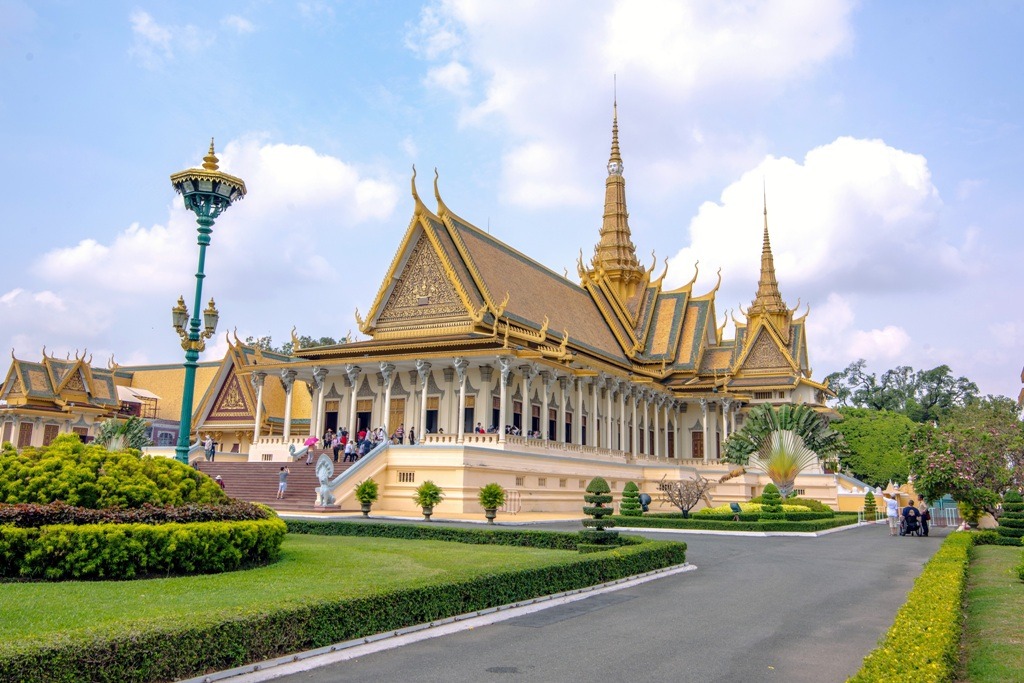
- the Royal Palace and the Silver Pagoda, just to the north;
- the Cambodia-Vietnam Friendship Monument, within Wat Botum Park itself;
- the National Museum, a few streets to the northwest;
- the Sisowath Quay promenade along the Tonlé Sap.
To further explore Khmer heritage outside the capital, Angkor's complexes naturally come to mind, including the Bayon Temple and the Terrace of the Elephants.
Frequently asked questions
Frequently asked questions
The nickname comes from the monastery's former lotus pond. The monk Kanite Topodae renamed the place Botum Wathei around 1860 in reference to this pond, the term botum evoking the lotus.
No. The pagoda was closed in the 1970s but was not destroyed. It reopened in 1979 and is today an active monastery, home to the Khmer Writers' Association.
A thorough visit of the complex (Vihara, stupas, paintings, five reincarnations room) takes 30 to 45 minutes. It is an ideal stop to combine with the neighboring Royal Palace.
Access to active pagodas is generally free or subject to a modest donation. Modest dress (covering shoulders and knees) is expected, and removing shoes is customary when entering the Vihara.
The Royal Palace and Silver Pagoda, the National Museum, the Cambodia-Vietnam Friendship Monument in Wat Botum Park, and the Sisowath Quay promenade along the Tonlé Sap are all within walking distance.
Plan your trip
Wat Botum naturally fits into a journey combining Phnom Penh, Angkor, and southern Cambodia. To build a customized itinerary including Khmer Buddhist heritage, consult our Cambodia travel ideas.
Nearby

Interested in this visit?
We can include it in your personalised itinerary.