5 Ways to Get Around Phnom Penh!
To get around Phnom Penh, it helps to know your options. Ride-hailing apps, tuk-tuks, taxis, motos, and cyclos each serve different needs depending on your journey.
Exploring Cambodia's capital is an inevitable part of any visit. Whether you're taking in this rapidly expanding city, moving between different attractions, or simply enjoying the thrill of vehicles that don't exist back home, you'll quickly notice some striking differences in traffic habits compared to Western cities. Traffic laws do exist, but driving here follows a more intuitive approach. This is even more pronounced outside the capital than in Phnom Penh. You'll see what we mean at your first intersection in the kingdom. Don't worry though—drivers generally move at a leisurely pace, especially during the day.
You'll have several transportation options when you spend a few days in Cambodia's capital. Each has its own advantages and disadvantages, often relating to cost or safety, but not solely. Here's a guide covering five different modes of transport to help you get your bearings before you arrive.
Before we start, note that for the first three options below, we recommend checking out one of our previous articles about Uber-style ride-hailing apps available in Cambodge. They're extremely convenient—you can track your driver on a map and prices are standardized. In other words, no scams! The app offers rickshaw, traditional tuk-tuk, and taxi rides in Phnom Penh.
The rickshaw, the new favorite
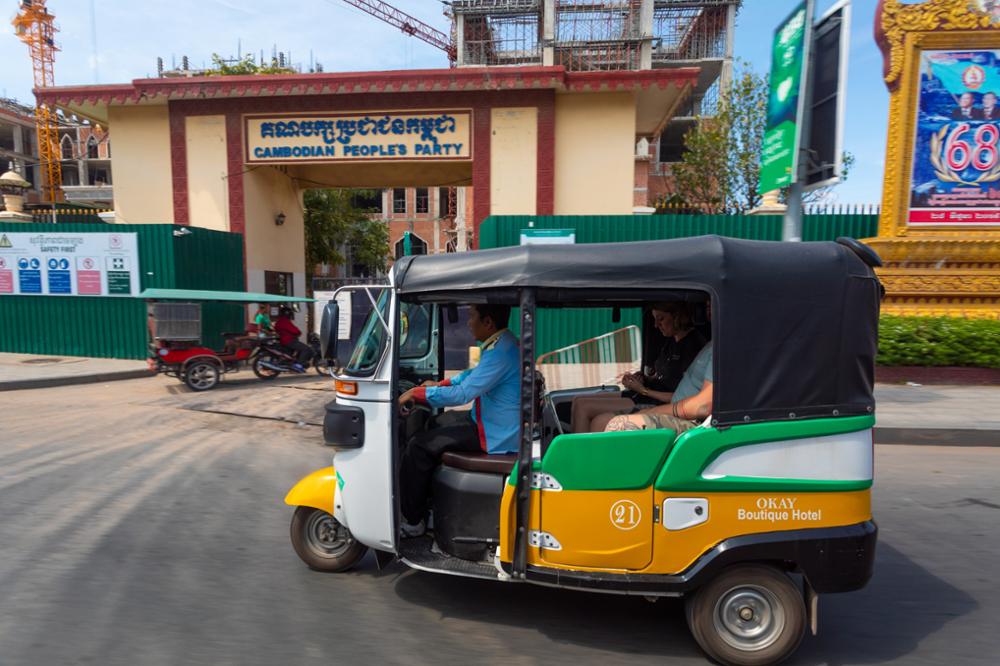
Advantages: Loosely called a "yogurt pot," this small Indian-origin vehicle can fit up to three passengers behind a motorcyclist and is now the most prevalent on Cambodian ride-hailing apps. You'll find a driver in just 2–3 minutes, no matter where you are in the capital. Rides are completed just as quickly, if not faster, than traditional tuk-tuks or cars, given the generally leisurely pace of city traffic. But the main advantage is obviously the rock-bottom prices! For example, it costs only $3 to reach downtown from the airport, whereas a tuk-tuk used to charge a minimum of $10 before these apps arrived.
Disadvantages: To be honest, there are few downsides to taking a rickshaw over other transport. It can get a bit hotter than in a tuk-tuk because of its nearly enclosed frame, though many have a central fan. The real drawback is that due to its light frame and minimal weight, a rickshaw offers little protection in an accident. Additionally, the small vehicle's size sometimes encourages drivers to take unwarranted risks. Rickshaws also aren't suitable for large families, though you can always book multiple vehicles.
Personal take: For me, it's the safe bet on the market. There's always a rickshaw available whenever you need one, at any hour, and for cheap!
The tuk-tuk, still going strong
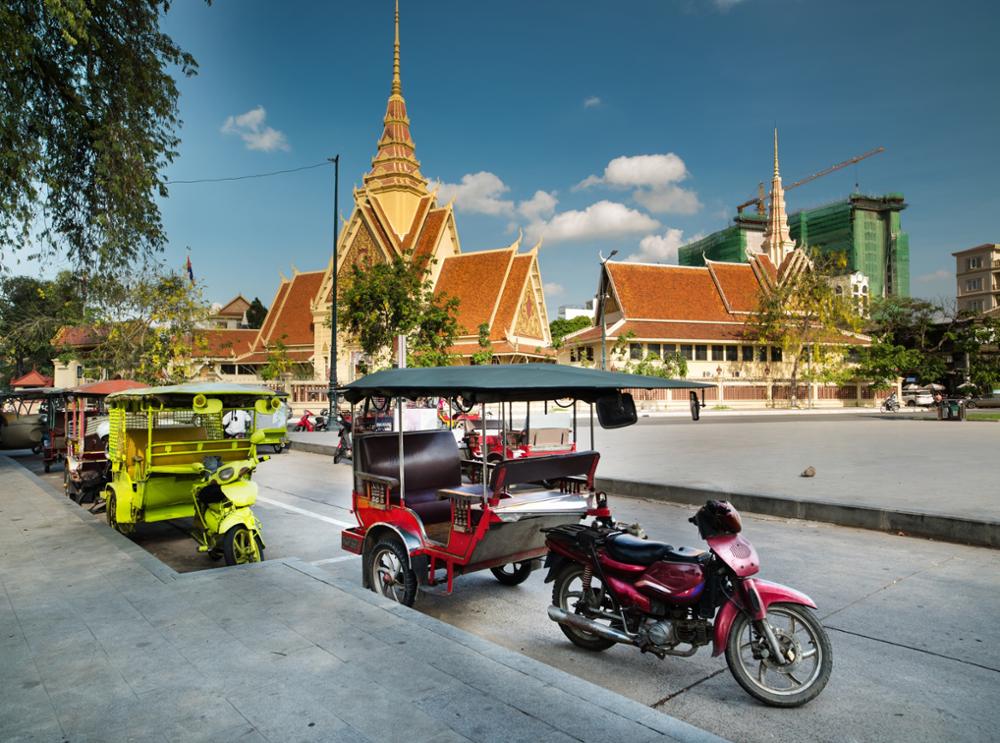
Advantages: Despite the arrival of its smaller sibling, the rickshaw, in 2017, the traditional tuk-tuk still roams the streets of Phnom Penh in search of travelers craving authenticity. This is certainly its biggest advantage. This "trailer" pulled by a motorcyclist features two comfortable benches facing each other. This is Southeast Asia, this is Cambodia from postcards! A canopy resembling a small pergola roof shields travelers from the sun. Added to the two side panels protecting the rear bench, these are the vehicle's only real closures. The air is exceptionally fresh and caresses passengers' faces as they can easily take in the capital's sights.
Disadvantages: A tuk-tuk ride will always cost more than a rickshaw or moto. This was once a major drawback, as drivers charged exorbitant prices, taking advantage of tourists' unfamiliarity with standard fares. But those days are gone since the arrival of ride-hailing apps. Because of its larger size, it's less maneuverable than a rickshaw or motorbike, which can sometimes extend travel times, especially during rush hours. Most tuk-tuks have zip-up protective panels for rain, but if yours doesn't and a downpour hits, you'll get soaked—a drawback shared with motos and cyclos below.
Personal take: We often take the traditional tuk-tuk when there are more than three of us. It's a convivial experience in the back.
The taxi, nice and cool
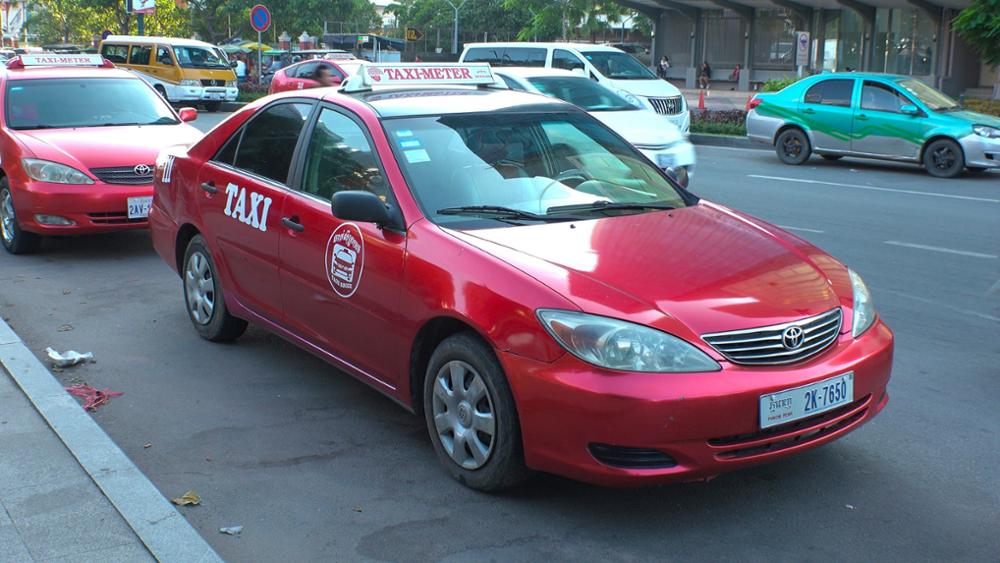
Advantages: Many taxis ply the roads of Phnom Penh. Their main benefit is air conditioning! Cambodge stays hot year-round, even during the monsoon season between July and October. Only December offers relief, with a pleasantly cool week (around 68°F). Air conditioning appeals to many travelers who dread intense heat. Plus, the vehicle's protective shell offers noticeably better safety than other modes of transport. Interested travelers can select a sport vehicle like an SUV on the app, though rides cost more.
Disadvantages: A car ride will naturally be far more susceptible to the capital's traffic congestion, whereas motorcyclists, rickshaw drivers, and even tuk-tuk drivers can usually find ways to reduce travel time. But the bigger downside is that taxis completely lack the authenticity travelers seek. Someone expecting novelty and a break from routine won't find it in the back of an air-conditioned sedan.
Personal take: I've never booked a taxi in Phnom Penh and rode in an SUV only once—the driver tried hard to inflate the app's displayed price. Best avoided.
The moto, lightning fast
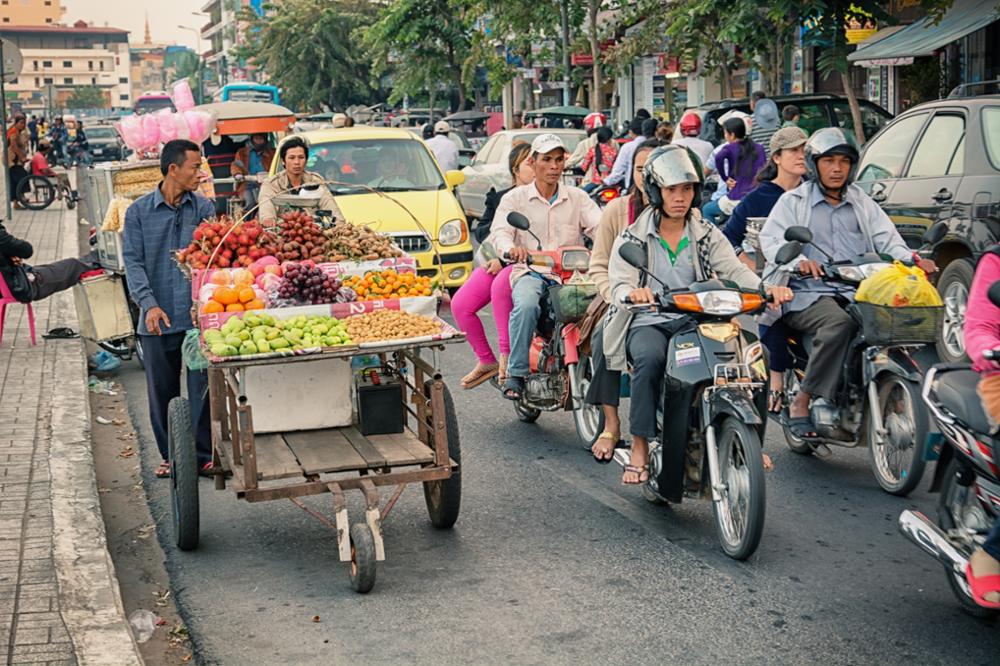
Advantages: Now let's discuss transport modes absent from Cambodge's ride-hailing apps. Motos, or motorcycle taxis, are one. But don't worry—they're everywhere at many street corners in Phnom Penh. Moto drivers are easily recognizable; several usually cluster at the same spot waiting, and they typically ride the same bike—a black Honda Dream, an extremely popular model in Cambodge. Though not digitized, moto rides cost very little. They're sometimes even cheaper than rickshaws. But the moto's main advantage is obviously speed. Motorcyclists slip slowly and easily between cars in traffic jams. It's undoubtedly the fastest way to get around Phnom Penh.
Disadvantages: It's no secret that motorcyclists in Cambodge, and more broadly Southeast Asia, are the most vulnerable road users. Running red lights, changing lanes without checking mirrors or signaling, and SUV drivers focused only on themselves all pose real dangers to riders. It's therefore imperative you ask the driver to provide you with a helmet for the ride. Drivers usually have one but not always. Ask him first before hopping on and use the question "mou sovatopheap?" which literally means "safety helmet." Finally, the moto is obviously only for solo travelers.
Personal take: The transport I've used far more than any other since arriving in Phnom Penh two years ago. It's fast, efficient, and I've never had an accident. I highly recommend it for solo travelers.
The cyclo, old school
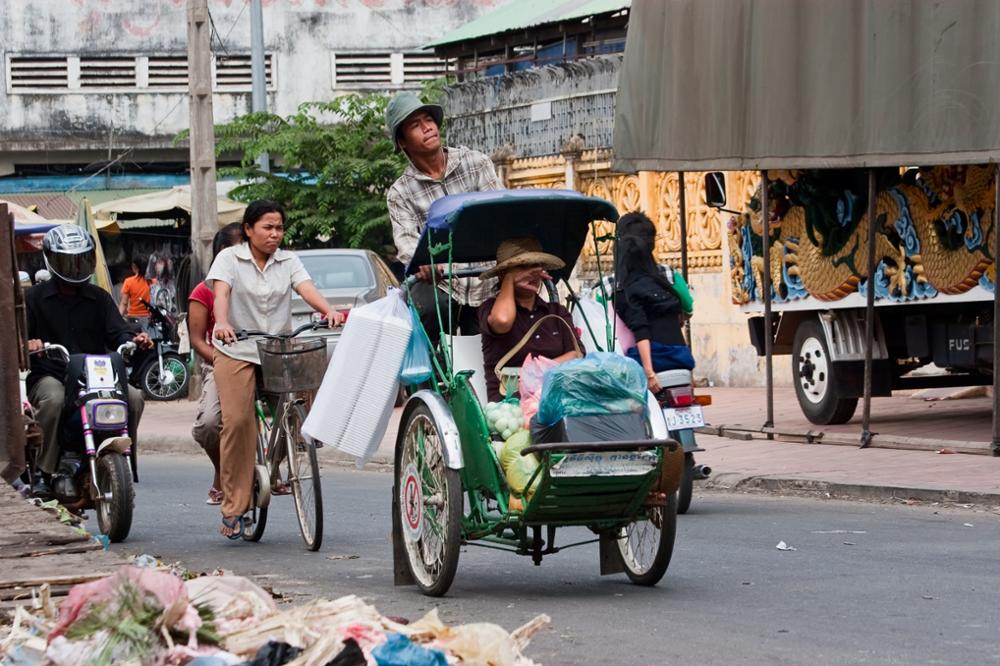
Advantages: The cyclo driver sits on an elevated bicycle seat, towering behind the passenger's spacious seating area. Among all the transport options above, the cyclo is the most historic. Its use traces back to the French Protectorate era (1863–1953). Colonial-era residents invented its name, still used in Khmer today: cyclo. Its primary modern advantage lies in being environmentally friendly. In this capital often choked by badly-maintained vehicles, the cyclo is the eco-champion, powered solely by a cyclist. It can also evoke for older travelers or history enthusiasts a bygone era—early 20th-century Cambodge.
Disadvantages: The cyclo is therefore, undoubtedly, subject to controversy, despite its eco credentials. The word "protectorate" makes many Westerners uncomfortable, though many Cambodian families hold positive memories of that era. But taking these vehicles feels colonial. The other negative aspect stems from sympathy for cyclo drivers. Often quite elderly and wearing sun hats, they sometimes cover long distances pulling a passenger under blazing sun. In Cambodge, some feel pity for them and believe we should stop exploiting their labor; others argue that using their service lets them earn a living. You'll have to form your own view. Either way, if you want to chat with one of these cyclists, you'll mainly find them downtown. The cyclo is clearly the least common transport here.
Personal take: I've never had a chance to ride in a cyclo. But the social debate it raises is interesting.
Many other ways exist to get around Phnom Penh, such as renting bikes, scooters, motorcycles, or cars, or using public transport: the city buses. Unfortunately, there still aren't enough to attract most travelers, and they struggle to compete with the transport options described above. But they do exist, and nothing stops you from hopping on one cheaply and crossing the city.
Frequently asked questions
The rickshaw is generally the most economical transport option, costing just $3 from the airport to downtown via ride-hailing apps.
Yes, transport is generally safe. Drivers move slowly in the city. For motorcycles, always ask the driver for a helmet.
Several Uber-style apps are available and help avoid scams by standardizing prices for rickshaws, tuk-tuks, and taxis.
Ride-hailing apps have fixed prices. For traditional transport, research typical fares before negotiating.